
J-20 design institute researchers propose radar arrays built into drone wings
A Chengdu design institute study describes wing-embedded radars on rolling drones that would share early-warning work, but it does not show any hardware or flight test.
TAIPEI —
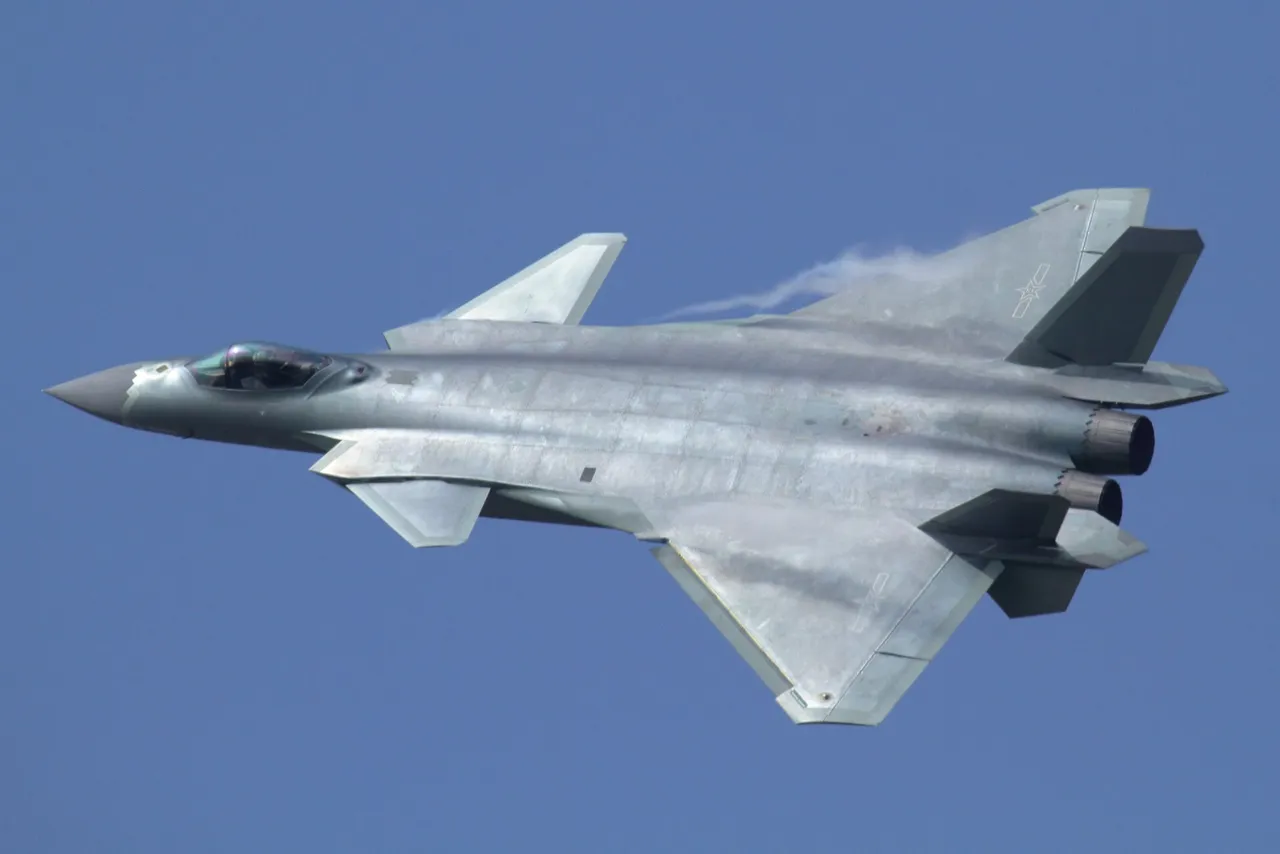
Engineers at the Chinese state aircraft design bureau that created the J-20 stealth fighter have proposed fitting large radar antenna arrays inside the wings of unmanned aircraft, so that formations of drones could share the airborne early-warning job now done by large dedicated radar planes. The South China Morning Post reported the proposal on 24 October, and Defence Security Asia published its own assessment of the same study later that day.
According to both reports, the study was published online on 10 October in the Chinese peer-reviewed journal Measurement and Control Technology. Its authors work at the AVIC Chengdu Aircraft Design and Research Institute. The Post noted that the same institute developed the J-20 and was named by China's defence ministry as the designer of the two-seat J-20S, a version meant to fly alongside unmanned aircraft.
The paper claims that wing-mounted early-warning radar is a new kind of mission payload built for what its authors call distributed air combat, an idea the Post traced to a 2014 concept from the US Defense Advanced Research Projects Agency. In the authors' account, such warfare cannot depend only on conventional early-warning aircraft with big, high-power radars and will instead need many smaller and cheaper drones working together to watch the sky.
Under the design described in the paper, the antenna array, control parts and related equipment would sit inside the wing structure. The radiating face would point downward in level flight, covered by a protective skin that follows the outer shape of the wing, which the authors say would enlarge the antenna area without a bulky external radar dome. To aim the radar at other sectors, a drone would roll by more than 45 degrees, tilting the array from the ground towards the side.
The authors set out four operating modes, including detection in all directions and in several chosen directions, as well as group modes in which aircraft spread out for wide-area coverage, concentrate on particular targets or cooperate to resist electronic jamming. The paper asserts that such teamwork could deliver early-warning performance close to or better than conventional radar aircraft without relying on a large platform. Those are the researchers' own claims; neither report described any test data supporting them.
Both reports stressed the limits of the evidence. The Post said the concept could in principle be considered for future Chinese combat aircraft, including the J-20 and next-generation designs known in the West as the J-36 or J-50, but that the paper did not confirm the radar was being developed for any of them. Defence Security Asia said the proposal does not establish that a wing radar has been installed on operational J-20s, tested in flight or chosen for any production aircraft.
Defence Security Asia also noted that the material it reviewed gave no array dimensions, frequency band, module count, power output or measured detection range, which rules out any reliable comparison with existing fighter radars or dedicated early-warning aircraft. It added that packing transmit and receive modules, cooling and power supplies into a thin wing would be demanding, and that a protective covering designed to limit the radar signature is an integration goal rather than proof that stealth would be preserved.
The current J-20 still carries a conventional nose-mounted active electronically scanned array radar, Defence Security Asia said. For now, the wing radar is a published research direction from the J-20's designers rather than a demonstrated capability, and it points to how Chinese engineers are thinking about spreading airborne surveillance across crewed fighters and supporting drones.
Sources
More in Cross-Strait
Taiwan coast guard says China pairs militia boats with coast guard ships to prepare the battlefield
Answering Reuters, Taiwan's coast guard confirmed it drove off the suspected militia boat Minfudingyu 07902 in August and warned of pressure on Japan and the Philippines.
TaiwanDefence · 1d ago · 3 min read

Chinese coast guard ships tail eight Japanese patrol vessels sheltering from a typhoon in the Taiwan Strait
Taiwan's coast guard says five Chinese cutters shadowed the Japanese ships off Penghu and accuses Beijing of using Typhoon Champi to imply control of the strait.
TaiwanDefence · 1d ago · 3 min read
Satellite images show four KJ-3000 radar jets at China's Xian aircraft plant
Imagery from 5 October shows four of the PLA's new Y-20-based early warning jets at Xian-Yanliang, a sign analysts say the type may be nearing serial production.
TaiwanDefence · 2d ago · 3 min read
Discussion (0)
Comments are not currently available.