
Japan studies rapid rocket launches to replace military satellites lost in a conflict
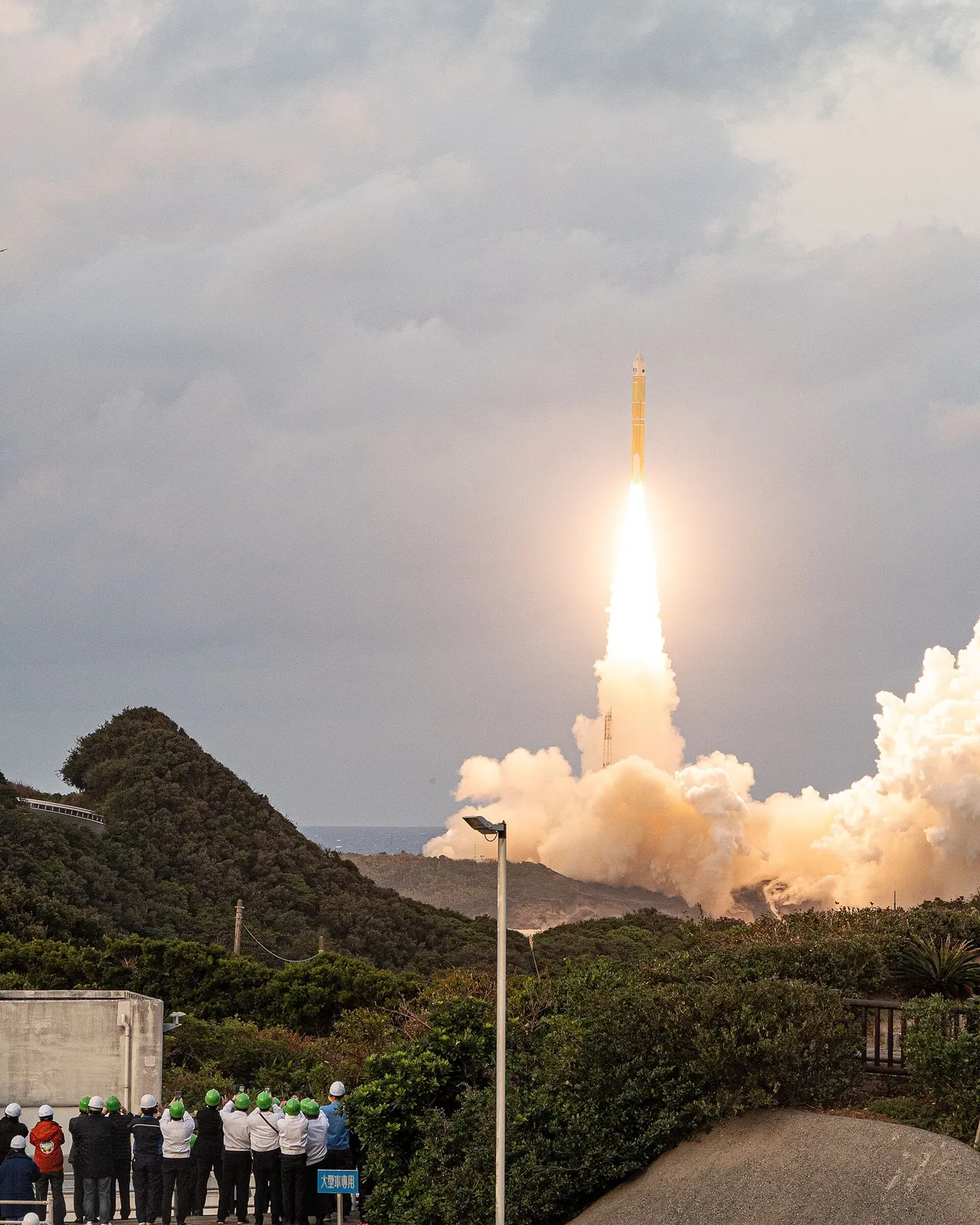
Tokyo is asking private companies for ideas on rockets that could put replacement military satellites into orbit at short notice if its own are attacked.
TAIPEI —
Japan's Ministry of Defense will study how to launch rockets at short notice so that it can quickly replace military satellites used by the Self-Defense Forces if they are attacked or fail. Defence Minister Shinjiro Koizumi announced the research study on 9 October 2026 and said the ministry was asking private companies for a broad range of ideas.
The ministry opened a public call for proposals from private firms the same day, covering rocket manufacturing and launch methods, Jiji Press reported. It plans to choose a contractor in February next year and then examine questions such as lift capacity, cost and production arrangements. The ministry has not said when such a launch capability could enter service or how much it might cost.
Restoring lost satellites quickly
Koizumi told a regular news conference that the ministry and the forces were working to strengthen their capabilities in space, but that being able to restore functions quickly if some of the satellites they rely on are lost, including in an emergency, remained a critical national security issue. He pointed to the United States, which can carry out launches on demand within 24 hours of being notified, according to The Japan Times.
He said the ministry could not solve the launch problem on its own and wanted to draw on the technical expertise of the private sector. The study is meant to set out the specific requirements of the ministry and the forces for responsive space transport, and to signal demand that encourages companies to invest in rockets and launch sites. Koizumi said space transport was going through a period of major change and voiced hope that a new, internationally competitive system would emerge from Japan.
Space as a military domain
The United States, China and Russia have all expanded the military use of space, raising the importance of the domain for security, Jiji Press noted. Japan's defence ministry drew up guidelines for defending the space domain last year, but shortening the time needed to recover when a satellite is lost has remained a challenge. Military satellites carry communications, command and control, and intelligence, surveillance and reconnaissance links, and losing them could limit how well forces can track a situation.
The study adds a transport element to earlier work on responsive satellites. In March 2024 the ministry signed a contract with Kawasaki Heavy Industries to build and test a responsive multi-mission demonstration satellite, according to The Epoch Times Japan. The ministry's budget request for the 2027 fiscal year also seeks upgrades to its space situational awareness system, so that it can detect and track spacecraft making unusual manoeuvres, and equipment to monitor electromagnetic jamming.
The US benchmark Koizumi cited dates from the VICTUS NOX demonstration in 2023, when a launch team was ready within 24 hours of receiving the order and put a satellite into orbit about 27 hours after it.
Sources
More in Indo-Pacific
Paparo briefed US envoys, including Taiwan's AIT chief, on PLA moves at Tokyo meeting, report says
Ambassadors to Seoul, Tokyo and Beijing joined the Indo-Pacific commander at the US Embassy in Tokyo before Trump's China trip, a Korean daily says.
TaiwanDefence · 3h ago · 2 min read
Japan's air force scrapped reusable rescue helicopter parts worth 58 million yen, auditors say
Japan's Board of Audit found the air force failed to salvage generators and other parts from retired UH-60J rescue helicopters that other units needed.
TaiwanDefence · 4h ago · 2 min read
India's air chief says US has made no formal F-35 offer, Su-57 decision still pending
Air Chief Marshal A P Singh spoke as six US Air Force F-35As ended their first exercise on Indian soil at Tarang Shakti in Jodhpur.
TaiwanDefence · 5h ago · 2 min read
Discussion (0)
Comments are not currently available.