
North Korean workers at Russia's top drone plant could take mass-production skills home, report says
A CSIS and Bush Institute study says up to 12,000 North Koreans build Geran attack drones at Alabuga, using mostly Chinese electronics, and warns of a sharper drone threat in Asia.
TAIPEI —
North Korea could gain hard-won know-how in mass-producing attack drones from the thousands of its workers assigned to Russia's main drone factory, the Alabuga complex in the special economic zone near Yelabuga in Tatarstan, according to a report published on 14 October 2026 by the Center for Strategic and International Studies (CSIS) and the George W. Bush Institute. The authors, CSIS Korea Chair Victor Cha and Bush Institute programme manager Joseph Kim, warn that a larger and more capable North Korean drone programme would pose a new order of military challenge for South Korea, Japan and US forces in the Indo-Pacific.
The study cites Ukrainian military intelligence estimates that up to 12,000 North Koreans have been assigned to the plant, where they earn roughly US$2.50 an hour. The workers are handled through a front company for Green Pine Associated Corporation, North Korea's principal arms-trading house, which has been under US sanctions since 2010 and UN listing since 2012. Pyongyang withholds between 70 and 90 per cent of their wages, the report says.
The authors argue that the lasting cost for Asia is not only the money. In their assessment, technicians who rotate home will bring lessons from a high-volume assembly line and from watching Russian engineers keep refining the Geran, the Russian-built version of the Iranian Shahed-136 one-way attack drone that Moscow fires at Ukrainian cities and power grids.
A factory built for scale
According to the report, the Alabuga site has grown to roughly 17 facilities and as many as 116 buildings and can turn out more than 5,500 drones a month, citing satellite imagery analysis by the CSIS Beyond Parallel project. Ukraine's Defence Intelligence estimates that Russia aims to build 60,000 long-range drones and 50,000 decoys in 2026. Between March and May this year Russia launched more than 200 drones a day at Ukraine, including over 8,000 in May alone. Ukrainian intelligence says the workforce, which began at about 1,000 people, is planned to reach 40,000.
North Koreans are one of three labour pools at the plant. The report says Russian students as young as 15 are recruited through Alabuga Polytechnic under a work-experience label and work shifts of up to 12 hours, while women aged 16 to 22 from Africa, Latin America, South Asia and Eurasia are lured by offers of catering and hospitality jobs, then placed on drone assembly lines after their passports are taken. The authors say the recruitment meets UN indicators of human trafficking.
Chinese parts at the core
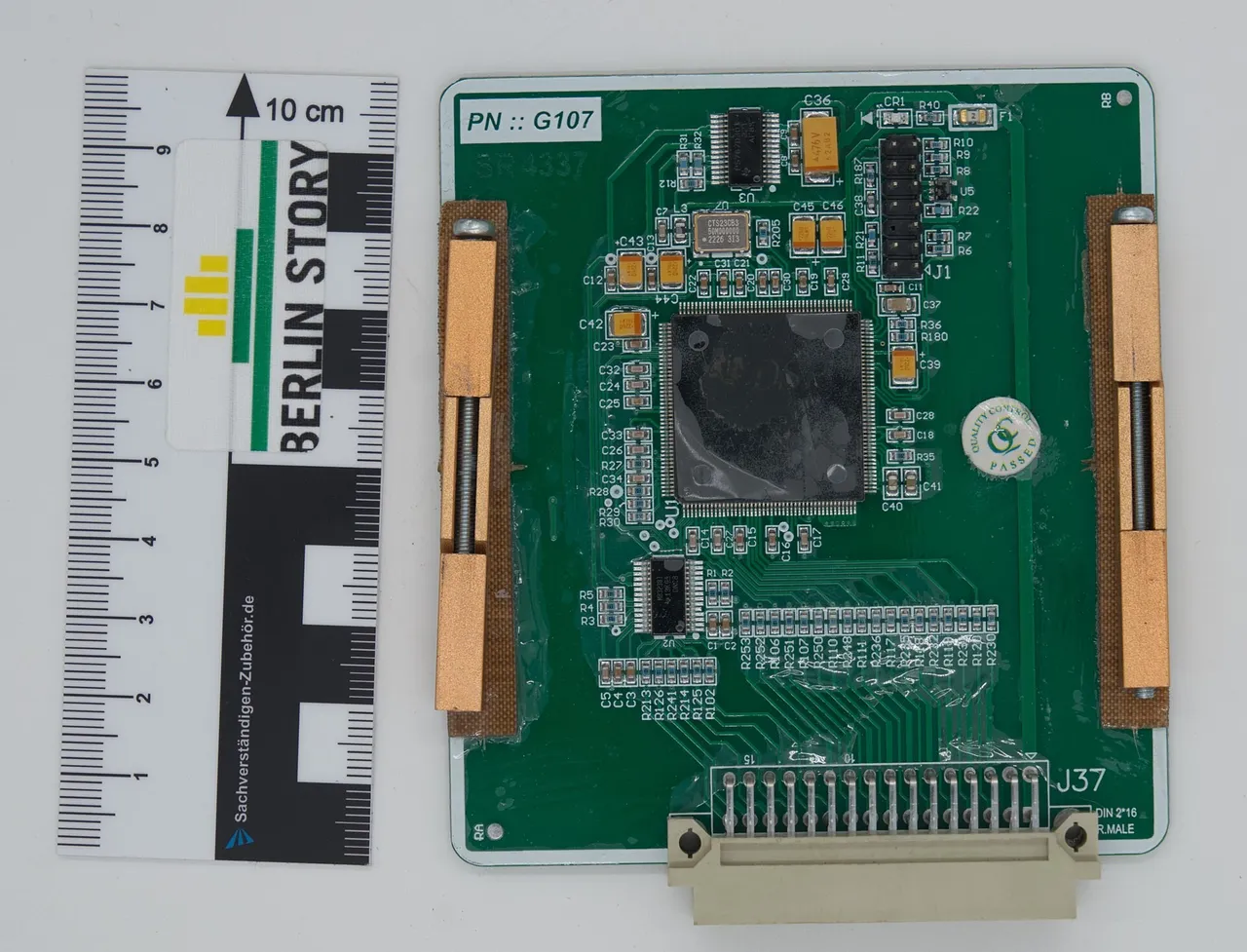
China is described as the main supplier of the drones' most critical dual-use subsystems, including engines, navigation and anti-jamming electronics. The report says Chinese-origin parts now make up roughly 80 per cent of the critical electronics in Russia's drones, that one Chinese supplier shipped more than 685,500 engine parts between June and August 2024, and that satellite-navigation antennas traced to the Chinese maker Harxon were reportedly shipped disguised as agricultural equipment. Russian engineers also replaced a US-made Xilinx chip in the anti-jamming antenna with a circuit from the Beijing Microelectronics Technology Institute, it says.
A separate September report by the 11-nation Multilateral Sanctions Monitoring Team estimated that Russia hosted 15,000 to 30,000 North Korean workers at the end of 2025, some of them building military drones, and that Moscow used a student visa scheme to disguise them. UN Security Council Resolution 2397 of 2017 required all member states to send North Korean workers home by the end of 2019.
Why it matters for Taiwan
The same Chinese electronics base is one that Taiwan is trying to keep out of its own drone fleet. Taoyuan prosecutors said on 12 October that two executives of drone supplier Jiin Ming Industry had been detained on suspicion of fitting prohibited China-made chips and camera lenses into drones delivered under military contracts and submitting false certificates of origin, a case brought under the National Security Act.
Taken together, the two cases suggest that control of drone components has become a front line of its own: Beijing's suppliers help Russia sustain mass drone production for its war in Ukraine, while Taipei is policing its supply chain to stop the same parts reaching the drones it is buying to deter China.
The report urges the US State Department to publish an assessment of the recruitment networks feeding Alabuga, the Treasury to sanction their enablers under the Global Magnitsky Act, and Washington to convene a UN-backed multilateral team modelled on the sanctions monitoring group to investigate the complex. It also calls on democracies to name foreign companies still operating in the Yelabuga zone; it says several European firms and one American company remained there after a European Union deadline of 25 January 2026 to leave.
Sources
More in Indo-Pacific
North Korea test-fires two submarine-launched cruise missiles, likely from new attack sub
Seoul says it tracked both missiles from launch to impact; analysts see the first armed test of the 3,000-tonne Hero Kim Kun Ok, unveiled in 2023.
TaiwanDefence · 2h ago · 3 min read
Japan pitches Type 03 air defence missiles to the Philippines on Taiwan's southern flank
Japanese firms showed Manila medium and short-range air defence missiles and satellite watch of Scarborough Shoal, widening arms ties on Taiwan's southern flank.
TaiwanDefence · 3h ago · 2 min read
Taiwan tracks PLA pressure as Japan and the US fly F-22s with F-15s over the East China Sea
Taipei counted 32 Chinese aircraft and ships around Taiwan while four US Raptors trained with JASDF F-15s northwest of Okinawa.
TaiwanDefence · 3h ago · 2 min read
Discussion (0)
Comments are not currently available.