
South Korea and Indonesia push past arms sales toward joint development and third-country exports
At their 12th defence industry committee in Jakarta, the two governments and about 40 companies reviewed the KF-21, T-50 and submarine projects.

TAIPEI —
South Korea and Indonesia have agreed to look for ways to move their defence relationship beyond the sale of finished weapons, discussing joint research and development, local production in Indonesia and joint exports to third countries at a meeting in Jakarta on 11 November, according to South Korea's Defense Acquisition Program Administration (DAPA).
The talks were the 12th session of the Korea-Indonesia Defense Cooperation Committee, a regular forum between DAPA and Indonesia's defence ministry. Financial News reported that this year's session was organised to turn defence agreements reached at the two countries' summit in April into concrete projects, and to help South Korean industry widen its reach into Southeast Asian markets. Indonesia is the only country in the region to hold a special strategic partnership with Seoul.
The committee was co-chaired by Jeong Gi-yeong, who heads DAPA's future power business division, and Sri Yanto, director general of reserve forces at the Indonesian defence ministry. Ten major South Korean defence and manufacturing companies took part, including Korea Aerospace Industries, Hanwha Ocean, Hanwha Aerospace, LIG D&A, Poongsan, Dasan Machineries, Hyundai WIA, Hyundai Motor, Kia and the maintenance firm KAEMS. Around 30 Indonesian companies attended, among them the state-owned aircraft maker PT Dirgantara Indonesia, the shipbuilder PT PAL and the land systems and ammunition maker PT Pindad.
The meeting ran on two tracks. In the government-to-government session, officials discussed new partnership models for companies in both countries and reviewed progress on existing flagship projects, which Financial News listed as work involving the T-50 advanced trainer, submarines and the KF-21 fighter. Both sides discussed follow-up steps to carry those projects forward, the Yonhap report said.
A business-to-business session followed, in which companies set out their capabilities and requirements in aerospace, naval vessels, ground weapons and ammunition. DAPA said the exchanges identified new candidate projects and widened working networks between the two industries, and that it plans to set up a regular public-private consultation channel to keep those contacts going.
DAPA said the meeting reaffirmed Indonesia's place as a strategic defence technology partner involved in research, development and production, rather than simply a buyer of South Korean equipment. Jeong described the session as a chance to put the summit's defence agreements into practice quickly, according to Financial News.
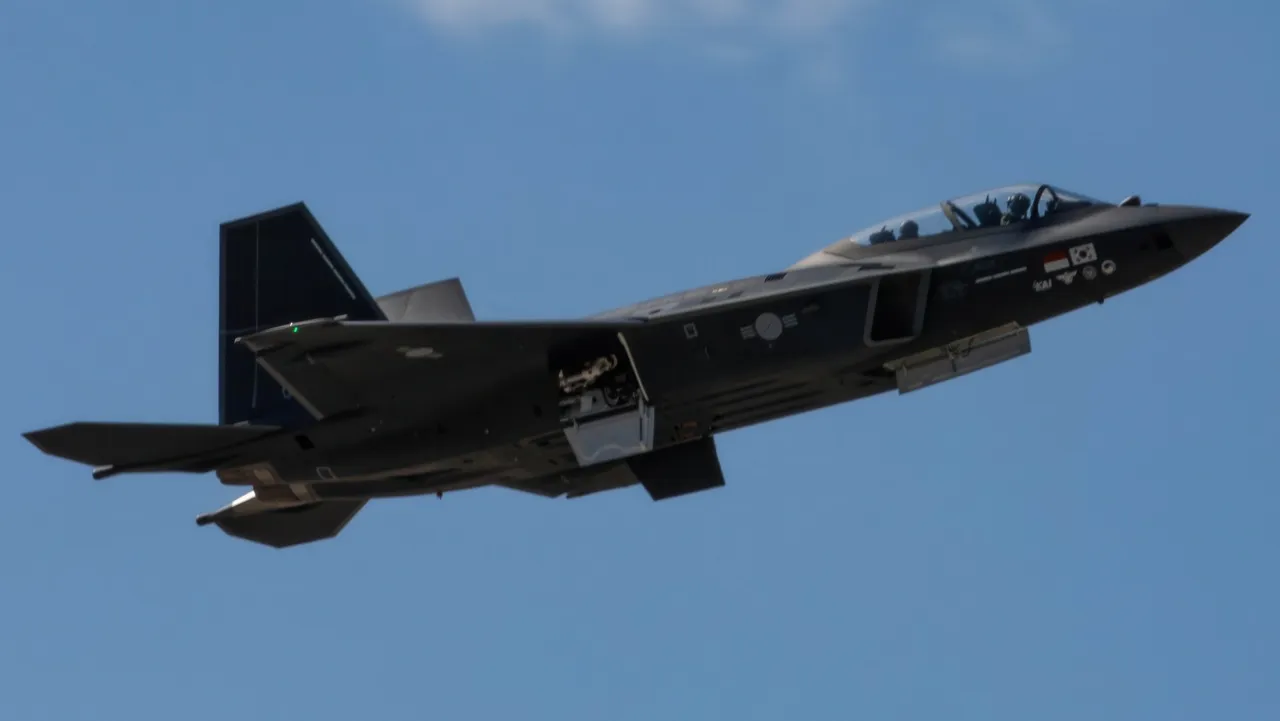
The KF-21 is the most sensitive item in the relationship. Indonesia joined South Korea's indigenous fighter programme under a deal to share development costs in return for technology transfers, but the project ran into difficulty when Jakarta sought to reduce its contribution. The two governments settled last year on cutting Indonesia's share to 600 billion won, about 448 million US dollars and roughly a third of the original commitment, in exchange for a smaller transfer of technology.
Neither report named specific new contracts, values or delivery dates arising from this week's committee, and DAPA did not say which of the candidate projects identified by companies would move forward first.
Sources
More in Indo-Pacific
US, Japan, Australia and the Philippines pledge a combined coordination centre on Philippine soil
A joint statement released on 10 November turns last month's Cebu meeting of the four defence ministers into pledges on a shared hub, aligned investment and bigger drills.
TaiwanDefence · 3h ago · 3 min read
India orders steam-to-diesel refit and weapons upgrade for ageing frigate INS Betwa
India's defence ministry signed a Rs 498.58 crore deal with Cochin Shipyard to swap the Brahmaputra-class frigate's steam plant for diesel engines and modernise its weapons.
TaiwanDefence · 4h ago · 2 min read
Austal cuts first steel on the Australian Army's new heavy landing craft
Work has begun at Henderson in Western Australia on the first of eight 100-metre landing ships meant to carry tanks and HIMARS launchers into Australia's near region.
TaiwanDefence · 8h ago · 3 min read
Discussion (0)
Comments are not currently available.