
Taiwan charges drone maker Align's founder with hiding Chinese chips in military drones
Prosecutors say the T-REX helicopter firm's founder and his wife supplied four military drone orders with Chinese parts and scrubbed their markings to pass inspection.

TAIPEI —
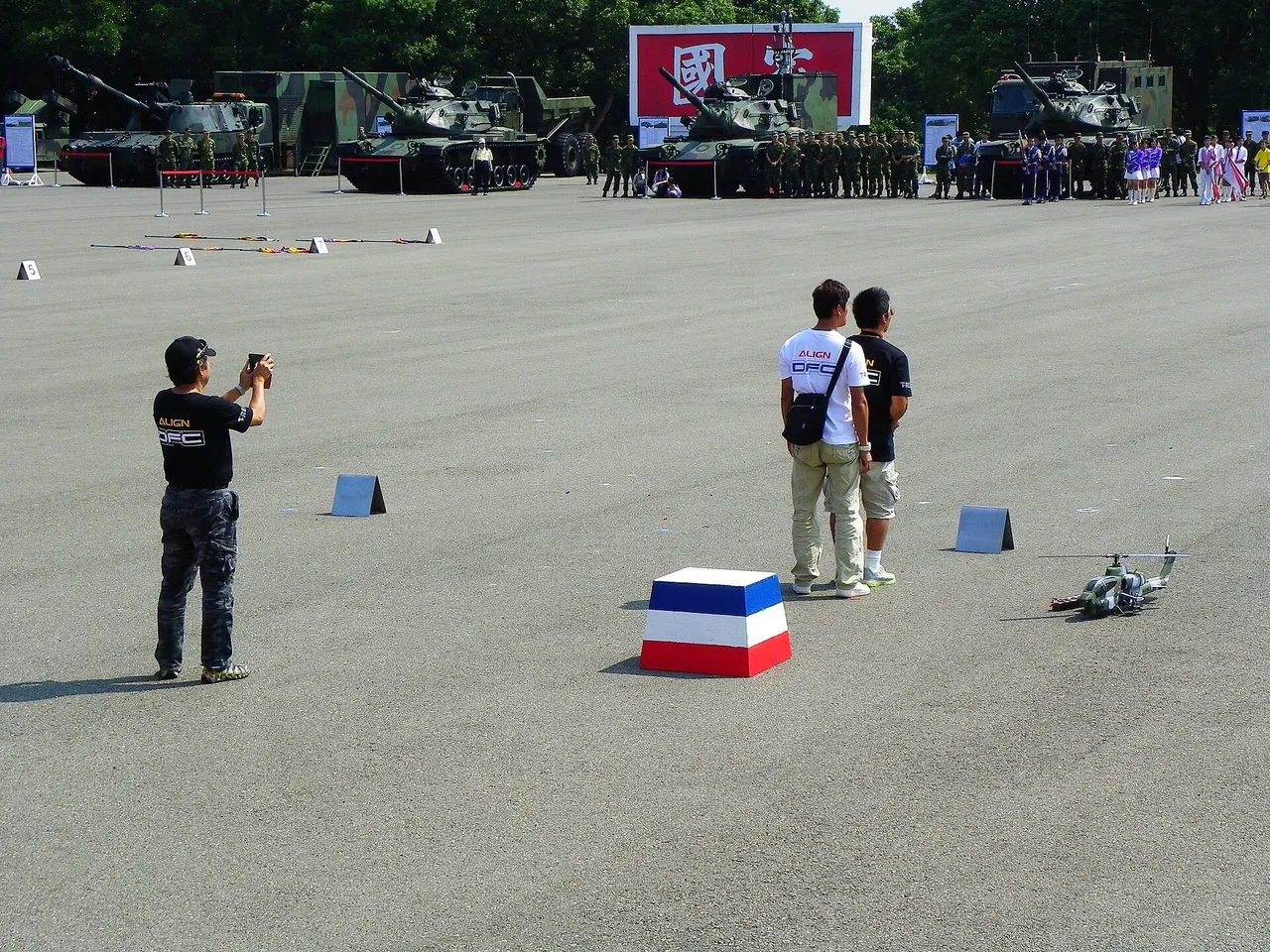
Prosecutors in Taichung on 13 November indicted Tu Ta-sen, the founder and chairman of the radio-controlled helicopter maker Align, and his wife Huang Wen-li, a vice general manager at the firm, for supplying Taiwan's armed forces with drones that contained Chinese-made chips and circuit boards. The charges include violations of the National Security Act, false business records and fraud.
The Taichung District Prosecutors Office asked the court to impose at least two years for each offence and a combined sentence of at least five years. Both defendants, who had been held in detention, were transferred to the Taichung District Court. Prosecutors also asked the court to confiscate NT$394,000 and NT$870,000 in contract payments they say were obtained by fraud.
According to the indictment as reported by Mirror Media and United Daily News, the company won four military drone contracts between last year and this year, worth a combined NT$16.06 million. The buyers were the Army Academy, the Army Logistics Command, the Navy's Zuoying logistics support command and the defence ministry's Youth Daily News. The largest order, worth NT$8.8 million, covered 32 bomb-dropping drones for training.
All four contracts barred main units, remote controllers, computing, storage and network communication modules made in mainland China, Hong Kong or Macau. Prosecutors say the couple knew the firm had long imported finished remote controllers and circuit boards from a supplier in Quanzhou in Fujian province and camera modules from Hong Kong, yet used them anyway. Chips named in the case include an image processor from Beijing-based Ingenic and parts from the Chinese chipmaker PUYA.
The case alleges deliberate concealment. Prosecutors say Tu told staff to peel off China-origin stickers and to grind or laser-etch away chip markings or cover them with glue, and that the company then issued certificates stating the drones had been designed and built in Taiwan. Investigators found scraped chip markings on boards supplied to the navy order when they took the drones apart.
The scheme unravelled on 15 May, when the Army Logistics Command took apart four of the training drones during acceptance checks and found PUYA chips and components marked as made in China. The army rejected the batch, ended the contract and referred the case to prosecutors, who widened the inquiry to other deliveries. Police and investigators searched the company in mid-October and questioned six people, and a court approved the couple's detention at the end of that month.
United Daily News reported that Align had already been barred from government tenders from July 2025 to July 2028 after an earlier procurement case over a training drone tender for the army's 10th Army Command, which ended with a deferred prosecution. Prosecutors say the couple then bid through two other companies Tu controlled, while Align itself built the aircraft.
Tu admitted the charges during questioning, according to the same report. He argued that Taiwan lacks specialised drone chips and cannot yet build drones entirely from domestic parts, said a Taiwanese radar he had tried caused serious interference, and maintained that the aircraft were training drones that carried no data links or classified information. Prosecutors rejected that defence, saying the couple traded national security for commercial gain and that Chinese components could expose military movements and reconnaissance data.
Align, founded in 1984 in Fengyuan in Taichung, built its name on the T-REX series of model helicopters, which at one point held a large share of the global market. The firm had for years sold drones to the military, police and fire services. The case cuts to the core of Taiwan's push for drones built from a supply chain free of Chinese parts, a requirement written into military drone contracts.
Sources
More in Cross-Strait
Taiwan opens an ocean survey centre, saying 74 Chinese ships have mapped the seas around it
President Lai unveiled a centre that will run Taiwan's survey ships and a ship model lab tied to its submarine programme, as officials cited Chinese seabed surveys.
TaiwanDefence · 1h ago · 3 min read
Taiwan report says PLA units face a talent gap as China's coast guard pushes east of Taiwan
Taiwan's Mainland Affairs Council says constant reform has thinned PLA grassroots talent, while Chinese coast guard and militia boats spread into waters east of the island.
TaiwanDefence · 3h ago · 3 min read
Taiwan says China quietly test-fired a submarine-launched ICBM during its unannounced drills
Taiwanese security officials say the missile was fired from waters off eastern China in early November as part of a PLA exercise that Beijing never named.
TaiwanDefence · 4h ago · 2 min read
Discussion (0)
Comments are not currently available.