
Taiwan's army plans NT$978 million urban warfare ranges for brigades that train conscripts
The 2027 defence budget book shows the army building urban combat and CBRN training ranges for seven infantry brigades from 2027 to 2030.
TAIPEI —
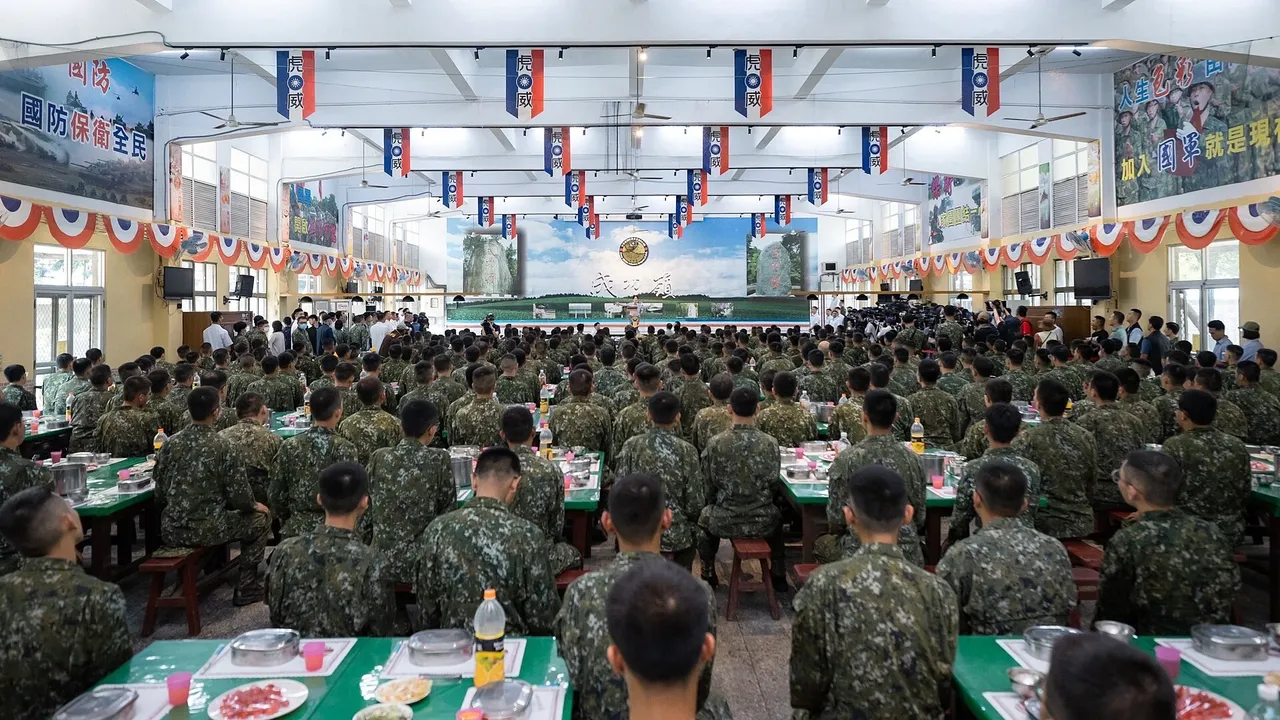
Taiwan's army plans to spend nearly NT$978 million over four years building urban warfare and chemical, biological, radiological and nuclear (CBRN) defence training ranges for seven infantry brigades that train one-year conscripts. The figure appears in the defence ministry's budget book for 2027, the Liberty Times reported on Tuesday 10 November, and it shows the project moving from early planning into actual construction.
According to the budget book, the ministry approved the project's feasibility study on 28 May 2026. The total cost is NT$977.592 million, to be spent from 2027 to 2030. The 2027 budget carries NT$25.057 million, followed by about NT$310.4 million in 2028, NT$318.2 million in 2029 and NT$323.9 million in 2030. The army will next run a design-and-build tender, then design and construct the ranges.
The seven units are the 101st, 109th, 153rd, 206th, 249th, 257th and 302nd infantry brigades, according to a report the ministry sent to the Legislative Yuan last year to release frozen funds. All belong to the army's 6th and 10th Army Corps and are spread across Taoyuan, Hsinchu, Miaoli, Taichung, Chiayi and Yilan. They are key units for training men doing the one-year compulsory service.
The project began on a much smaller scale. The army first set aside NT$9.243 million for 2025 and 2026 for preliminary work such as land development planning, environmental impact assessment and soil and water conservation studies. Legislators froze NT$1 million of the 2025 portion until the ministry explained the plan in writing. At that stage the army expected construction to run from 2027 to 2029. The new budget book both reveals the much larger construction cost and stretches the schedule to 2030.
When the planning money was first budgeted in late 2024, TVBS reported that the main aim was to give conscripts in four-month military training and the conscript-based garrison brigades enough urban combat training. It said the army's existing urban training areas at its northern, central and southern training bases were already stretched by the needs of volunteer troops, and that the new ranges would be built at garrison brigade bases, with main combat units able to rotate through them.
Analysts quoted at the time raised design questions. Hsu Chih-hsiang, an assistant research fellow at the Institute for National Defense and Security Research, said a range would need to reflect modern Asian cities full of high-rise buildings, where commanders in basements and troops on upper floors may struggle to communicate. He also noted that the belt from Taipei through New Taipei and Taoyuan to Hsinchu is one continuous urban area tied closely to the coast, so an invading force would move straight from a landing into city fighting.
The defence ministry has said that modern training ranges are meant to meet the army's need for realistic training by building urban combat and CBRN protection into courses, so that troops learn the techniques and combine them with military and professional education. The budget book does not yet disclose the exact location of each range, the cost per site or the facilities to be built, so it remains unclear whether they will include mock street blocks, building assault structures or live-fire lanes.
The spending matters because Taiwan's one-year conscripts are expected to hold ground alongside regular units if China attacks, and much of the island's western coastal plain is built up. Giving the brigades that train them their own ranges would let conscripts practise urban defence close to where they serve rather than competing for scarce time at central training bases.
Sources
More in Army
Anti-jamming change delays the last 85 of Taiwan's army Capricorn drones
A defence ministry report says an added wartime radio band pushed final deliveries to January 2027, with a daily penalty of NT$1.28 million after that.
TaiwanDefence · 16h ago · 3 min read
Tainan bridge blast would give all four of Taiwan's army theatres live demolition experience this year
The 8th Army Corps' 54th Engineer Group plans to destroy the Touqianxi Bridge in Baihe on 12 November, the army's fourth live bridge demolition of 2026.
TaiwanDefence · 19h ago · 2 min read
Army special training centre puts combat divers through final water tests
Eight trainees faced bound flips, underwater kit drills and an eight-kilogram side swim before the 115-2 combat diving class could graduate and take the badge.
TaiwanDefence · 4d ago · 2 min read
Discussion (0)
Comments are not currently available.