ASPI: pending US$14 billion Taiwan arms package still a Trump-Xi bargaining chip
ASPI says a US$13–14 billion Taiwan air-and-missile package remains unused leverage after Trump-Xi talks, with State still not opening transfer procedures.
TAIPEI —
The Australian Strategic Policy Institute said in its 1 October Fault Lines briefing that a pending US$13 billion to US$14 billion U.S. arms package for Taiwan remains an unresolved political instrument after the 24 September Trump-Xi summit in Washington, with the State Department still not starting transfer procedures.
ASPI wrote that most of the package is high-end air and missile defense equipment useful to an island inside China's strike range, yet Washington appears to treat the promise or threat of a future sale as leverage for concessions from Beijing whose content remains unclear even to senior figures in President Donald Trump's party.
Storm Media summarized the same ASPI assessment for Taiwanese readers, noting that neither the May Beijing summit nor the September Washington meeting produced a decision on the large Taiwan sale first floated publicly in February.
Focus Taiwan reporting after the Washington talks cited American analysts who likewise expected delay. Zack Cooper of the American Enterprise Institute said he could not imagine Trump clearing a package with further U.S.-China meetings planned for November in China and December at the Miami G20, and judged a 2027 rollout or broken-up smaller notifications more likely.
Ken Moriyasu of the Hudson Institute told Focus Taiwan that Taiwan sales remain leverage Trump can use if Beijing does not cooperate on other conflicts, while noting the administration already authorized a record US$11 billion package in December 2025 that took effect in March.
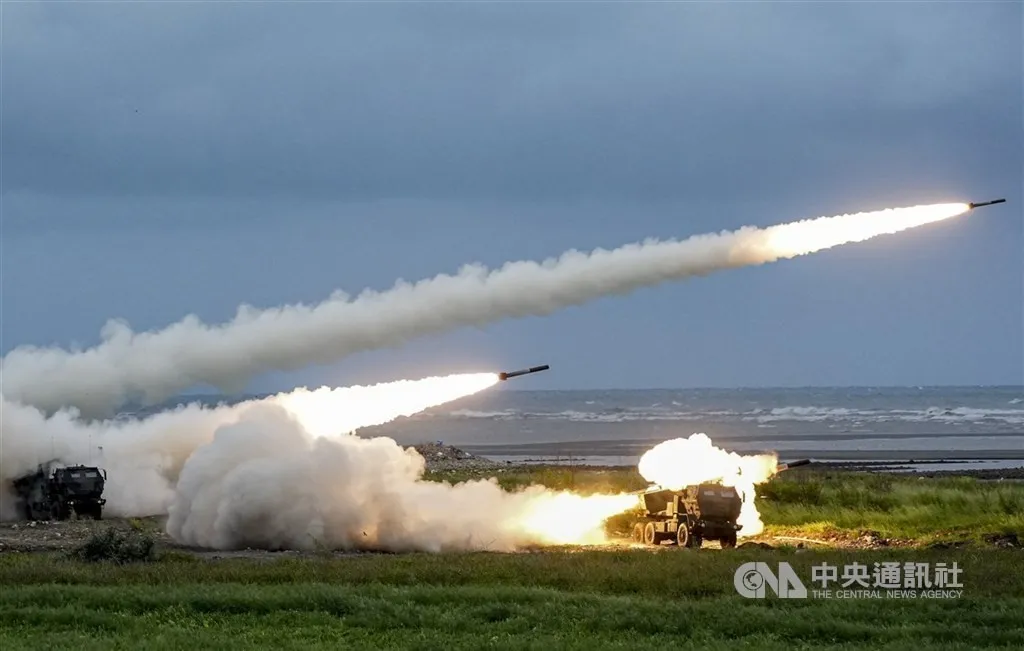
ASPI recalled that the earlier US$11 billion sale left Taipei scrambling for an emergency disbursement and a U.S. deadline extension to make the first HIMARS-related payment before a scaled special defense budget cleared the legislature days later.
The think tank argued U.S. arms sales usually pressure the buyer, not a third party, and questioned whether reversing Reagan-era linkage language can extract strategic gains from China. It judged Chinese reductions in aircraft sorties and the absence of a major blockade exercise since December as thin concessions beside steady PLAN presence and expanded China Coast Guard activity east of Taiwan.
Taiwan Current News and other regional outlets have separately described the US$14 billion package as still awaiting presidential approval amid industrial capacity limits and competing U.S. stockpile demands, aligning with ASPI's picture of a sale stuck in political suspension rather than rejected outright.
Taken together, the early-October ASPI note and late-September Focus Taiwan interviews portray a delivery bottleneck driven by summit diplomacy rather than by Taiwanese funding shortfalls alone, keeping advanced air defenses and related systems on hold while smaller already-approved lines continue.
ASPI did not claim the package is cancelled. Its core finding is that State Department paperwork has not started and that using the sale as a bargaining chip with Beijing leaves Taipei waiting without a public schedule.
Cooper also argued the current administration has reversed earlier efforts to routinize smaller, more frequent Taiwan sales, making each package a prolonged political negotiation with Beijing even while officials insist formal one-China policy language is unchanged.
This report was produced through TaiwanDefence’s automated publishing system and includes links to its supporting sources.
Discussion (0)
Comments are not currently available.