
Chinese survey ship Kexue leaves Japan's EEZ off Ishigaki after coast guard warnings
Japan's coast guard says the Chinese research vessel Kexue left Japanese waters north of Ishigaki and Yonaguni after a week of unauthorised survey work, the 14th such case this year.
TAIPEI —
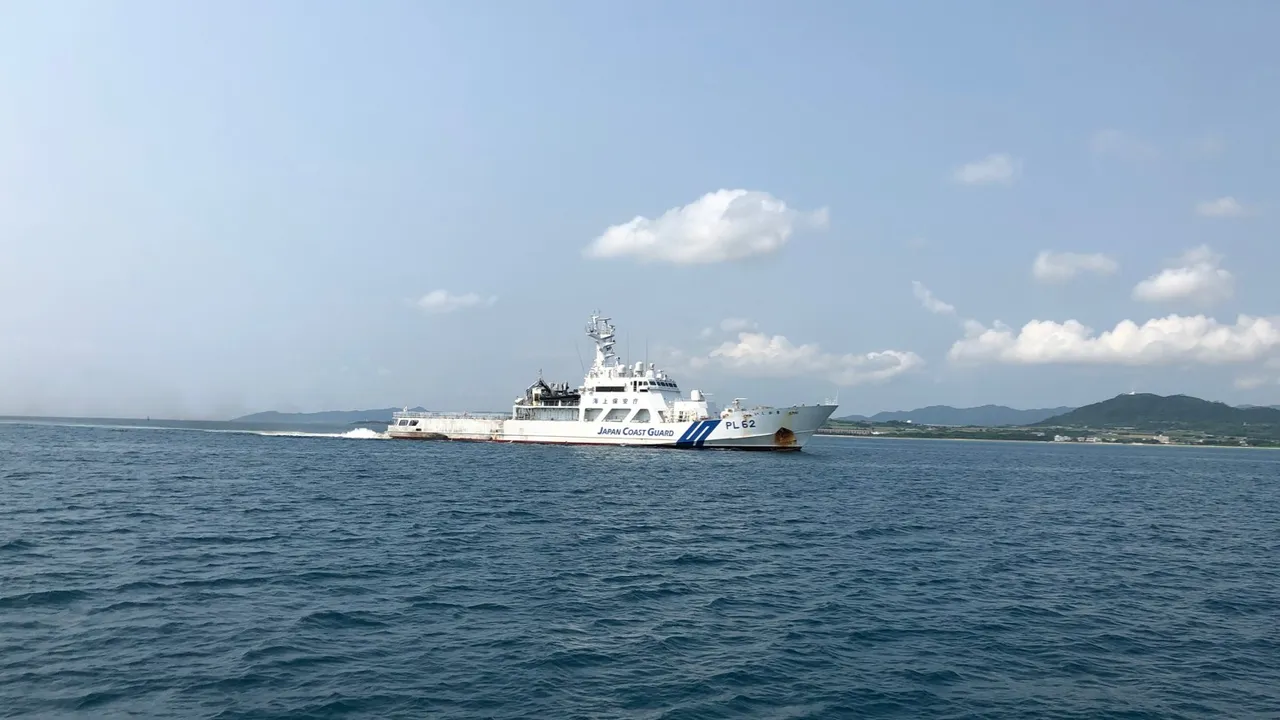
A Chinese marine research vessel that Japan accused of conducting unauthorised surveys in its exclusive economic zone (EEZ) off Okinawa has left Japanese waters, the Japan Coast Guard said. The 11th Regional Coast Guard Headquarters in Naha announced on Monday, 5 October, that the ship Kexue had crossed the geographical median line heading west at about 15:55 local time, taking it outside Japan's EEZ, according to Kyodo News.
A coast guard spokesman, Masashi Asano, confirmed the departure to AFP on Tuesday, 6 October, and said the vessel had been ordered repeatedly to stop research that Tokyo had not approved. He said patrol ships had sent radio messages demanding that the survey be halted and stating that scientific research in Japan's maritime zone without its consent would not be tolerated.
A week of wire deployments near the Yaeyama Islands
Japanese patrol ships first spotted Kexue at about 12:10 on Sunday, 27 September, roughly 72 kilometres north of Ishigaki Island, lowering what appeared to be a wire into the sea, the Jiji news agency reported at the time. The coast guard immediately radioed the ship to stop, saying ocean surveys without Japan's consent were not allowed in those waters.
According to the 11th Regional Headquarters statement reported by the Naigai Times, the ship then operated day after day until 2 October in waters north of Ishigaki and north-west of Yonaguni, intermittently paying out wire-like objects from its side and stern. Patrol vessels kept issuing radio warnings and shadowed the ship until it crossed the median line on 5 October. The headquarters said it would move to a routine alert posture if the ship showed no further unusual movements.
AFP's account said the vessel left on Friday, 2 October, which matches the last day of observed survey activity in the Japanese statement; the coast guard's own release, as reported by Kyodo and the Naigai Times, put the ship's exit from the EEZ three days later, on 5 October.
Fourteen cases this year
Asano told AFP that unapproved surveys by Chinese ships in Japan's EEZ had already more than doubled compared with last year, with 14 cases so far in 2026. He said their frequency had surged since around the time Japan and the Philippines announced they would begin talks on delimiting their maritime boundary, a step Prime Minister Sanae Takaichi and President Ferdinand Marcos Jr agreed on 28 May.
Accounts of the prior-year baseline differ. AFP quoted Asano as saying there were six cases last year and one or two a year in the three years before that, while a spokeswoman for the 11th Regional Headquarters told Stars and Stripes in late September that there had been four cases in 2025 and none in 2024. Both accounts give 14 for 2026.
Stars and Stripes reported that the 2026 cases began in March and continued every month from April to September, and that five of them involved research vessels near Uotsuri and four near Kuba, both in the Senkaku Islands, which Japan administers and China and Taiwan also claim. The 11th Regional Headquarters covers waters from Okinawa's main island west to Yonaguni, including the Senkakus.
Why the surveys matter
Under the United Nations Convention on the Law of the Sea, marine scientific research in another state's EEZ requires that state's consent. China's foreign ministry said in August that its activities in the region complied with international law and were aimed at improving scientific knowledge of the ocean, Stars and Stripes reported.
Mark Davidson, an assistant professor at Temple University Japan, told Stars and Stripes that such surveys could gather data potentially useful for submarine operations, but that Beijing was more likely signalling displeasure with Japan's defence build-up in its south-western islands and testing how Tokyo and Washington respond.
The episode comes as relations between Tokyo and Beijing remain strained. Ties fell to a low after Takaichi suggested last November that Japan might intervene in any attack on Taiwan, AFP noted, and Japanese and Chinese coast guard ships continue to face off routinely around the Senkakus.
Sources
More in Indo-Pacific
Japan's defence minister to meet Okinawa governor as Marine murder case strains US basing
Shinjiro Koizumi will meet Governor Genta Koja on Wednesday on preventing a repeat after a Futenma-based US Marine was arrested over the killing of a Naha woman.
TaiwanDefence · 3h ago · 3 min read
Philippine military's monthly tally of Chinese ships at disputed features nearly doubles to 101
The Philippine military said it monitored 101 Chinese navy and coast guard vessels at four West Philippine Sea features in September, up from 56 in August, with the sharpest rise at Pag-asa Island.
TaiwanDefence · 5h ago · 3 min read
Taiwan defence minister says no word from US on splitting stalled arms package
Wellington Koo said Taipei has received no information that Washington will break up a pending US$14 billion arms package, and that US commitments to Taiwan's defence have not changed.
TaiwanDefence · 7h ago · 3 min read
Discussion (0)
Comments are not currently available.