
Singapore's army unveils a drone-heavy infantry battalion with five-platoon companies
The Next Generation Infantry Battalion gives each company two drone sections, a new light machine gun and handheld battle-management links, now on trial in Australia.
TAIPEI —
The Singapore Army has officially unveiled its Next Generation Infantry Battalion, a reorganised infantry unit built around drones, digital command links and smaller fighting sections. Pioneer, the Ministry of Defence publication, reported on 26 October that the new battalion was presented at this year's Exercise Wallaby in Queensland, Australia, where soldiers of the 5th Battalion, Singapore Infantry Regiment, known as 5 SIR, are validating its full range of capabilities.
The biggest change is on the ground. According to Pioneer, a company in the new battalion drops the traditional three-platoon layout and instead fields five platoons, each with two six-man sections, for ten sections in all. Each company also gets two dedicated Steel Net Sections that operate unmanned systems, including surveillance and attack drones. The publication said a single company could, for example, send one platoon to secure a building, another to clear a route and a third to cover a key junction while holding two platoons in reserve.
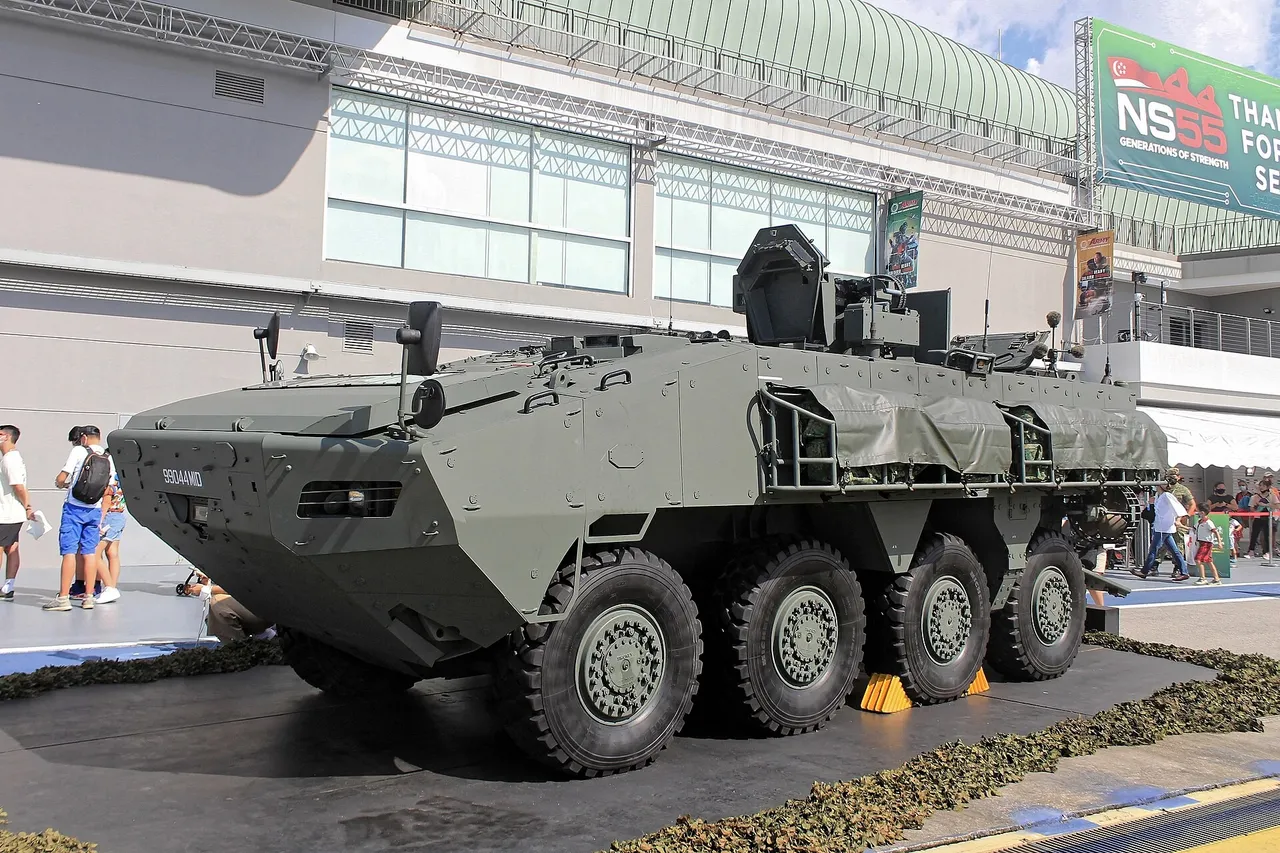
Drones are meant to go first into high-threat areas. Pioneer said the Vesper unmanned aerial system and the Artos attack drone work as a surveillance-and-strike pair, letting soldiers gather information at longer range before hitting a target. The battalion is supported by Terrex infantry carrier vehicles and can draw on armour, combat engineer and intelligence units for capabilities beyond its own. A universal controller called RC3, developed jointly by the Army and the Defence Science and Technology Agency, can pair with and fly every drone type the battalion uses, replacing separate controllers for each model.
New weapons and networks are being added as they mature. The report said a new light machine gun replaces the Ultimax 100 squad automatic weapon, which has been in service since 1982, and that a next-generation infantry fighting vehicle and more unmanned assets will join the battalion. Every section commander now carries a handheld Battlefield Management System that shares the positions of friendly and enemy forces, danger areas and routes in real time, so troops can still coordinate when radio links are down.
The officers involved described the battalion as unfinished by design. The commanding officer of 5 SIR, Lieutenant Colonel Shahreel Rajaratnam, likened it to a multi-tool that gives ground commanders more options to match each mission, and said it had gone through lengthy trials and several iterations. Chief Infantry Officer Brigadier-General Fairoz Hassan said its capabilities would keep changing every year in line with battlefield needs, with feedback from soldiers shaping the next steps.
The unveiling comes alongside other drone-era trials at Wallaby. The Straits Times reported on 25 October that the Singapore Armed Forces is testing an aerial communications node, a drone-borne 5G base station that no longer needs a tether and can extend coverage up to 2 kilometres from a base station, together with a counter-drone system mounted on pickups that can detect and jam drones on the move. A Defence Science and Technology Agency official told the paper that soldiers had reported cases where the counter-drone suite could not detect threats in time, feedback the agency is using to make the system more robust.
The exercise itself is large. The Straits Times reported on 23 October that some 6,000 Singapore troops and 1,200 platforms are taking part in the 36th edition of Wallaby, the country's largest unilateral overseas drill, which began in September and runs to 2 November at the Shoalwater Bay Training Area, an area roughly five times the size of Singapore. The paper said the Ministry of Defence first mentioned the new battalion concept in its 2022 budget debate as part of a wider Next Gen SAF plan for 2040 that also includes Invincible-class submarines and F-35 fighters.
Pioneer did not say how many of the army's infantry battalions will be converted to the new structure or on what timeline, and it did not name the new light machine gun or give a date for the next-generation fighting vehicle.
Sources
More in Indo-Pacific
US Air Force starts turning BYD cars away from Kadena as its ban on the Chinese brand takes effect
The 18th Wing says vehicles from the Chinese carmaker, which the Pentagon lists as a Chinese military company, pose an unacceptable risk at the Okinawa base.
TaiwanDefence · 2h ago · 3 min read
Malaysia asks its Attorney-General's Chambers to weigh legal action over undelivered Naval Strike Missiles
Deputy Defence Minister Adly Zahari says the claim against the Norwegian supplier tops RM1 billion, as the navy's first littoral combat ship slips to April 2027.
TaiwanDefence · 3h ago · 3 min read
China and Indonesia revive Sharp Knife army counter-terror training with a drill in Guangdong
Beijing says Chinese and Indonesian troops will train together in Guangdong from late October, reviving a special forces series RSIS says stopped in 2015.
TaiwanDefence · 5h ago · 3 min read
Discussion (0)
Comments are not currently available.