
South Korea's defence minister says the Joint Chiefs must move to Sejong with his ministry
Kang Shin-chul told lawmakers the JCS would not be left in Seoul when the defence ministry relocates to Sejong by 2031, easing fears of a split command.
TAIPEI —
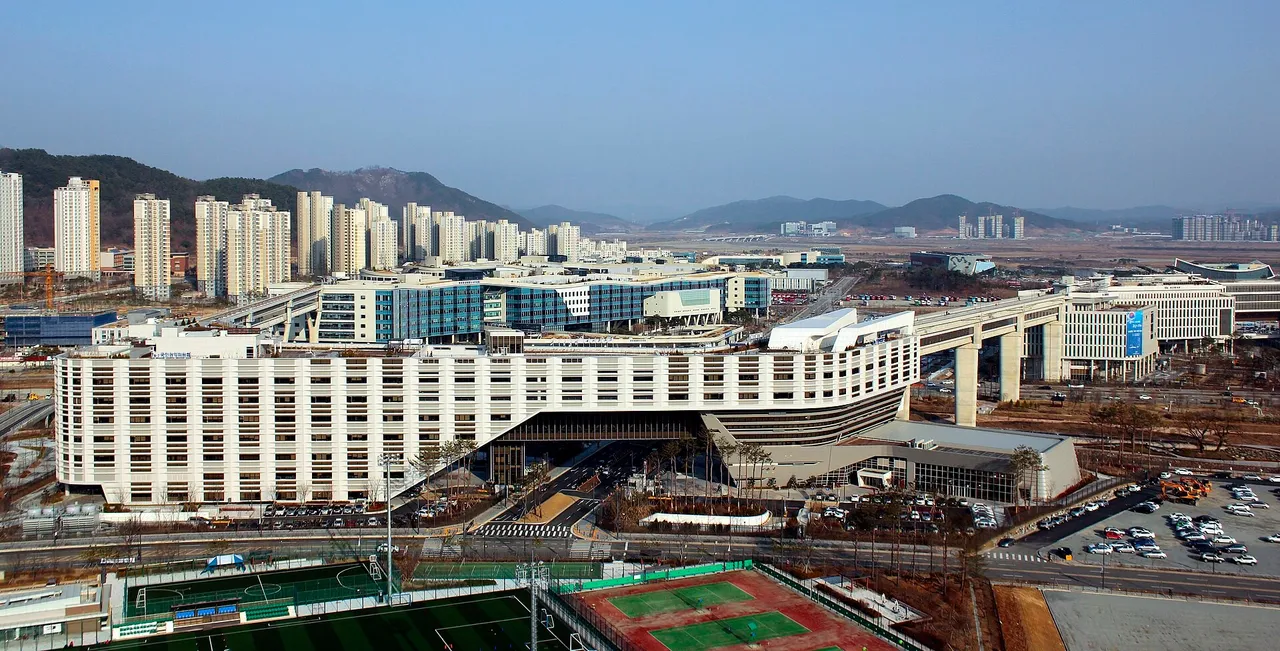
South Korea's defence minister, Kang Shin-chul, has told lawmakers that the Joint Chiefs of Staff will have to move to the administrative city of Sejong together with the Ministry of National Defense, rather than staying behind in Seoul when the ministry relocates. He made the remarks on Monday, 26 October, during the closing comprehensive session of the National Assembly defence committee's annual audit of the ministry and the military.
The issue arose after the government's second plan to move central government bodies to Sejong, published on 13 October, added the foreign, unification and defence ministries to the list of agencies due to relocate by 2031. Yonhap news agency reported that the Joint Chiefs, which hold military command and operational authority, were not included in that plan, leaving open the possibility that the ministry would move while the military's operational headquarters remained in the capital.
Concerns over a divided command
Critics warned that such a split could weaken the response in a crisis and make it harder for the National Security Council, which brings together the presidential national security office and the foreign and security ministers, to work efficiently. Yoo Young-ha, a lawmaker from the opposition People Power Party, said that separating the two would put the minister and the chairman of the Joint Chiefs roughly 100 to 120 kilometres apart, forcing them to run operations by video conference in an emergency, according to Daejeon MBC.
Kang responded that the ministry had never said the two bodies would move separately. He said they had to move together and that a command post would naturally be needed, and he described the relocation as more than a transfer of buildings and staff, saying that the state itself was moving. He also argued that the defence ministry belongs wherever the president, as commander-in-chief, is based.
Gyeryongdae option raised
Hwang Myung-sun, a lawmaker from the ruling Democratic Party, suggested that the ministry could instead go to Gyeryongdae, the compound that houses the headquarters of the army, navy and air force, arguing that this would tie defence policy more closely to its execution. Kang said he partly agreed and noted that in the United States the defence department, the joint chiefs and the service headquarters all sit in the Pentagon, but he repeated that the decisive factor was proximity to the president.
A defence ministry official told Yonhap that the ministry would work closely with other agencies during the relocation talks so that support for the president's command of the armed forces and the military's readiness posture would not be disrupted. Yonhap reported that, given the particular nature of a defence ministry, it plans to work out the move with the agencies concerned on the principle that its support for the commander-in-chief must not be disrupted.
Legislation next
The relocation still needs changes to the law. Daejeon MBC reported that the National Assembly's land and transport committee was due to begin reviewing this week a special act on an administrative capital together with an amendment to the law on the multifunctional administrative city, which had excluded foreign affairs and security ministries from the move to Sejong. The broadcaster said that if the law and the relocation plan are changed, discussion would turn to the future of the Joint Chiefs and to the embassies that would follow the foreign ministry.
Sources
More in Indo-Pacific
Malaysia says its navy and air force are guarding the Malacca Strait against a Hormuz-style disruption
Deputy defence minister Adly Zahari told parliament the armed forces patrol the strait continuously and train for disruption, alongside patrols with three neighbours.
TaiwanDefence · 29m ago · 2 min read
Pentagon confirms the annual US-South Korea defence ministers' meeting will slip into 2027
The Security Consultative Meeting, normally held each autumn, will miss its calendar year for the first time since 1998 as the allies differ over wartime command.
TaiwanDefence · 2h ago · 3 min read
Australia moves to give its military standing powers to stop drones over defence bases
A bill introduced on 27 October would let Defence detect, track and act against drones over sensitive sites and set up new security zones around its people and assets.
TaiwanDefence · 4h ago · 3 min read
Discussion (0)
Comments are not currently available.