
US special ops use drone laser to guide mortar fire past standard range
A PDW C100 carrying a Leonardo DRS laser designator marked targets for precision 120mm rounds at Dugway; Taiwan fields its own 120mm mortars.
TAIPEI —
Leonardo DRS said on Tuesday, 14 October 2026, that a small Performance Drone Works C100 quadcopter carrying its STAG-5 electro-optical and infrared gimbal with a laser target designator guided precision mortar engagements beyond the standard maximum range of a 120 mm non-rifled mortar during a US Army special operations validation event in Utah.
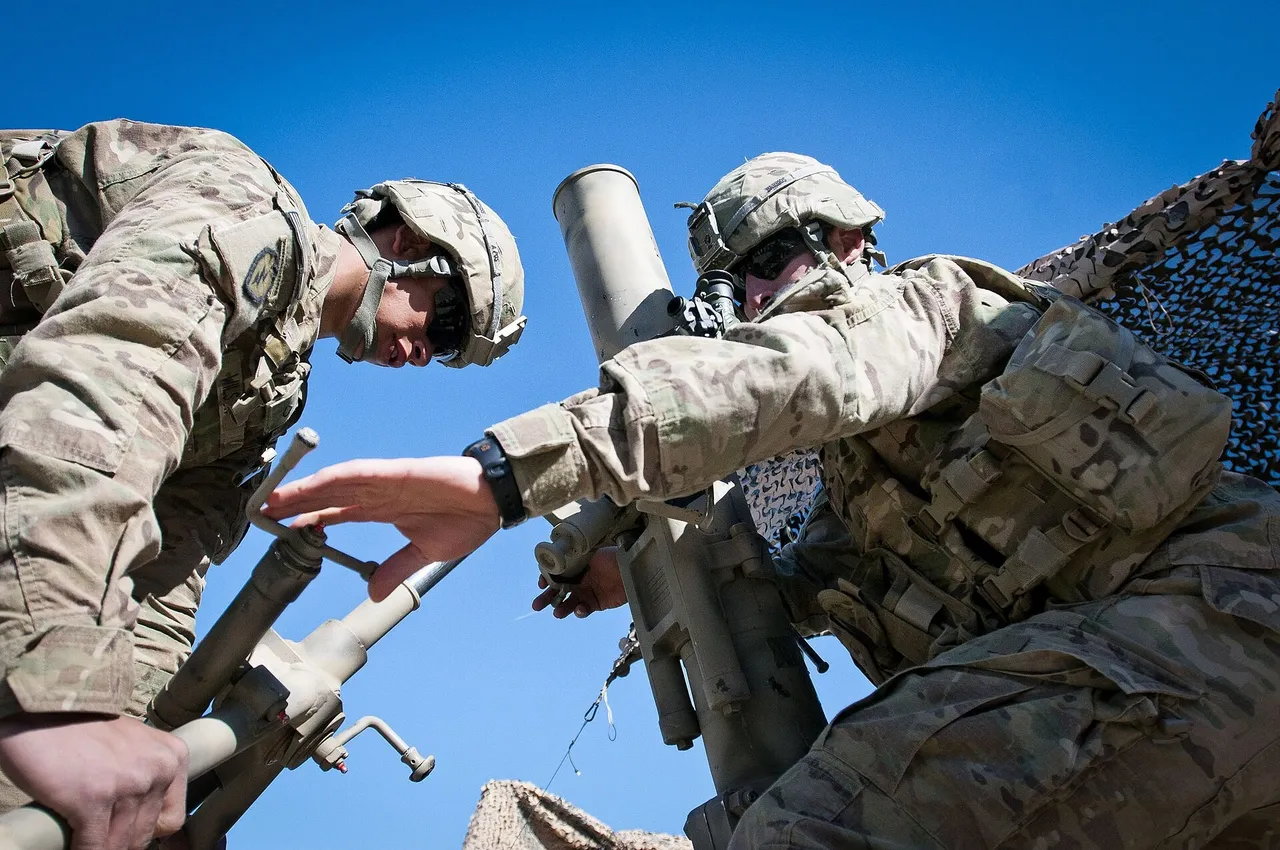
The Iron Sting Precision Mortar Validation Event was hosted by the Capability Development and Innovation office, formerly the Irregular Warfare Technical Support Directorate, for US Army Special Operations Command at the White Sage Mortar Range at Dugway Proving Ground. Organisers tested the safety, accuracy and extended-range performance of next-generation precision mortar munitions and let operators try the kit in realistic scenarios.
Leonardo DRS said repeated engagements were completed at ranges beyond the normal maximum for a smoothbore 120 mm mortar, though it did not publish the distances, the number of rounds fired or the miss distances. Liberty Times, citing the same company brief, likewise reported that the strikes went past the usual maximum range without giving figures.
A laser designator marks a target with a coded beam, and a laser-guided mortar round steers onto the reflected spot. Putting the designator on a drone lets an observer stay farther from the target and lets a mortar crew engage positions its own teams cannot see from the firing point.
Jerry Hathaway, senior vice president and general manager of Electro-Optical Infrared Systems at Leonardo DRS, said the STAG-5 is meant to give operators precise ISR and targeting that can improve mission effectiveness and extend standoff in contested environments. The gimbal pairs the laser with day and night cameras so crews can find a target, mark it, confirm the strike and watch the mission from farther back.
The C100 is already in US Army service. In September 2024 the Army selected PDW's C100 and Anduril's Ghost X for the Company-Level Small Uncrewed Aircraft System programme, which puts reconnaissance and target-acquisition drones with manoeuvre companies. The rucksack-portable quadcopter can carry about 6.8 kg of payload and fly for up to 74 minutes, Defence Blog reported.
Leonardo DRS did not name the munitions used. The event shares its name with Iron Sting, a 120 mm mortar round made by Israel's Elbit Systems that combines GPS and semi-active laser guidance and has been used in combat by the Israel Defense Forces since 2023. US officials have not confirmed that the Utah firings used that round.
For Taiwan, the test matters because the island's army already fields domestic 81 mm and 120 mm mortars and has rolled out locally built mobile mortar kits meant to speed fire and cut crew exposure. Taipei Times reported in 2015 that the Armaments Bureau's 202nd Arsenal showed a computerised mobile mortar system able to fire the army's 81 mm and 120 mm shells from a vehicle mount or a ground set-up, part of efforts to make anti-landing fires more responsive.
Sources
More in Indo-Pacific
South Korea folds two postponed US drills into its Hoguk field exercise
Seoul says the 19 to 30 October drills will absorb two allied field drills cut from Ulchi Freedom Shield, as Taiwan also moves to unscripted war games.
TaiwanDefence · 29m ago · 3 min read

Chinese navy helicopter shadows Philippine patrol flight over Scarborough Shoal
A PLA Navy helicopter tailed a Philippine AW109 over the disputed shoal on 15 October, as Beijing said its forces warned the aircraft out of its airspace.
TaiwanDefence · 4h ago · 2 min read
US Army sent balloon swarms meant for a Pacific test to Middle East operations instead
The Army scrubbed a plan to fly over 100 high-altitude balloons over Indo-Pacific waters; its space chief now calls them game-changing as China fields its own.
TaiwanDefence · 5h ago · 2 min read
Discussion (0)
Comments are not currently available.