
Australia's Mogami frigates and Japanese missile tests on its ranges are on track, Tokyo says
Koizumi and Marles met in Cebu on 29 October for their eighth talks and welcomed a September survey of Australian ranges for Japan's hypersonic missile.
TAIPEI —
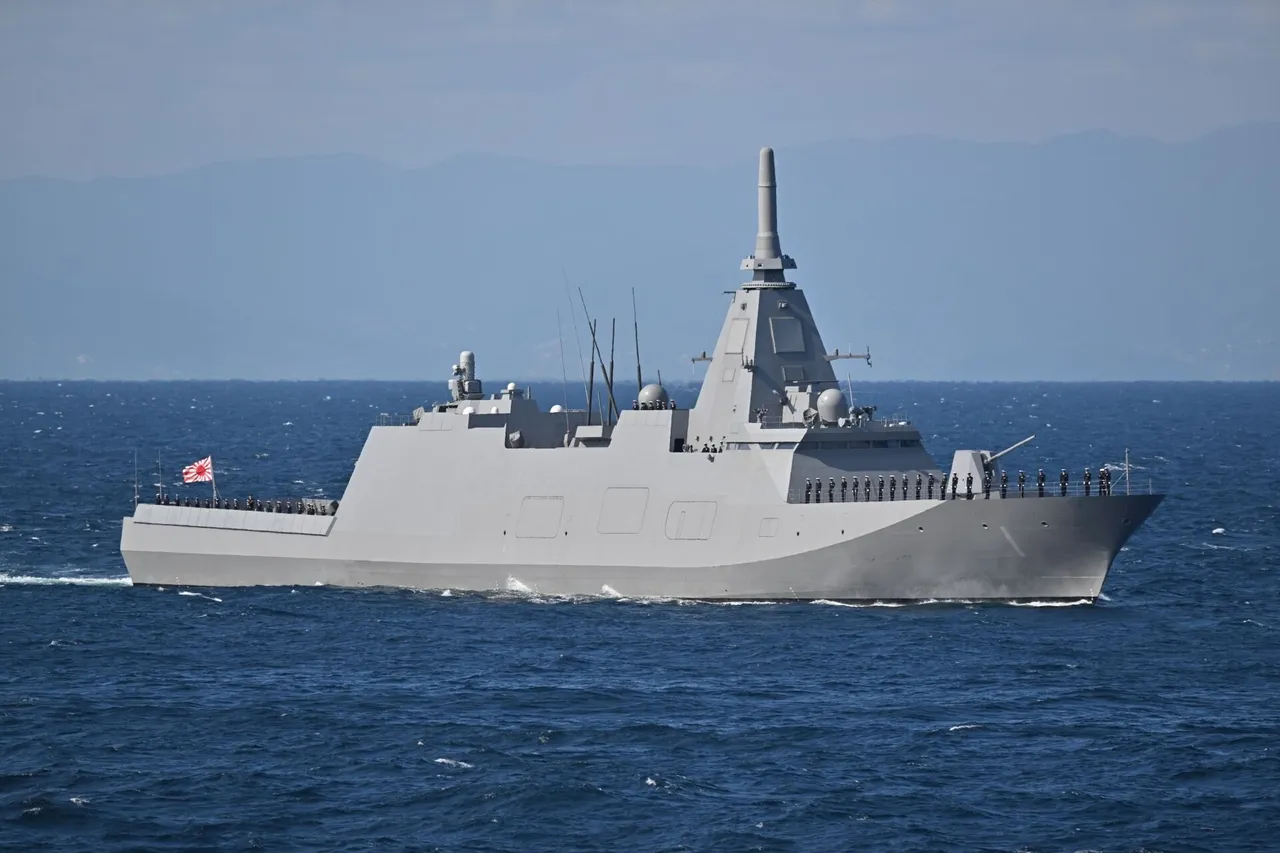
Japanese Defence Minister Shinjiro Koizumi and Australian Deputy Prime Minister and Defence Minister Richard Marles met in Cebu, the Philippines, on 29 October and confirmed that two flagship projects between their countries are moving forward: Australia's purchase of upgraded Mogami-class frigates and the use of Australian test ranges for a Japanese hypersonic missile, according to Japan's Ministry of Defense and Kyodo News.
Koizumi described the talks at a press conference afterwards, held on the sidelines of the 13th ASEAN Defence Ministers' Meeting-Plus. He said it was his eighth meeting with Marles and that the two sides shared the view that the regional security environment is growing more severe. They agreed to make defence cooperation under the Japan-Australia special strategic partnership more concrete.
Frigates and a hypersonic test range
According to the ministry's transcript, the ministers confirmed steady progress on the Mogami-type frigate programme for Australia that they discussed when they last met in August. Kyodo reported that the project is a joint development of a new warship based on the improved version of the Japan Maritime Self-Defense Force's latest FFM frigate.
The ministers also welcomed progress on using Australian test ranges for Japan's hypersonic guided missile. Koizumi said Japan had sent a site survey team to Australia in September as part of that work. The Nikkei newspaper reported that the two sides confirmed they would keep coordinating towards long-range missile firing tests by the Self-Defense Forces in Australia.
The ranges plan grew out of a joint statement that Koizumi and Marles issued in Canberra on 18 August. In it they committed to build a framework for using Australian test ranges to support next-generation long-range precision strike and autonomous capabilities, explicitly including Japan's hypersonic guided missile programme. The same statement noted the signing of a Mogami memorandum on 18 April, said work was on track to hand the first ship to the Royal Australian Navy in 2029, and recorded a successful July demonstration in South Australia of a laser system called Boobook, the first project the two countries developed together.
Defense News reported in April that Mitsubishi Heavy Industries is to build the first three 4,800-ton frigates in Japan, with the first due by December 2029, and that eight more are planned for construction in Western Australia. The ships are to replace the Royal Australian Navy's Anzac-class frigates.
New three-way formats
Koizumi said the two ministers also agreed on the importance of building layered cooperation, with Japan and Australia at the core of a network of like-minded partners, and on continuing to contribute to peace and stability in the Indo-Pacific. He said talks had also been held in two new three-way formats, Japan-Australia-South Korea and Japan-Australia-India, which he called a significant result for the future. Kyodo reported the same two formats.
Over two days in Cebu, Koizumi said, he held bilateral talks with seven countries, namely the United States, South Korea, India, the Philippines, Vietnam, Singapore and Australia, plus a four-way meeting with the United States, Australia and the Philippines. He also told reporters that in his conference speech he had cited, as an example of the tougher regional environment, the transit of three Chinese navy ships and a Chinese coast guard vessel through the Osumi Strait off Kagoshima two days earlier, the first such case the ministry had confirmed and published.
Why it matters
The meeting shows that the two largest pieces of the Japan-Australia defence relationship, a warship export worth billions and access to Australian ranges for long-range missile testing, have moved past announcements into working-level steps. Both feed directly into the strike and naval capabilities that Tokyo and Canberra are building at a time when Chinese naval movements near Japan, such as the Osumi Strait transit Koizumi cited in Cebu, are drawing closer official scrutiny.
Sources
More in Indo-Pacific
Koizumi and Kang hold first talks since the Yasukuni visit and agree to step up defence ties
Japan's and South Korea's defence ministers met in Cebu, reaffirmed three-way coordination with Washington on North Korea and flagged work on AI and drones.
TaiwanDefence · 3h ago · 3 min read
A quarter of Australia's troops are not medically cleared to deploy, defence chiefs tell senators
A Senate estimates hearing also heard that cuts to big projects cannot be ruled out, and that Defence has opened a leak inquiry into a report on those cuts.
TaiwanDefence · 4h ago · 3 min read
Beijing blames Manila for its low-level seat at ASEAN defence talks, and Teodoro pushes back
China's defence ministry says Philippine politicians obstructed its attendance in Cebu; Teodoro says ASEAN does not share that view and left the attache to his deputy.
TaiwanDefence · 6h ago · 3 min read
Discussion (0)
Comments are not currently available.