
CSIS says China's autumn naval surge was several operations, not one drill, but a first for its three fleets
A CSIS review of the late October and early November 2026 deployments finds no single exercise, but records 165 Chinese official ships near Taiwan in October.

TAIPEI —
China's surge of warships and government vessels across the Western Pacific in late October and early November was most likely several overlapping operations rather than a single unannounced exercise, the Center for Strategic and International Studies (CSIS) said in a report published on 23 November. The Washington think tank nonetheless judged that the near-simultaneous deployments gave the People's Liberation Army valuable experience for a possible Taiwan contingency.
The report, by Bonny Lin and four other CSIS researchers, drew on maps released by Taiwan's National Security Council Secretary-General Joseph Wu, which on 3 November showed more than 100 Chinese navy and government vessels spread across the region, as well as Japanese, Philippine and Taiwanese official data and satellite imagery. It found no strong evidence that the activity formed one coordinated campaign, and said much of it matched the usual rise in Chinese military activity at this time of year.
Three theatre fleets beyond the island chain
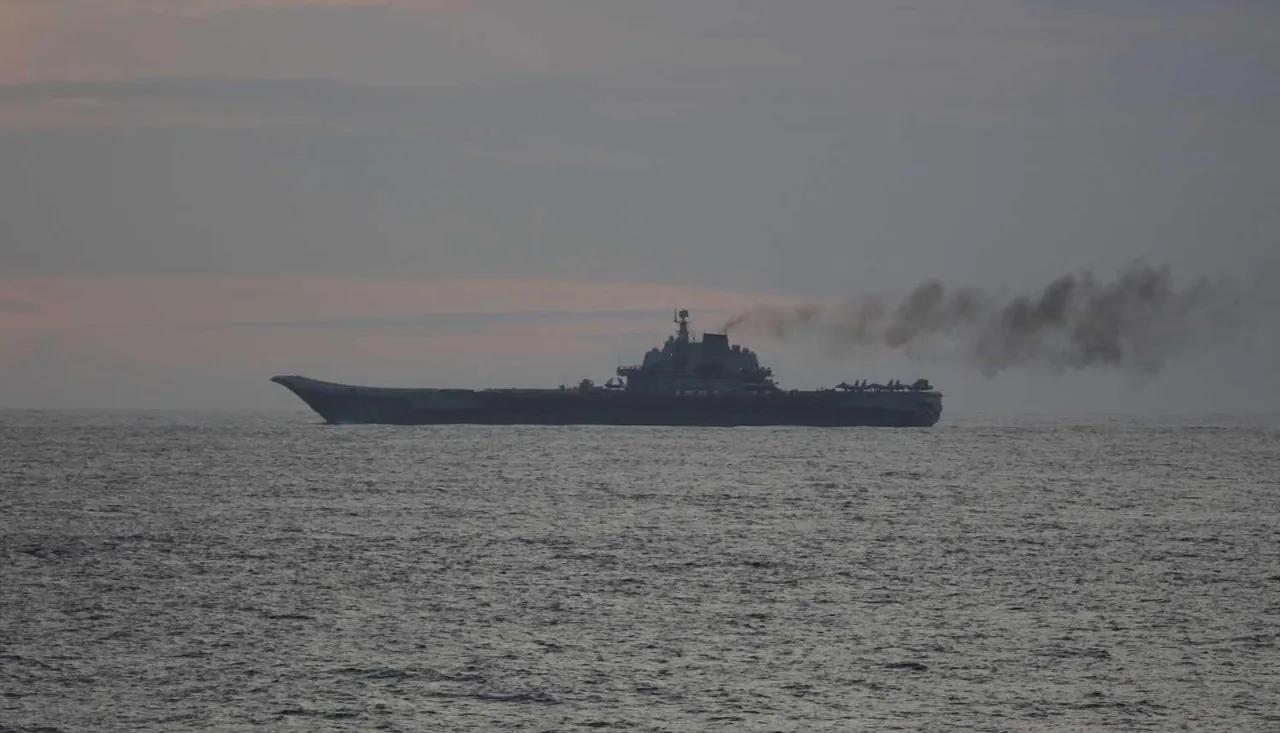
The exception, according to CSIS, was the Philippine Sea, where the carrier Liaoning's strike group operated alongside three naval task forces drawn from the Eastern, Southern and Northern Theater Commands. The four groups comprised at least 16 PLA Navy ships, with five China Coast Guard vessels operating nearby. The authors called it the first time all three theatre commands, together with a carrier group, had carried out sustained blue-water operations beyond the first island chain.
The report noted that Japan's defence ministry had confirmed for the first time that a China Coast Guard ship sailed with PLA Navy warships through the Osumi Strait into the Pacific, on 27 October. Japan's Joint Staff counted 20 distinct Chinese navy ships and one coast guard ship passing through the Miyako and Osumi straits between 13 October and 12 November, more than during the Liaoning's May-June deployment but below the record 23 seen in December 2024.
Fewer warships, more official ships near Taiwan
In the waters around Taiwan, CSIS found that the Chinese naval presence dipped slightly in October. Taiwan's defence ministry recorded 198 PLA Navy vessels that month, an average of 6.4 a day, against roughly seven a day earlier in 2026. By contrast, Chinese government official ships, a category that includes coast guard and research vessels, reached a record 165 in October.
Between 1 June and 12 November, Taiwan's ministry logged 713 official ships around the island, an average of 4.3 a day, compared with 571 over the previous two years combined, the report said. Taiwan's Coast Guard Administration separately reported 10 incursions by Chinese government vessels in October: four at Kinmen, three at Pratas and three near Taiwan's main island.
A rehearsal for fighting on two fronts
The authors warned against giving Beijing too much credit by treating the build-up as one highly coordinated operation. But they argued that in a Taiwan conflict China would probably have to act against the island while also trying to stop foreign forces from intervening, which requires naval forces operating well beyond Taiwan, possibly including a carrier group to the southeast of the island. The autumn deployments, they said, let the PLA practise that kind of spread.
CSIS also cautioned that Beijing may see the operations as a success, which could encourage more coordinated but unnamed military activities in the future. Separately, the report found little support for a claim by a Taiwanese source that China test-fired an intercontinental ballistic missile from a submarine in the Yellow Sea during the period, noting that no other source had corroborated it.
Sources
More in Cross-Strait
Taiwan warns a Chinese rocket due to launch from Xichang this week will cross its air defence zone
Citing US aviation data, Taiwan's defence ministry says the carrier rocket will head for the western Pacific through its ADIZ, as PLA drones looped round the south.
TaiwanDefence · 1d ago · 2 min read
China resumes combat patrols near Taiwan after the APEC summit, sending 15 aircraft over the median line
Fifteen of 21 Chinese military aircraft crossed the Strait's median line on 21 November in a joint combat readiness patrol, ending a quiet spell in the air around Taiwan.
TaiwanDefence · 4d ago · 2 min read
Four Chinese balloons cross the Taiwan Strait median line, with some drifting over Taiwan itself
Taiwan's defence ministry tracked the balloons on 19 November alongside eight PLA aircraft sorties, six of which crossed the median line.
TaiwanDefence · 5d ago · 2 min read
Discussion (0)
Comments are not currently available.