
South Korea seeks another airport for US wartime reinforcements as Gwangju base makes way for chip fabs
Defence minister Kang Shin-chul says Seoul and Washington are discussing a reserve airport to take over Gwangju's role as a landing point for US troops and supplies in a war.
TAIPEI —
South Korea is discussing with the United States which airport could take over the wartime role of Gwangju Air Base as a landing point for American reinforcements, Defence Minister Kang Shin-chul told lawmakers on 26 October. The base is due to be vacated so that its site can host a semiconductor cluster.
Speaking at the National Assembly defence committee's final annual audit of the ministry, Kang said the two sides were talking about using a reserve airport as the aerial port of debarkation in place of Gwangju. Asked by People Power Party lawmaker Lim Jong-deuk whether a reserve airport had been chosen, he said only that discussions were under way, indicating no decision yet.
Kang said the issue had a working-level side but also parts that had to be settled from the top down, and that he was handling it personally. The head of the ministry's military airport relocation office told the committee that officials meet their US counterparts often in a special bilateral subcommittee, but did not say how many times the move had been discussed.
Gwangju Air Base is one of the airports through which US troops, weapons, equipment and supplies would flow into the Korean Peninsula in a contingency, under the deployment schedule for American reinforcements, according to Yonhap and the Herald Business. Yonhap's English service said it is one of five collocated operating bases, air logistics hubs set up to receive US personnel and equipment in a crisis. In peacetime the South Korean and US air forces both use it, and part of the base is land provided to the US side under the status of forces agreement.
The government picked the base as the site of a semiconductor cluster for the southwestern Honam region and plans to move the military airport to Muan. Samsung Electronics and SK Hynix are to build four chip fabrication plants there, the Herald Business reported. Yonhap said talks with the US side, which must be consulted because the base is both a landing airport and a jointly operated facility, had reportedly made no concrete progress.
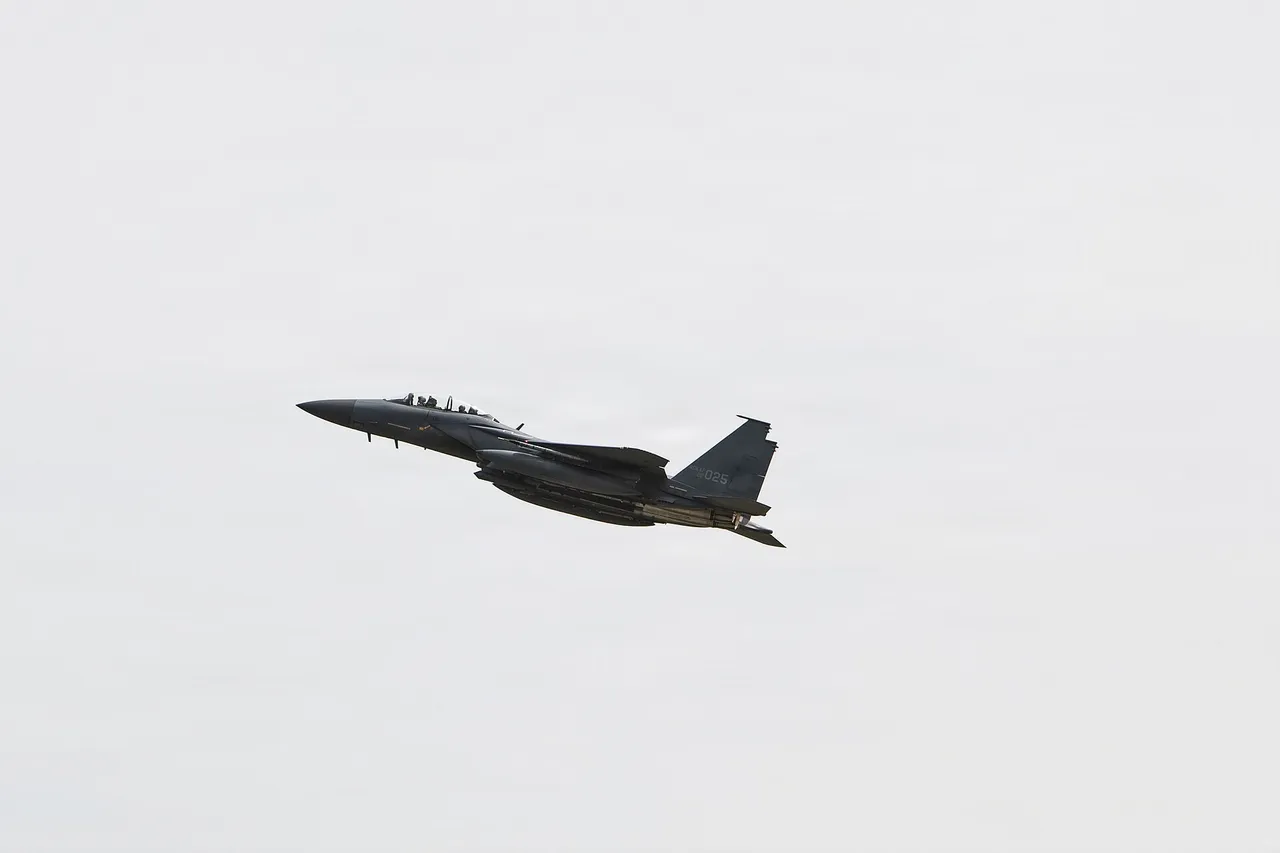
Seoul's plan is to clear the base by mid-2028 at the latest. President Lee Jae Myung said on 29 September that completing the temporary relocation by then would be too late and ordered officials to see how far it could be brought forward. The air force has said it will move two T-50 advanced trainer squadrons to Yecheon and a TA-50 light attack squadron to Seosan, while the Herald Business said some functions at Yecheon would in turn shift to Jungwon air base in Chungju.
Lim also pointed to continued spending on the US side of the base. Citing an annual report by the US Army Corps of Engineers Far East District, he said the ministry had contracted 58.2 billion won of facility work this year, with three more projects planned for 2027, and asked whether that contradicted the push to leave sooner. Kang replied that US forces keep investing until the day before they withdraw, suggesting the works would not hold up the move.
The question of who answers for the move has also surfaced elsewhere in the National Assembly. The Herald Business said Trade, Industry and Energy Minister Kim Jung-kwan told a separate committee on 22 October that he had not been aware of the construction work and that the defence ministry was responsible for consulting US Forces Korea on the relocation.
At the same audit, Kang said Seoul and Washington were closely coordinating on completing the certification of South Korea's full operational capability and on setting a target year for the transfer of wartime operational control, which the allies are expected to discuss at their annual Security Consultative Meeting in Washington in December.
Sources
More in Indo-Pacific
Japan widens its emergency consultation network with like-minded defence partners
Tokyo is speeding up bilateral frameworks to consult Australia, France, Germany and the Philippines in a crisis, and plans to write them into its new security strategy.
TaiwanDefence · 2h ago · 3 min read
Philippines in talks on visiting forces pacts with three or four more countries, Teodoro says
The defence secretary wants more troop-status agreements with like-minded partners in Asia and Europe, and says the 2012 phased modernisation plan should go.
TaiwanDefence · 5h ago · 2 min read
Malaysia's first two FA-50M light combat jets are due on Friday, defence minister says
Khaled Nordin told parliament the South Korean-built jets will be based at Kuantan and Labuan, the first of 18 aircraft due by March 2028.
TaiwanDefence · 8h ago · 2 min read
Discussion (0)
Comments are not currently available.