
South Korea's military destroys two more North Korean land mines washed onto Ganghwa Island
Coastal patrols found an anti-personnel mine and a wooden-box mine within hours, taking discoveries in the border county to about 20 in three months.
TAIPEI —
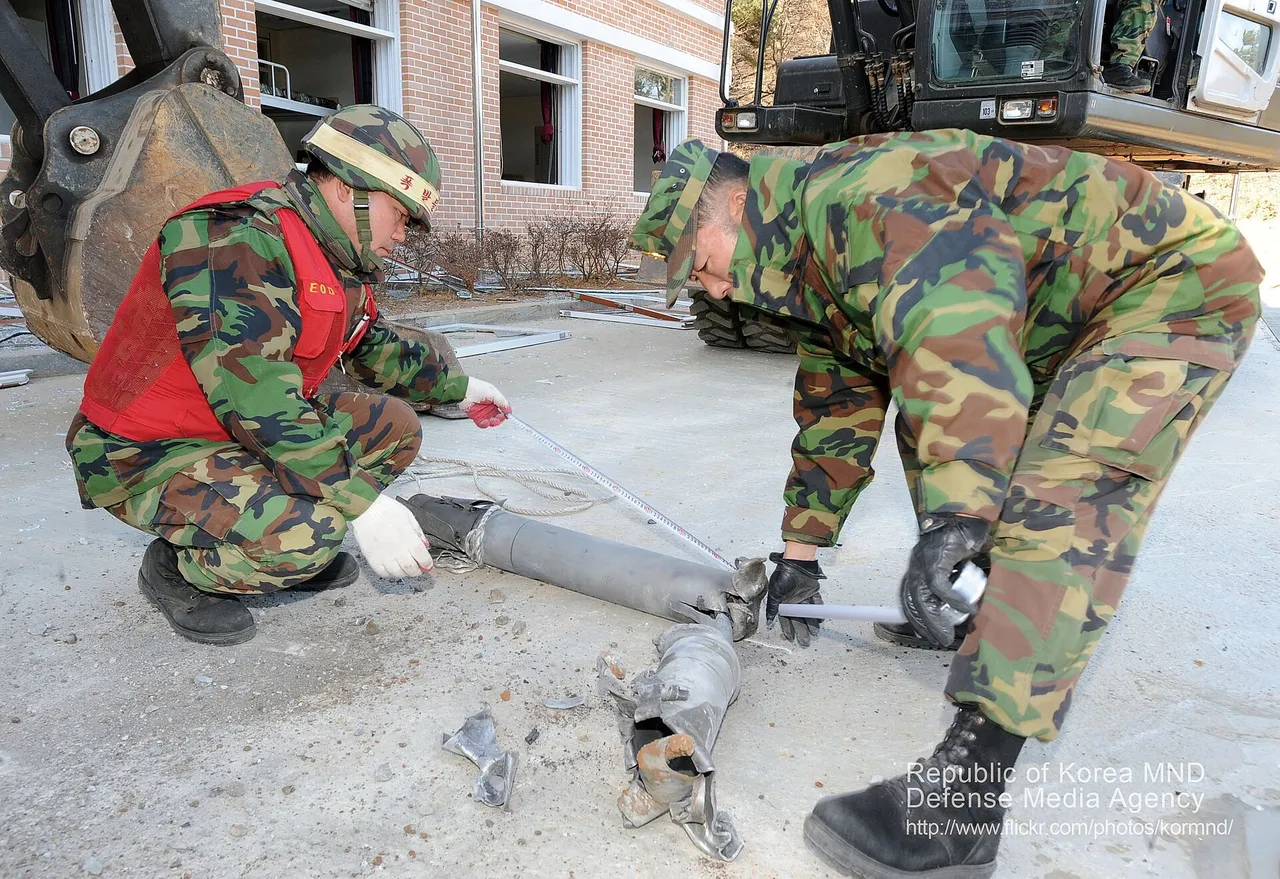
South Korea's 2nd Marine Division found two land mines believed to have drifted down from North Korea along the coast of Ganghwa Island on 10 October and destroyed both in controlled detonations, the division said. No one was hurt and no property was damaged.
Marines on a coastal search patrol spotted a circular anti-personnel mine near Eunggujit beach on Jumun Island, part of Ganghwa County, at about 7:40 a.m. local time. An explosive ordnance disposal team was called out and blew it up on the spot at about 10 a.m., according to Incheon Ilbo.
At around 9:50 a.m. the military received a report of a suspicious object in the water near Odudondae, an old coastal fort on the Yeomha channel in Bureun-myeon. The disposal team finished destroying it at about 12:10 p.m., and its own examination concluded that it was a North Korean wooden-box mine.
Military authorities believe the mines were carried south by summer floods in North Korea and are looking into exactly how they reached the coast, Kyeonggi Ilbo reported. The division said it would keep up coastal patrols at sunrise and sunset every day in case more turn up. A division official urged residents and visitors to stay out of hazardous areas and not to touch wooden or plastic boxes or other suspicious objects, but to report them to the police or a military unit at once.
A steady stream since summer
The two finds came two days after another anti-personnel mine was discovered near Daebinchang beach on Jumun Island on 8 October and destroyed by a Marine Corps disposal team. That was the first discovery on Ganghwa's islands since 15 August. In July and August, 17 mines, including wooden-box and anti-personnel types, were found in succession in the county, according to the military.
About 20 mines have now turned up on the county's shoreline in roughly three months, Seoul Economic Daily reported, and the county has put up warning banners at coastal tourist sites and harbours. Ganghwa sits just northwest of Incheon at the mouth of the Han River estuary and is one of the closest South Korean islands to the Military Demarcation Line, Yonhap has noted, and heavy rain often washes North Korean mines across the border.
Dispute over the DMZ blast
The latest discoveries came amid friction between the two Koreas over a mine explosion inside the Demilitarized Zone on 21 September that wounded three South Korean soldiers. South Korean military authorities concluded that North Korean troops had deliberately planted that mine south of the Military Demarcation Line.
At the First Committee of the UN General Assembly on 8 October, Seoul described the mine-laying as a violation of the Armistice Agreement and called for an official apology. North Korea accused the South of shifting responsibility and cited Unification Minister Chung Dong-young's remark that the incident could not be specifically attributed to a North Korean attack. The opposition People Power Party said on 10 October that the minister had handed Pyongyang grounds for its claims and called on President Lee Jae-myung to dismiss him.
Sources
More in Indo-Pacific
US presses Seoul on intelligence standards as North Korea sharing reportedly narrows to missiles
A senior US official urged South Korea to uphold alliance rules on intelligence, as a report said US military data on the North now covers only missiles.
TaiwanDefence · 3m ago · 3 min read

Japan's defence minister protests to top US commander Paparo over Okinawa Marine murder case
Shinjiro Koizumi demanded full cooperation with police, tighter discipline and steps to prevent a repeat when he met Adm. Samuel Paparo in Tokyo.
TaiwanDefence · 1h ago · 2 min read
Japan has signed a contract to buy Ukrainian SkyFall interceptor drones, defence minister says
Shinjiro Koizumi said Tokyo is pushing for early delivery and that Japan has much to learn from the speed at which Ukraine develops new military drones.
TaiwanDefence · 4h ago · 2 min read
Discussion (0)
Comments are not currently available.