
Lai visits Taiwan army's week-long Coordination 115 drill as future unit leaders train on simulators
The president watched officers and NCOs in a brigade-sized command exercise in Kaohsiung use simulation and drone trainers, but said judgement still wins battles.

TAIPEI —
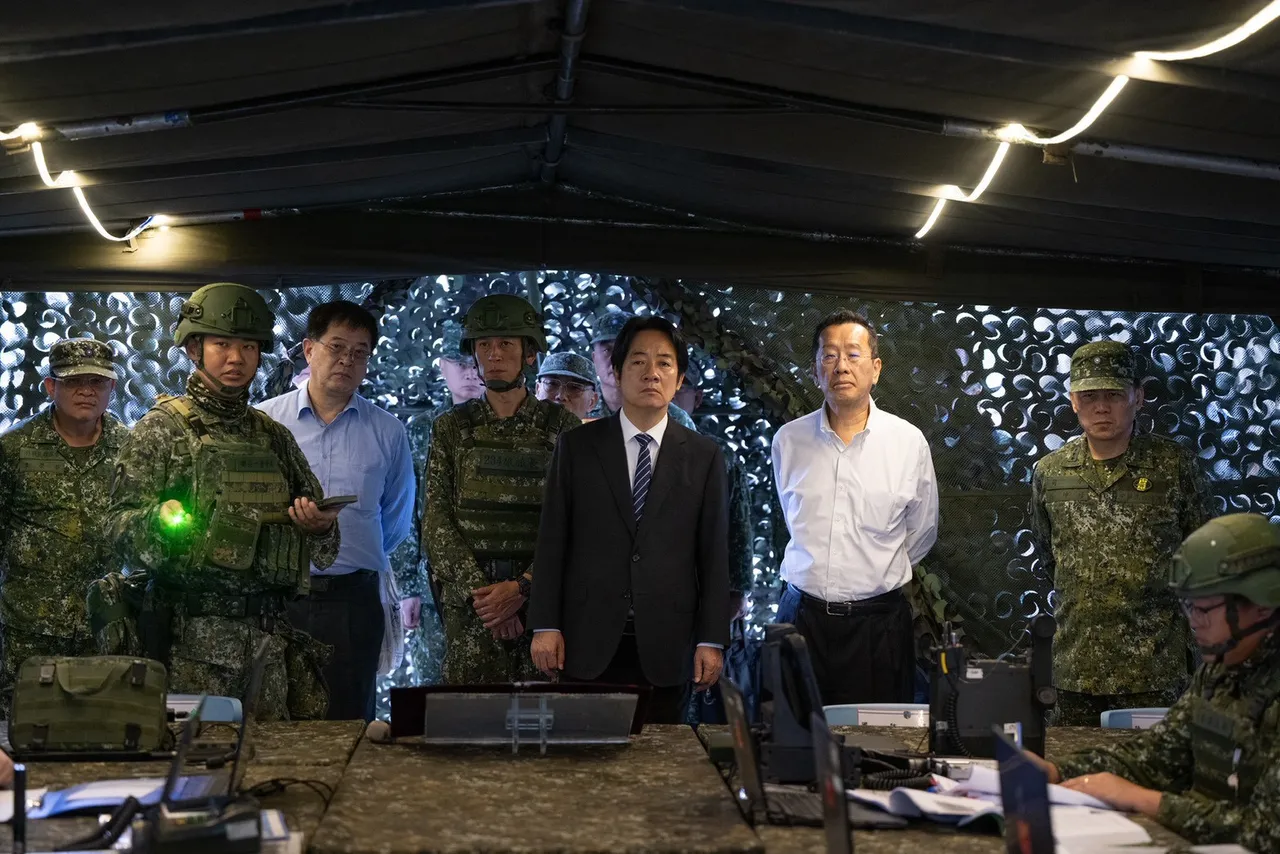
President Lai Ching-te travelled to Kaohsiung on the morning of 24 November to inspect the army's annual Coordination 115 exercise, a seven-day command and tactics drill for officers and non-commissioned officers who are about to finish their branch career courses. Defence Minister Wellington Koo and army commander Lu Kun-hsiu accompanied him, the Liberty Times reported.
According to the Presidential Office account carried by the Central News Agency, Lai first received a briefing at the army's exercise control headquarters. He then went to the command and operations centre of the exercise's Brigade A1, where he watched a rapid decision-making and synchronisation process (RDSP) drill and saw a live-troop engagement simulation system and a combat power calculation system at work. He also handed out a meal bonus to the participating troops.
Two forces built on a real brigade
Radio Taiwan International said the army command organises the exercise to test what graduating students from the officer and NCO regular courses of each branch have learned. The drill uses an existing combined-arms brigade as its framework, with the students split into two opposing forces, A and B, for cross-branch staff work and tactical play.
The goal, the broadcaster said, is for company and battalion leaders heading back to frontline units to understand what the other branches can and cannot do, and to put joint operations command procedures into practice. Lai said the scenarios ran from defensive operations to a north-versus-south attack and defence contest, with wargaming that forced students to reach decisions in limited time and adjust plans as the enemy situation and battle changed.
Simulators speed decisions, not replace them
Lai praised what he called a technology-driven approach to training. The exercise used joint confrontation and tactical simulation systems, a unit situational-awareness application suite, a combat power calculation system and drone simulators, which he said bring training closer to real battlefield conditions, give a live picture of the situation and greatly speed up commanders' decisions.
He added a caveat. Technology is only a supporting tool, Lai said, and what still decides a battle is the ability of officers to keep calm, judge the situation and adapt. He urged the students to master traditional basic tactics and command procedures while making use of digital equipment.
Lai noted that the coordination exercise is a key stage of the regular course, and that its graduates will return to different units to take up command and staff posts as the backbone of future battalions and brigades. He asked them to bring the tactical thinking and spirit of cooperation they had practised back to their units.
Citing rapid regional change and the continued expansion of authoritarianism, Lai repeated that peace must rest on strength and that only steady improvement in combat readiness can keep Taiwan secure and contribute to stability in the Indo-Pacific. He said the government would keep pushing defence reform and improving equipment and training conditions for the armed forces.
Sources
More in Army
Taiwan's army buys obstacle trailers, mine detectors and demolition kits to slow a landing force
A NT$46.2 million award covers 24 wire-laying trailers, 60 mine detectors and 120 demolition kits for engineers defending beaches, roads and towns.
TaiwanDefence · 1d ago · 2 min read
Taiwan's army drone command signs its first university pact to build and repair drones in the field
The Army Unmanned Systems Training Command and National Formosa University will study mobile drone workshops, production trucks and field repair vans.
TaiwanDefence · 5d ago · 2 min read
Taiwan's army adds night attacks and paired-drone strikes to its four-day drone evaluation
The army's second drone test of the year runs from 24 to 27 November in Tainan and moves from basic flying skills to tactics, as new drone battalions and companies compete.
TaiwanDefence · 14 Nov 2026 · 3 min read
Discussion (0)
Comments are not currently available.