
ANALYSIS
Why North Korea's big new destroyers, tracked in November 2026, still need Russia and cannot fight alone
Imagery published in November 2026 shows two 5,000-ton destroyers settling in and yards growing, but the ships lack air and submarine cover and lean on Russia.

TAIPEI —
This article is an original Taiwan Defence analysis based on the cited public sources. It distinguishes reported facts from analytical judgments and does not represent original field reporting.
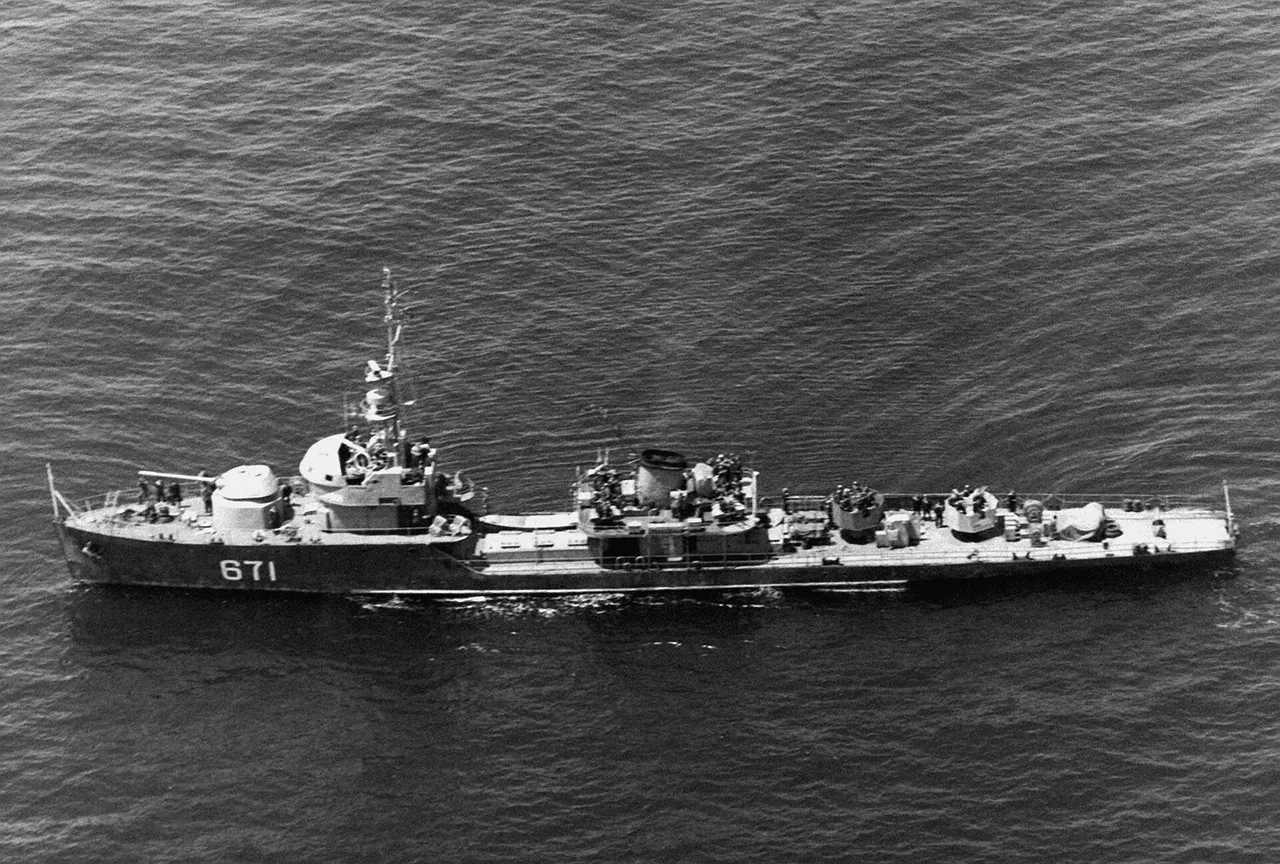
Satellite imagery published by Daily NK on 23 November 2026 shows North Korea's two 5,000-ton Choe Hyon-class destroyers settling in on opposite coasts. Imagery from 9 October shows the Kang Kon berthed at a submarine pier at the Mayang Island naval base off Sinpo, while the 144-metre Choe Hyon remains at a general-purpose pier in Nampo for outfitting and trials. The same day, Radio Free Asia reported that about 20 North Korean workers had toured the museum of Russia's Amur Shipyard, which built more than 50 Soviet nuclear submarines.
Taken together, the reports show a navy adding bigger hulls faster than the means to protect them. The destroyers give Pyongyang another way to put nuclear-capable missiles to sea, not a fleet that could survive a fight with South Korean, Japanese or US forces, and the programme's pace looks tied to outside help, above all from Russia.
What the imagery shows
Daily NK's analyst wrote that the Kang Kon left the Chongjin yard in late April 2026 for Mayang Island, the East Sea Fleet's main submarine base. The ship partly capsized at its first launch in May 2025 and was repaired in a dry dock at Rajin. New imagery shows crews building the walls of a dry dock at Chongjin, which had no such facility in 2025, so that the yard can build and repair warships of 5,000 tons or more.
North Korea commissioned the Choe Hyon on 23 June and the Kang Kon on 6 September 2026, VOA reported. Experts cited by VOA count at least 74 vertical launch cells on the Choe Hyon, and both ships have been used for strategic cruise missile test launches, the Kang Kon in July. RFA said its own imagery shows hulls for a third and a fourth destroyer being assembled at Nampo and Chongjin.
Kim Jong Un has set large goals. At a party congress in February he ordered the navy's surface and underwater forces to be armed with nuclear weapons, according to RFA. In March he called for two surface combatants of this class or larger to be built every year. These are Pyongyang's stated aims, not demonstrated capabilities.
Big hulls, thin cover
A Japan Maritime Self-Defense Force officer told RFA that large surface ships cannot operate alone because they are exposed to attack from the air and from under the sea. Protecting them needs layers of defence, including airborne early warning and fighter cover. North Korea test-flew an early warning aircraft in March 2025, but South Korea's Joint Chiefs of Staff judged it a limited real threat at the time.
The same officer judged the destroyers' anti-submarine capability to be low. He said the waters east of the peninsula, with complex currents and salinity, make submarines very hard to find without patrol aircraft such as the P-3C or P-8, and that stealthy shaping would not stop satellites and high-altitude drones from spotting the ships quickly. Japanese defence officials put the cost of one such destroyer at no less than 50 billion yen, about North Korea's export earnings for 2024.
Raw numbers flatter the North. VOA cited South Korea's 2022 defence white paper as counting about 420 North Korean combat vessels against about 90 South Korean ones, but most of the North's ships are small craft built in the 1960s and 1970s. South Korea operates 12 destroyers, including Aegis ships of 7,600 and 8,200 tons, plus 17 frigates.
The Russian thread
The JMSDF officer told RFA that the destroyers appear to pair a hull resembling China's Luyang III destroyers with a radar layout resembling Russia's Admiral Gorshkov-class frigates, and guessed that the radars and vertical launchers came from Russia. The Amur Shipyard tour adds to that picture. RFA said the visit was announced on the yard's official channel on the MAX messenger and reported by the Russian shipbuilding outlet Korabel.ru on 20 November, though no date was given and the yard did not say where the workers are employed.
The United States sanctioned the Amur yard in April 2022 and the European Union added it to its asset-freeze list on 12 October 2026, RFA reported. A September report by the 11-nation Multilateral Sanctions Monitoring Team said up to 1,000 North Korean workers were employed at Russian shipyards and arms plants and named the Khabarovsk region as a hub. In May, 38 North judged that the 8,700-ton nuclear submarine North Korea says it is building most resembles the Soviet Akula class, which the Amur yard also built.
Analysts differ on how far Moscow will go. Joseph Bermudez of CSIS told RFA that meeting Kim's building plan would be hard and would depend on what technology Russia and China supply. Kim Min-seok, a former South Korean defence ministry spokesman, told VOA that Russia could provide engines for surface ships but doubted it would hand over a submarine reactor.
What to watch
The near-term test is sustained operations, not ceremonies. Watch whether the Choe Hyon leaves Nampo for a West Sea Fleet base, whether the Chongjin dry dock is finished, and whether more evidence emerges of North Korean labour or training inside Russian naval yards. Without air and anti-submarine cover, those ships would remain high-value targets rather than a force able to contest the seas around Korea.
Sources
More in Analysis
Why China's fourth carrier, seen taking shape in November 2026, is about endurance more than the strait
Imagery from 12 November 2026 shows the Type 004 hull filling out at Dalian. Nuclear power would let China keep a big carrier at sea far from its coast.
TaiwanDefence · 8h ago · 4 min read
Why China's third new nuclear submarine, seen in November 2026, is aimed at Taiwan's helpers
Satellite images from 6 November 2026 show a third Type 095 boat at Huludao; its range and missiles point at US forces sailing to Taiwan's aid.
TaiwanDefence · 1d ago · 3 min read
Why the Philippines' November 2026 talks on Indian missiles hinge on how Manila pays
Reports from 18 to 22 November 2026 say Manila wants more BrahMos, Akash and Pinaka, but India's 15% advance and borrowing limits stand in the way.
TaiwanDefence · 1d ago · 4 min read
Discussion (0)
Comments are not currently available.