
ANALYSIS
Why China's third new nuclear submarine, seen in November 2026, is aimed at Taiwan's helpers
Satellite images from 6 November 2026 show a third Type 095 boat at Huludao; its range and missiles point at US forces sailing to Taiwan's aid.
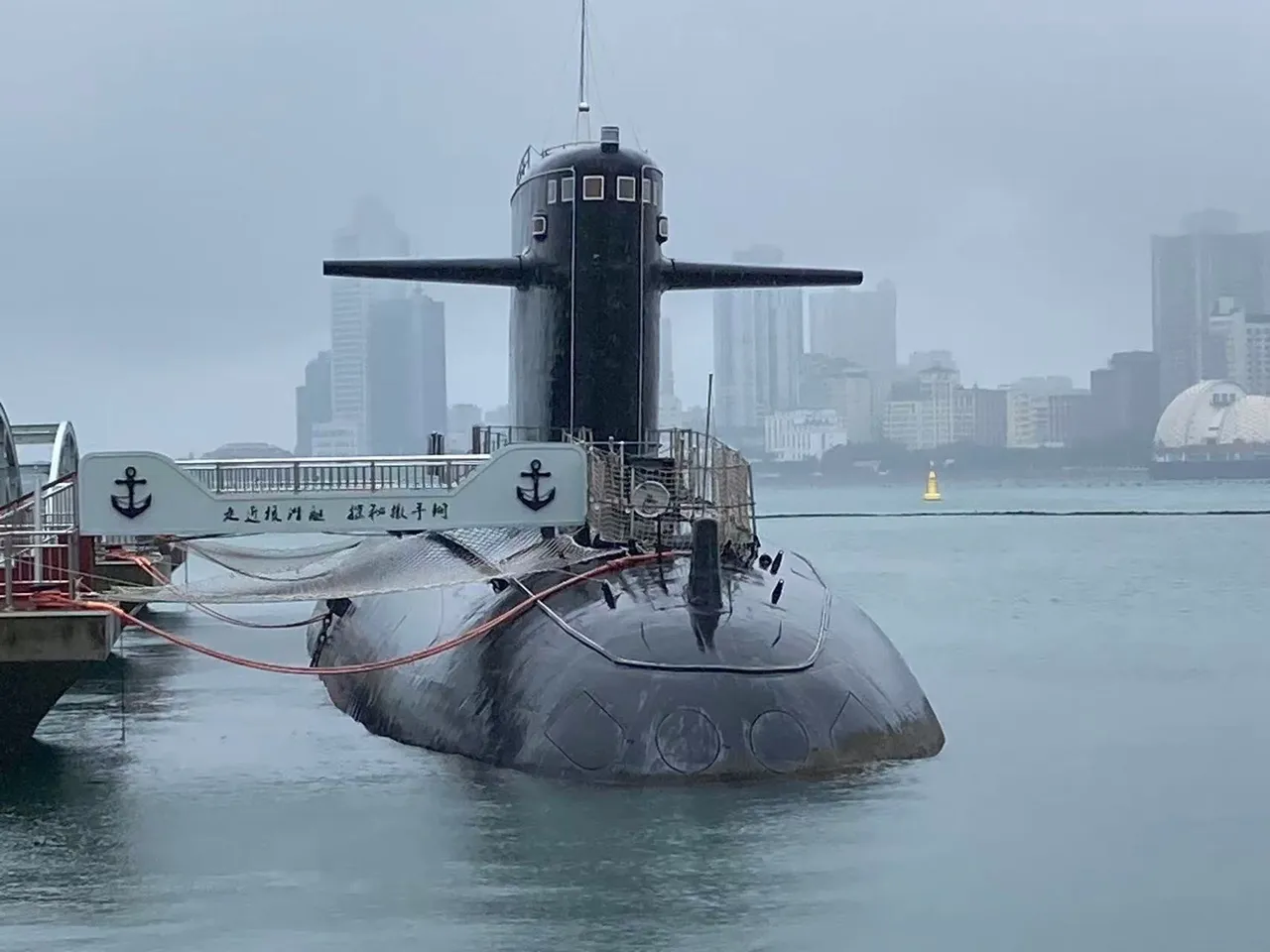

TAIPEI —
This article is an original Taiwan Defence analysis based on the cited public sources. It distinguishes reported facts from analytical judgments and does not represent original field reporting.
Commercial satellite imagery taken on 6 November 2026 and published by Janes on 17 November shows a nuclear-powered submarine in dry dock at the Huludao shipyard in north-east China, apparently being readied for launch. Janes assessed it as likely the third 122-metre boat of the new class that Western analysts call the Type 095, with an estimated displacement of 10,000 to 11,000 tonnes. Two other submarines linked to the programme were seen beside a nearby pier in imagery from the same day.
On 20 November the Institute for the Study of War and the American Enterprise Institute, which label the design Type 09V, described the boat as a nuclear-powered guided-missile submarine. They said it would bring China's fleet of such submarines to between nine and 11 hulls once it is commissioned. The Taipei Times reported their assessment on 22 November.
The hull count matters less for Taiwan than what the class is designed to do. Its features point to a mission beyond the Taiwan Strait itself: holding at risk the American and allied forces that would try to reach the island in a crisis. How serious that threat becomes depends on something satellite pictures cannot show, namely how quickly China turns launched hulls into working boats.
What the imagery shows
Like the earlier boats, the new submarine has a ducted pumpjet propulsor and four stern planes in an X-shaped arrangement, Janes said, and someone appears to have tried to hide the stern planes under a shroud. Janes first reported in February 2026 that China seemed to be fitting out the first boat of the class at Huludao, a vessel about 107 metres long. Defence Matters noted on 18 November that Beijing has not confirmed the designation, specifications or expected service entry, so all figures remain estimates drawn from imagery.
ISW and AEI said the design has room for an unknown number of vertical launch cells, which would let it strike ships and land targets from standoff range, and that the pumpjet is likely to make it quieter. They also cited Rear Admiral Chris Cavanaugh, who commands US Pacific Fleet submarine forces, as saying on 13 November that China could build 20 to 40 nuclear-powered submarines over the next decade.
Why it points away from the strait
Most of China's current submarine fleet is conventionally powered, which limits range and speed and makes the boats easier to detect in open ocean, ISW and AEI noted. They assessed that nuclear boats like this one would let the Chinese navy operate beyond the first and second island chains and would suit a strategy of attacking sea lines of communication. They added that such submarines could help isolate Taiwan from outside intervention, for example by adding missiles to a salvo against a US task force operating between Taiwan and Guam.
That is the core of the case. Conventional submarines already pose a dense threat inside the strait and close to China's coast. A quieter, missile-armed nuclear boat adds most where China is weakest today, far out in the Philippine Sea, where US carriers and supply ships would gather before moving toward Taiwan. In that sense the class is aimed at Taiwan's would-be helpers more than at Taiwan's own navy.
The gap between launch and capability
None of the sources treats the class as operational. ISW and AEI said the Type 09V boats already launched did not appear to be active at the time of writing, and judged that the US Navy likely retains critical advantages in undersea warfare. Defence Matters said the programme still needs extensive testing, crew training, maintenance arrangements and evaluation, and that real quietness depends on reactor design, machinery vibration and build quality, which imagery cannot reveal.
Defence Matters also set the build pace against American output, citing an International Institute for Strategic Studies finding that China launched more nuclear submarines than the United States by number and tonnage between 2021 and 2025. Janes, for its part, has now tracked three boats of the class at one yard within about nine months, from the first fitting-out reported in February to the dry-dock imagery of November.
For Taiwan, then, the third hull is an early warning rather than an immediate shift in the balance. The signals to watch are sea trials of the first boat and any sign of patrols beyond the island chains, the point at which the class would start to complicate US plans for reinforcing the island. Until then its main effect falls on Taiwan's partners, which face growing pressure to add anti-submarine aircraft, sensors and attack submarines of their own.
Sources
More in Analysis
Why the Philippines' November 2026 talks on Indian missiles hinge on how Manila pays
Reports from 18 to 22 November 2026 say Manila wants more BrahMos, Akash and Pinaka, but India's 15% advance and borrowing limits stand in the way.
TaiwanDefence · 2h ago · 4 min read
Why the Liaoning's November 2026 Pacific stint rests on oilers that must run Japan's watched straits
An 18 November 2026 tally of eight Chinese supply-ship crossings near Japan shows how the Liaoning stayed at sea, and where that lifeline is exposed.
TaiwanDefence · 9h ago · 4 min read
Why Taiwan's coast guard drones, revealed in November 2026, hinge on a OneWeb link rather than Starlink
A 21 November 2026 report says Taiwan's coast guard drones and drone boats send long-range video over OneWeb, because Starlink is still not licensed there.
TaiwanDefence · 22h ago · 4 min read
Discussion (0)
Comments are not currently available.