
ANALYSIS
Why the Philippines' November 2026 talks on Indian missiles hinge on how Manila pays
Reports from 18 to 22 November 2026 say Manila wants more BrahMos, Akash and Pinaka, but India's 15% advance and borrowing limits stand in the way.

TAIPEI —
This article is an original Taiwan Defence analysis based on the cited public sources. It distinguishes reported facts from analytical judgments and does not represent original field reporting.
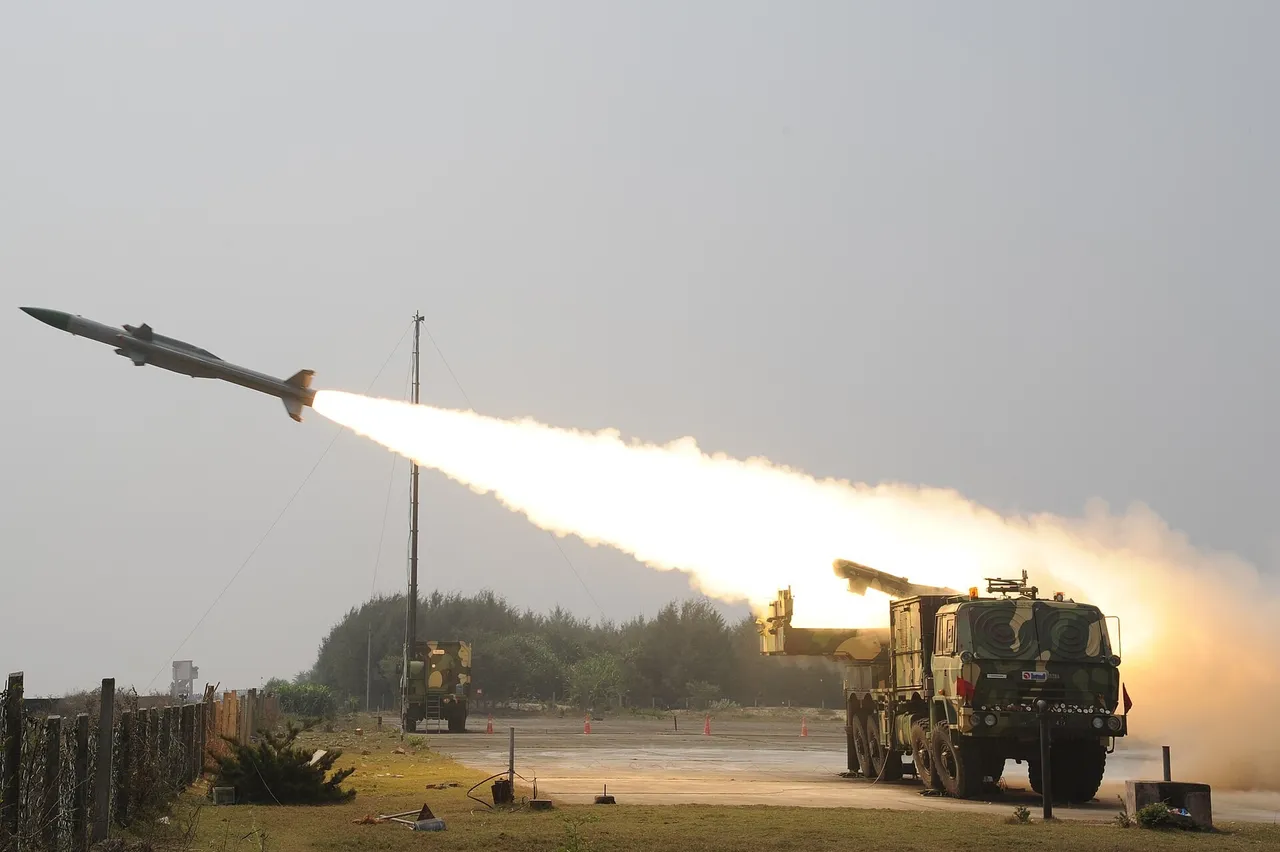
On 22 November 2026 the Manila Times reported that the Armed Forces of the Philippines would move shore-based anti-ship missiles to Bolinao in Pangasinan province for its Dagit-Pa joint exercise, as Manila weighs a far larger list of Indian weapons. According to Firstpost, which first reported the talks on 18 November, the Philippines is exploring at least six more batteries of the BrahMos cruise missile, more than five regiments of Akash air-defence systems and several batteries of Pinaka rocket launchers. Firstpost said discussions on several of the proposals had reached advanced stages.
The list is ambitious, but the reporting points to money rather than military fit as the main obstacle. Unless Manila finds a way to pay that suits both Indian practice and its own legal limits, much of it is likely to stay at the discussion stage.
What Manila already operates
The Philippine Marine Corps operates BrahMos under a 375-million-dollar contract for three shore-based batteries signed in January 2022, which made the Philippines the missile's first foreign customer. The first battery arrived in April 2024. During the Balikatan exercises with the United States earlier in 2026, marines rehearsed BrahMos targeting and firing procedures without launching a missile.
The current exercise, the 10th Dagit-Pa, runs from 17 to 27 November across northern Luzon, the Western Command area and the capital region. AFP spokeswoman Colonel Francel Margareth Padilla said the move to Bolinao would support the maritime strike part of the drills, which tests how land-based missiles work with ships and aircraft. The AFP has not named the system involved, although the Manila Times said reports of the deployment followed the sighting of what appeared to be a BrahMos shore-based launcher in the country.
Why the wish list hangs together
Firstpost said Manila had already received a reply from BrahMos Aerospace to a request for information on more batteries, and that India had offered to study fitting the missile to Philippine warships. Manila has not decided on a naval version, because its ships carry many Western-origin weapons and sensors and integration would need to be examined. The Philippines has also raised concerns about the weight of the land launchers in places where terrain and roads are poor.
Akash has been presented to the Philippine army, navy and air force, and a separate proposal has gone to the marines, whose requirements include air defence for strategically important military assets such as BrahMos deployments. The Philippine Air Force, however, is understood to want systems with a longer engagement range, according to both Firstpost and idrw. The Pinaka multiple rocket launcher is being discussed for the army.
On paper the package is coherent: more anti-ship missiles to hold sea approaches at risk, a medium-range air-defence layer to protect them, and rocket artillery for the army. The air force's reservation suggests Akash would cover only part of the country's air-defence need, which makes the marine proposal the more plausible first order for that system.
The financing knot
Firstpost reported that the two sides were still discussing financial terms. Under India's usual arrangement, a buyer pays an advance of at least 15 per cent of the contract value at signing, and Manila is seeking more flexible terms because of the size of the commitment. Asked whether an Indian line of credit could be used, sources pointed to constitutional restrictions in the Philippines on foreign borrowing for defence purchases. idrw, reviewing the same reports on 20 November, said financing could become a major issue.
That combination is the crux. A large up-front payment would weigh on any single year's defence spending, while the obvious Indian tool for easing it, concessional credit, is the one that sources say Philippine rules make hard to use. As idrw put it, whether the purchases become formal contracts depends heavily on solving that problem, not on whether the weapons perform.
Smaller steps are moving first
Other parts of the relationship are advancing on cheaper tracks. Indian company MKU is setting up a factory in the Philippines for bulletproof jackets after winning an order worth about 1,400 crore rupees for the Philippine Army, with the final lot to be made locally. India has also offered to explore observation stations that would give Manila access to Indian satellite imagery of surrounding seas, and the two governments are working towards a visiting forces agreement, Firstpost reported.
Those steps need little financing and fit within existing rules, which helps explain why they are moving while the large missile items remain under discussion. The test of the November 2026 reports will be whether Manila and New Delhi can agree a payment structure, such as staged payments or a different credit channel, that clears the 15 per cent hurdle without the borrowing Philippine law restricts. Until then, a follow-on BrahMos order looks the likeliest to move, because it builds on a system the marines already operate and have trained with.
Sources
More in Analysis
Why the Liaoning's November 2026 Pacific stint rests on oilers that must run Japan's watched straits
An 18 November 2026 tally of eight Chinese supply-ship crossings near Japan shows how the Liaoning stayed at sea, and where that lifeline is exposed.
TaiwanDefence · 7h ago · 4 min read
Why Taiwan's coast guard drones, revealed in November 2026, hinge on a OneWeb link rather than Starlink
A 21 November 2026 report says Taiwan's coast guard drones and drone boats send long-range video over OneWeb, because Starlink is still not licensed there.
TaiwanDefence · 21h ago · 4 min read
Why South Korea's lawmakers used the 16 November 2026 budget review to arm KF-21s and fix Apaches
Seoul's defence committee added about 1.4 trillion won to the 2027 budget on 16 November 2026, favouring KF-21 weapons and Apache upkeep over failing projects.
TaiwanDefence · 23h ago · 4 min read
Discussion (0)
Comments are not currently available.