
Taiwan's air force plans a December handover ceremony for its first two MQ-9B drones
The two US-built long-endurance drones, flying from Hualien since September, are to undergo more evaluation before joining the combat-ready force.

TAIPEI —
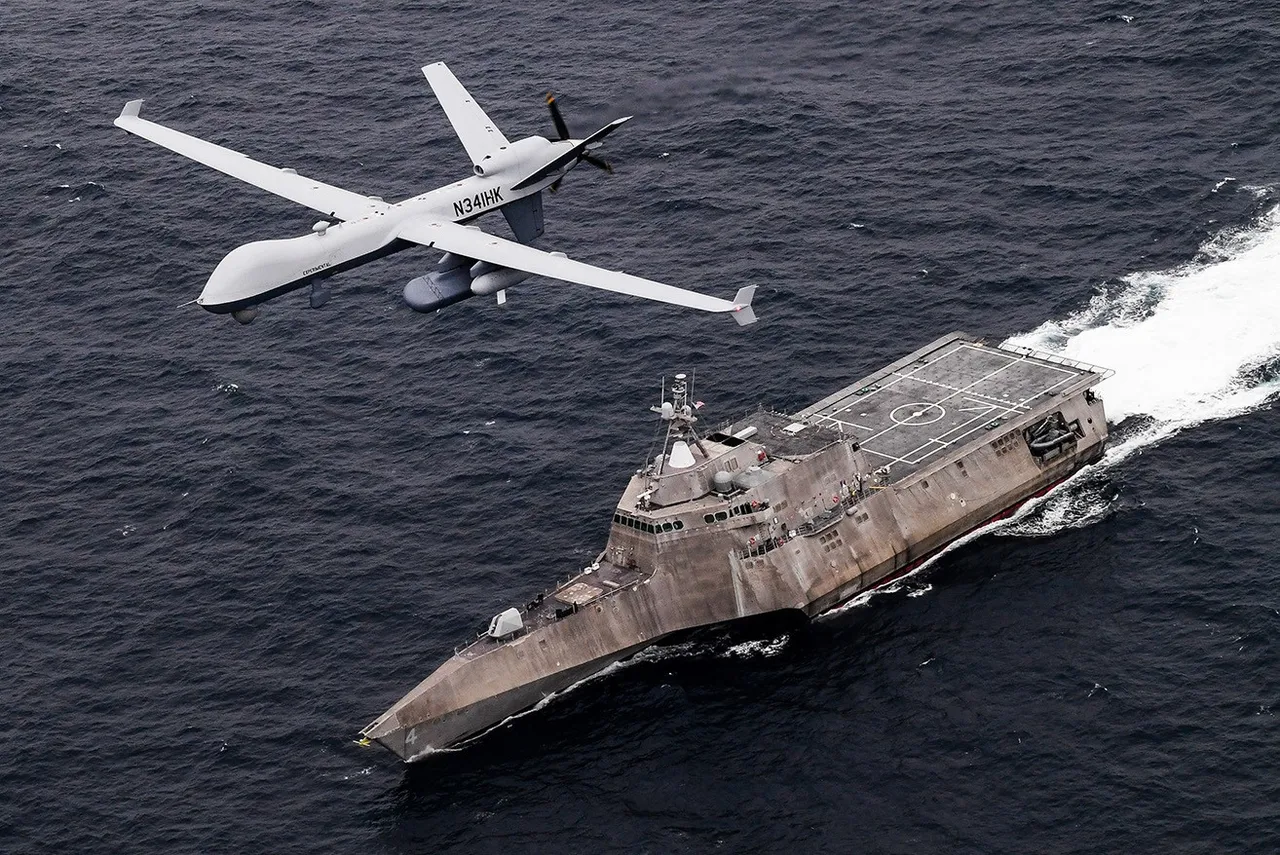
Taiwan's air force plans to hold a formal handover ceremony in December for its first two MQ-9B long-endurance drones and then put them through further evaluation before they join its combat-ready force, the Central News Agency (CNA) reported on 22 November. The Liberty Times reported the same plan later that day. Neither outlet named its sources, and the Ministry of National Defense has not publicly announced a date for the ceremony.
According to CNA, the air force will keep running a series of tests and evaluations after the ceremony. Once those procedures are complete, the two aircraft are expected to be entered into the combat readiness order of battle, with the aim of strengthening surveillance of the seas and airspace around the Taiwan Strait and improving the military's joint intelligence, surveillance and reconnaissance.
From a US handover to Hualien
The air force has budgeted NT$21.7 billion for the years 2022 to 2029 to buy four MQ-9Bs built by General Atomics, together with ground control stations and other equipment. The aircraft are being delivered in two pairs, the first in 2026 and the second in 2027.
The first pair was handed over at a ceremony in the United States on 17 March that was attended by Deputy Defence Minister Hsu Szu-chien and Taiwan's representative in Washington, Alexander Yui. The drones arrived at Kaohsiung port in June and were moved overland to Hualien air base, where the manufacturer and the air force spent about three months assembling and testing them.
They made their first flight in Taiwan from Hualien on 14 September. The United Daily News reported at the time that the aircraft would serve with the 4th squadron of the air force's 12th Tactical Reconnaissance Group at Hualien, and that a radar was already fitted to the airframe in photos released from the test flight.
What the drones are for
The Liberty Times said the MQ-9B can stay airborne for long periods, operate day and night in all weather and use satellite communications. It can carry electro-optical, infrared and radar sensors and send imagery back in real time over a data link.
In its budget documents for 2026, cited by both outlets, the air force said it needed a long-endurance drone system with round-the-clock surveillance and real-time links to track changes in Chinese military forces and movements around Taiwan, and to shorten the time needed to obtain and assess intelligence. CNA added that the budget book also cited the type's long endurance and ability to carry munitions as a way to support combat and deter an enemy.
Su Tzu-yun of the Institute for National Defense and Security Research, a think tank under the defence ministry, told CNA that Taiwan sees the MQ-9B mainly as a battlefield reconnaissance asset rather than a primary strike weapon. He said it could take on high-risk tactical reconnaissance and provide all-weather monitoring during grey-zone pressure from Chinese warships and coast guard vessels, helping to close gaps in maritime surveillance.
A planned high-low mix still incomplete
The Liberty Times noted that the military had planned to pair the MQ-9B with the Teng Yun II, a domestic long-endurance drone developed by the National Chung-Shan Institute of Science and Technology. Under that concept the American aircraft would handle high-altitude, long-duration watch while the Teng Yun II flew medium- and low-altitude reconnaissance, widening the area under surveillance.
The Teng Yun II has completed an endurance test of more than 20 hours and the institute is still developing an electronic warfare version, the paper said, but the number to be bought, its budget and its schedule have not been settled after reports in July that the air force was reassessing the purchase. The medium-sized Rui Yuan II drone has instead been the first to win series production.
The second pair of MQ-9Bs is due to be delivered to Taiwan in 2027.
Sources
More in Air Force
Japan's E-767 radar planes to get new Link 16 terminals under a US contract
A $14.9 million US Air Force award covers datalink terminals for Japan's airborne warning fleet, though the quantity and installation schedule were not disclosed.
TaiwanDefence · 14 Nov 2026 · 3 min read
Satellite images point to China's biggest Red Sword air force exercise in years
Close to 300 PLA aircraft, including J-20 stealth fighters, H-6 bombers and KJ-500 radar planes, have massed at 11 western airbases, a US institute says.
TaiwanDefence · 13 Nov 2026 · 3 min read
Taiwan grounds all 65 Brave Eagle trainers after air force confirms brake failure
The air force told lawmakers a mechanical fault caused the Gangshan runway excursion, the worst of nine brake-related incidents on the jet in three years.
TaiwanDefence · 11 Nov 2026 · 2 min read
Discussion (0)
Comments are not currently available.