
Taiwan says the counter-drone system at Ching Chuan Kang air base will be working by the end of October
Defence minister Wellington Koo told lawmakers the system had not yet been accepted when a drone shut the base for 32 minutes and diverted eight fighters.
TAIPEI —
Taiwan's defence minister, Wellington Koo, told the Legislative Yuan on Tuesday 20 October that the drone defence system at Ching Chuan Kang, the military and civilian airport in Taichung, has now passed acceptance testing and should be able to perform its functions before the end of October. He was answering questions about an unidentified drone that disrupted flights at the base in September, at a time when the system there had not yet been formally accepted.
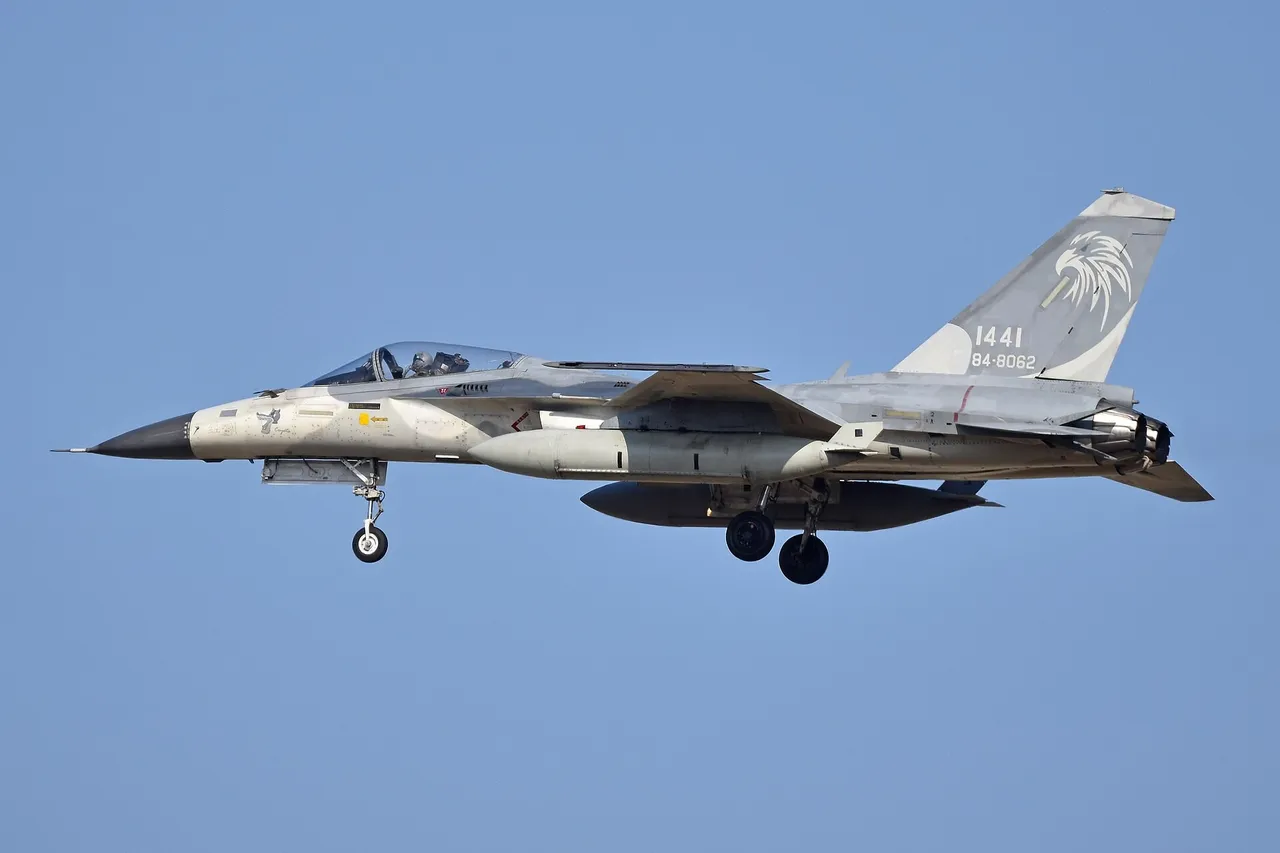
The incident took place on the evening of 8 September. According to the Central News Agency, drone activity was spotted around the airport at 7:37 pm and take-offs and landings were halted until 8:02 pm, affecting two civilian flights and eight military aircraft. Kuomintang legislator Liao Wei-hsiang said the closure lasted 32 minutes and forced eight IDF Ching-kuo fighters flying night training to divert to Hsinchu air base. The case was passed to the Aviation Police Bureau for investigation.
Koo said staff from the Civil Aeronautics Administration's Taichung office had seen signs of a drone outside the airport to the north-west, and the military sent a flight control unit and standby troops to search the area, but no drone was found. Liao said that neither the drone nor its operator has been identified since.
The minister said counter-drone equipment is now installed at Taiwan's military airports. The system, known as UDS, was developed by the National Chung-Shan Institute of Science and Technology. At Taichung, however, acceptance testing did not take place until 14 to 18 September, after the intrusion. Koo said that once re-inspection is complete and the air force has finished installing the system at its other bases, UDS will be able to jam the first two categories of small drones.
Liao based much of his questioning on a report by Taiwan's National Audit Office. He said the air force had commissioned the institute to build the system with a budget of about NT$3.5 billion covering 2022 to 2026, yet the equipment did not cover the 5.17GHz band used by Chinese-made civilian drones. He gave the DJI Mini 4 Pro as an example, noting that its published specifications list an operating range of 5.170 to 5.250GHz, and asked whether the system could reliably stop such aircraft.
Koo replied that a configuration change began this year and that the 5.17GHz band has been added to the frequencies the system can jam.
The audit figures cited by Liao also pointed to gaps in follow-up. By the end of November 2025, the system had detected 1,238 drone sorties and jammed 276 of them, according to the report as described by the legislator. Cases were referred to the police, but the military did not keep track of how those investigations turned out.
Liao argued that protecting a base such as Ching Chuan Kang, which serves both fighter operations and civilian air traffic, requires more than detection and jamming. He called for a system to trace intruding drones and their operators, and asked the defence ministry to set out concrete improvements to frequency coverage, jamming capability and incident tracking, together with a clear timetable, so that a similar incident does not again disrupt military and civilian flights.
Sources
More in Cross-Strait
Taiwan tracks 27 Chinese military aircraft as 21 cross the median line in a combat patrol and far-sea drill
Taiwan's defence ministry said fighters, H-6 bombers and KJ-500 early warning aircraft joined Chinese warships on a combat patrol and a far-sea long voyage.
TaiwanDefence · 3h ago · 2 min read

US commission chair calls China's coast guard patrols east of Taiwan highly destabilising
Randall Schriver told a Taipei forum the white-hulled patrols extend Beijing's legal and political warfare, as Joseph Wu said the ships now appear daily.
TaiwanDefence · 7h ago · 3 min read
Taiwan indicts four as two former service members are accused of selling military secrets to China
Prosecutors say a military police officer and an air force soldier passed classified files to China for about NT$1.8 million, with crypto used to move the money.
TaiwanDefence · 1d ago · 3 min read
Discussion (0)
Comments are not currently available.