
ANALYSIS
3 October: Houthis say missiles hit Aramco near Riyadh
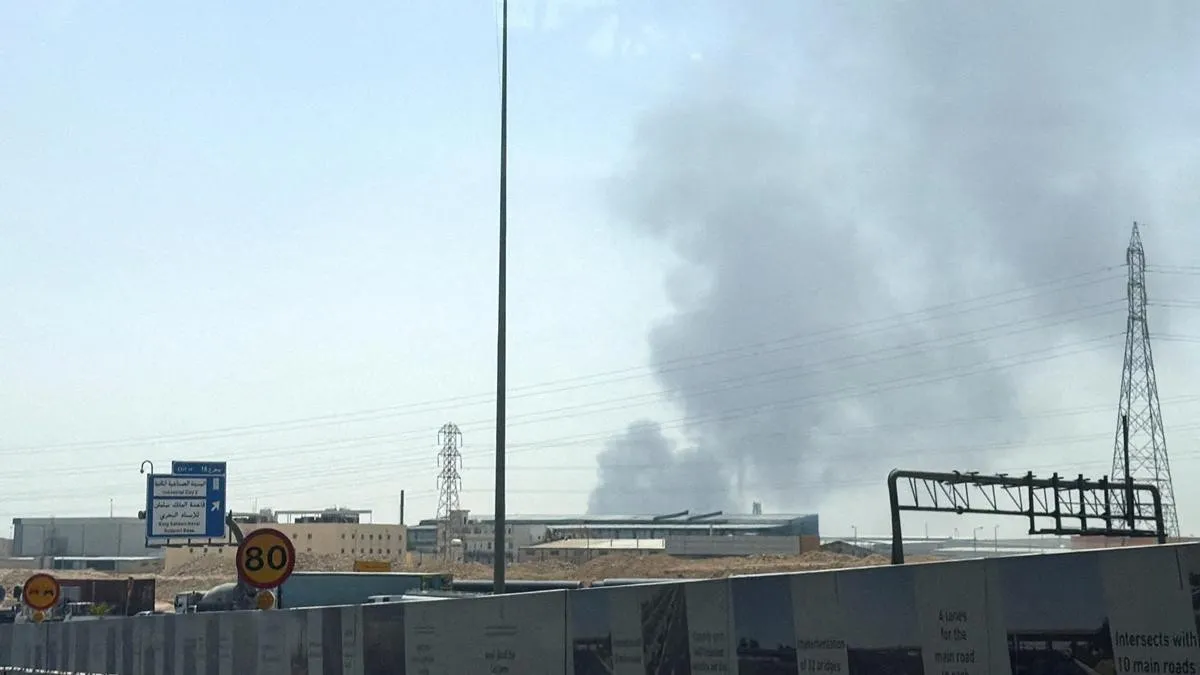
On 3 October 2026 the Houthis said missiles and drones hit an Aramco site near Riyadh, timely because an AFP journalist saw the refinery on fire that afternoon.
TAIPEI —
This article is an original Taiwan Defence analysis based on the cited public sources. It distinguishes reported facts from analytical judgments and does not represent original field reporting.
On 3 October 2026 Yemen's Houthis said they hit an Aramco facility in Riyadh with ballistic missiles and drones, and the claim is timely because an AFP journalist saw flames and smoke at the Aramco refinery south of the capital that same afternoon.
Agence France-Presse named the spokesman. Late on Saturday, Houthi military spokesman Yahya Saree said the group had targeted an oil facility in Riyadh with ballistic missiles and drones and that the strikes sparked fires. Reuters, carried by The Hindu and by NBC, reported the same claim: the Iran-aligned Houthis said they had targeted an Aramco facility in the Saudi capital with ballistic missiles and drones, in retaliation for Saudi attacks on Sanaa and other provinces. That reason is the group's explanation. It is not a Saudi admission.
What was seen is separate from what was claimed. AFP's journalist reported flames and smoke on Saturday afternoon from an Aramco facility south of Riyadh, then firefighters on a blaze at the Riyadh refinery, with ambulances and police nearby. A witness told Reuters that a large plume of smoke and fire rose near an Aramco facility in Riyadh earlier that Saturday. The Hindu's Reuters photograph is captioned as smoke from a fire at the Aramco refinery south of Riyadh on 3 October 2026. The reports share a company, a city, and a day. They do not share a weapons log or a damage survey.
Saudi authorities had not closed that gap when the copy was filed. AFP said they had yet to comment. Reuters said there was no immediate confirmation of an attack on an Aramco facility, and that Aramco did not immediately respond to a request for comment. A fire at the refinery, with a firefighting response, is what these outlets report from observation. A ballistic-missile and drone strike is still the attacker's claim. The wires did not treat the smoke as proof of the munition, and this account will not do it for them.
The afternoon sighting is the timely part. The Houthis have claimed Saudi energy targets before. Reuters notes that last week the group said it attacked Aramco facilities in Yanbu with missiles and drones. Saudi Arabia said then that it intercepted six ballistic missiles fired toward Taif and the Yanbu area, and it did not report damage to Aramco facilities. The 3 October record differs in one concrete way: a journalist and a witness described fire at the Riyadh refinery on the same day as the claim, and a Reuters photograph is dated that day. Riyadh has published no interception tally and no damage note.
The distinction to keep is narrow. A spokesman said missiles and drones caused fires at an oil facility in Riyadh. A journalist saw firefighters on a blaze at the named refinery. A witness saw a plume earlier. No outlet here quotes a Saudi civil-defence statement or an Aramco operations note. The honest account is a same-day pairing: an attack claim, and a fire at the place named in the claim. The pairing is timely because both halves are dated 3 October 2026, not because anyone has adjudicated it.
Interceptions, duds, and industrial accidents can all put smoke over a refinery. Last week's Yanbu episode, as Reuters records it, is the template for an interception story: a Houthi claim, a Saudi statement, and no reported Aramco damage. Saturday in Riyadh has the claim and the smoke, and it lacks the interception statement. It also lacks any public Saudi description of damage. The fire makes the claim harder to ignore. It does not identify the weapon, the number of impacts, or whether production stopped. None of the reports gives those figures.
AFP adds why the fire is being read as war rather than as a local industrial item. It says fighting resumed in July after a fragile truce, that the Houthis control most of northwest Yemen including Sanaa, and that they have announced a naval blockade on Saudi shipping in the Red Sea. That is scene-setting from one wire. Saturday's evidence remains the spokesman, the afternoon fire, and the silence from Aramco and the Saudi authorities.
What a reader can conclude before Riyadh speaks is limited, and the limit is the point. The Houthis have said they put ballistic missiles and drones on an Aramco site in the capital area. Observers have established that the Riyadh refinery was on fire on the afternoon of 3 October 2026, with firefighters, ambulances, and police visible to an AFP journalist. They have not established a trajectory, a warhead, or a Saudi confirmation. Holding those findings apart is the analysis. Folding them into one line would turn a claim into an observed impact.
The day's record is a sequence, not a tally. Saree said late on 3 October 2026 that missiles and drones aimed at an oil facility in Riyadh had sparked fires. Earlier, a Reuters witness saw smoke and fire near an Aramco facility. In the afternoon, AFP saw the blaze being fought at the Riyadh refinery. Reuters, AFP, The Hindu, and NBC all record that Saudi authorities and Aramco had not confirmed an attack. That unconfirmed claim, tied to a same-day refinery fire, is what makes the statement timely. The fire is what was seen. The munitions are what was asserted.
Sources
More in Analysis

4 October: CCG 21581 blocked boat HSRB-019 off Pag-asa
On 4 October 2026 the Philippine Coast Guard said CCG 21581 blocked HSRB-019 near Pag-asa, timely because a PLA Navy helicopter circled the same boats that morning.
TaiwanDefence · 1h ago · 4 min read
4 October: Manila says a J-16 flew in a Philippine patrol wake
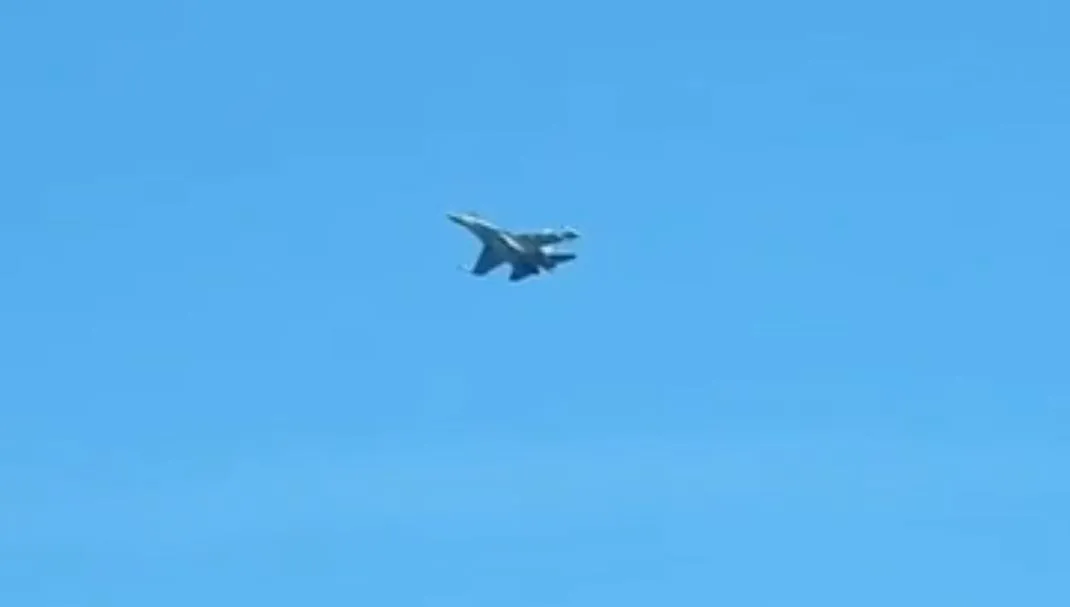
On 4 October 2026 the Philippine military said a Chinese J-16 flew into the wake of a C-208 near Scarborough on 3 October, timely because Beijing had not answered.
TaiwanDefence · 2h ago · 4 min read
4 October reports of Pentagon liaisons in Taipei are timely because the ministry has not confirmed them
On 4 October 2026 two Taipei papers reported a Pentagon policy officer and an IDA expert inside the defense ministry through 2028, timely because the ministry will not confirm it.
TaiwanDefence · 3h ago · 4 min read
Discussion (0)
Comments are not currently available.