
ANALYSIS
Ban Keun Laos hub extends PLA air reach toward Taiwan routes
China and Laos opened Ban Keun joint aviation facilities; Taiwan INDSR links the hub to Malacca routes and Taiwan Strait air corridors.
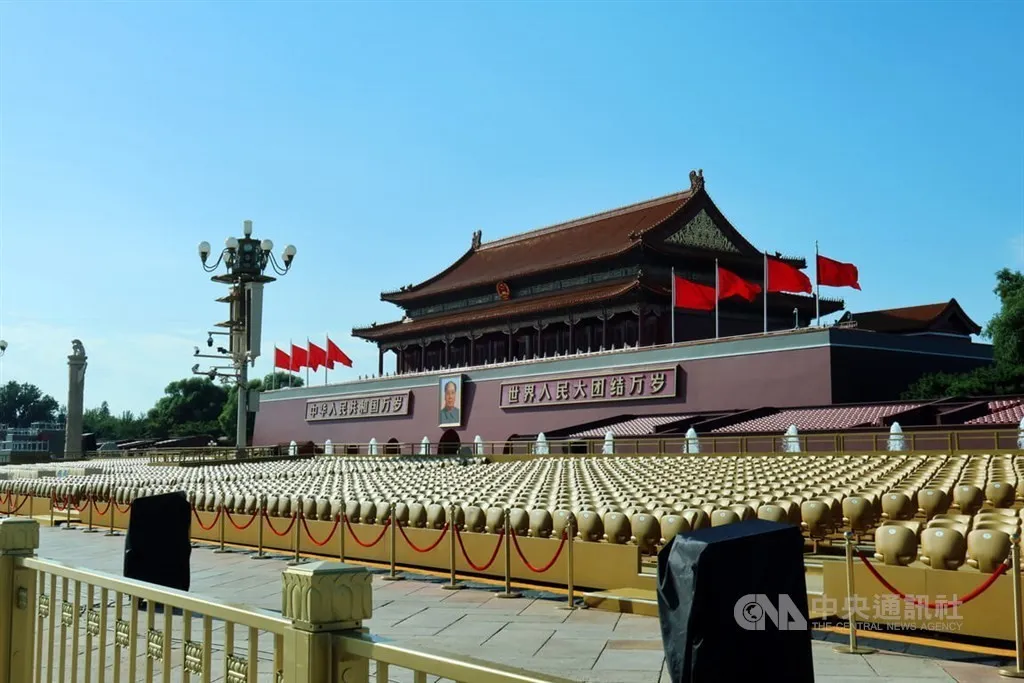
TAIPEI —
This article is an original Taiwan Defence analysis based on the cited public sources. It distinguishes reported facts from analytical judgments and does not represent original field reporting.
China and Laos formally opened the China-Laos Joint Support and Training Center and the China-Laos Friendship Aviation Academy at Ban Keun Airport in Vientiane Province on 29 September 2026, according to China's Ministry of National Defense as reported by Focus Taiwan and The Defense Post. A Chinese defence ministry English statement dated 30 September said the facilities are jointly maintained and operated to help Laos strengthen air-force pilot training, and that Lao Deputy Prime Minister and Defence Minister Khamlieng attended the inauguration with a People's Liberation Army delegation.
Beijing framed the project as consistent with both countries' laws and international practice, stating it is not directed against any third party and is intended to deepen practical military cooperation. The same statement presented the hub as a bilateral training and support venture rather than an expeditionary combat base, a formulation that Taiwanese analysts still read against China's wider overseas basing pattern.
Independent reporting has filled in physical detail that the Chinese statement omitted. The Defense Post reported that the Ban Keun complex includes a newly paved roughly 2,000-metre runway plus taxiways, aprons and hangars, that construction ran from 2025 into early September 2026, and that Lao Defence Minister Khamlieng Outhakayson attended with a Chinese delegation. Neither capital disclosed personnel numbers or specific aircraft types assigned to the site, leaving open whether the complex will remain limited to training aircraft or later host tankers and transports.
On 4 October, Focus Taiwan reported analysis from Su Tzu-yun, director of Defence Strategy and Resources at Taiwan's Institute for National Defense and Security Research. Su argued that the Laos aviation hub fits a longer Chinese pattern of overseas naval and air support nodes intended to secure Indian Ocean shipping routes and reduce Malacca Strait risk, alongside China's facility in Djibouti and its presence at Cambodia's Ream Naval Base. Taipei Times carried the same expert assessment on 5 October, underscoring how quickly the opening moved from a bilateral ceremony into Taiwan's defence debate.
Su assessed that Ban Keun, about 45 kilometres northwest of Vientiane, already has a paved runway able to handle fighter jets and that China may seek to lengthen it toward about 3,000 metres to support larger aircraft such as transports, tankers or bombers. In a Taiwan Strait or South China Sea contingency, he warned that U.S. Air Force aircraft staging from Diego Garcia and traversing Indochina west to east could face a denser Chinese interception environment if Beijing consolidates air support on the peninsula.
That judgment does not turn Ban Keun into a proven bomber base overnight. Open sources so far establish a pilot-training and support narrative from Beijing, a measurable runway and hangar footprint from independent reporting, and a Taiwanese official-think-tank reading that links the site to Malacca contingency logistics and Taiwan-relevant air corridors. The durable point for Taipei is geographic: a durable PLA-linked aviation node on the Indochina land bridge sits astride routes that connect the Indian Ocean, the South China Sea and the approaches used in any sustained Taiwan contingency.
For TaiwanDefence readers, Ban Keun therefore matters less as another daily gray-zone sortie tally and more as infrastructure politics. If China and Laos sustain joint operations there, the hub adds logistics depth to China's Southeast Asian military network and raises the cost of assuming that U.S. and partner air lines of communication west of Taiwan remain uncontested. Monitoring runway lengthening, tanker or transport presence, dual-use fuel and maintenance capacity, and command arrangements will show whether the site stays a training academy or becomes a standing power-projection node that complicates reinforcement paths into a Taiwan contingency.
The timing of the Taiwanese coverage also matters for readers tracking gray-zone pressure. Focus Taiwan published Su's assessment on 4 October, and Taipei Times followed on 5 October, days after the 29 September opening and the 30 September Chinese ministry statement. The sequence shows an official inauguration first, then independent infrastructure reporting, then a Taiwanese strategic reading that connects Ban Keun to Malacca logistics and Taiwan Strait air corridors. Focus Taiwan and Taipei Times both present Su's remarks as expert analysis rather than as an official Ministry of National Defense threat warning, and neither outlet claims to have inspected Ban Keun independently. The Defense Post similarly stops at infrastructure description and comparative basing, without asserting that Chinese combat aircraft are already flying from the Laos complex.
Nothing in those accounts resolves how Ban Keun will be staffed day to day. The Defense Post notes that neither capital disclosed personnel or aircraft types. Focus Taiwan and Taipei Times likewise do not publish a Lao or Chinese order of battle for the airport. Until such disclosures appear, claims about fighter detachments, bomber deployments or permanent tanker presence remain outside the sourced record even if they are plausible future possibilities raised by runway-length speculation.
The analytical conclusion for TaiwanDefence is therefore conditional. Ban Keun is a real, newly opened China-Laos aviation support and training complex whose location on the Indochina land bridge gives it prospective relevance to Indian Ocean and South China Sea air lines of communication that also matter in a Taiwan contingency. It is not, on present evidence, a finished combat hub already changing daily cross-strait sortie dynamics. That distinction keeps the article inside the public record: the opening is confirmed, the runway footprint is confirmed by independent reporting, and the Taiwan-relevant geography is an attributed think-tank judgment, not a verified change in the daily cross-strait order of battle.
Sources
More in Analysis
4 October reports of Pentagon liaisons in Taipei are timely because the ministry has not confirmed them
On 4 October 2026 two Taipei papers reported a Pentagon policy officer and an IDA expert inside the defense ministry through 2028, timely because the ministry will not confirm it.
TaiwanDefence · 6m ago · 4 min read
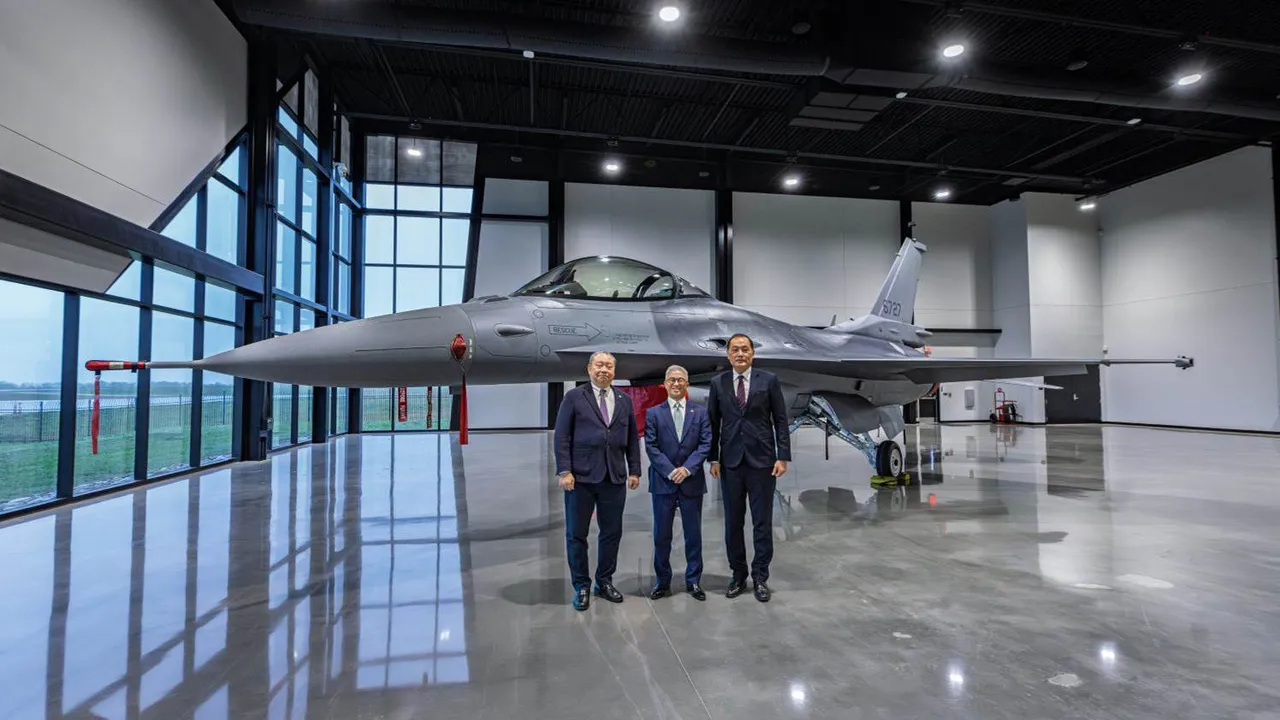
Two F-16 Block 70s begin Chihhang conversion, not a full wing
Two new-build F-16 Block 70 fighters are at Chihhang in Taiwan for acceptance and conversion training, while 63 aircraft remain in United States production.
TaiwanDefence · 8h ago · 5 min read
ASPI: pending US$14 billion Taiwan arms package still a Trump-Xi bargaining chip
ASPI says a US$13–14 billion Taiwan air-and-missile package remains unused leverage after Trump-Xi talks, with State still not opening transfer procedures.
TaiwanDefence · 2d ago · 2 min read
Discussion (0)
Comments are not currently available.