
Guam's delegate says Dark Eagle hypersonic missile went to Tinian, knows of no plan to base it on Guam
Del. James Moylan's written testimony to a legislative buildup briefing also relayed a Pacific Command line that Guam's new missile shield exists to defend the island.
TAIPEI —
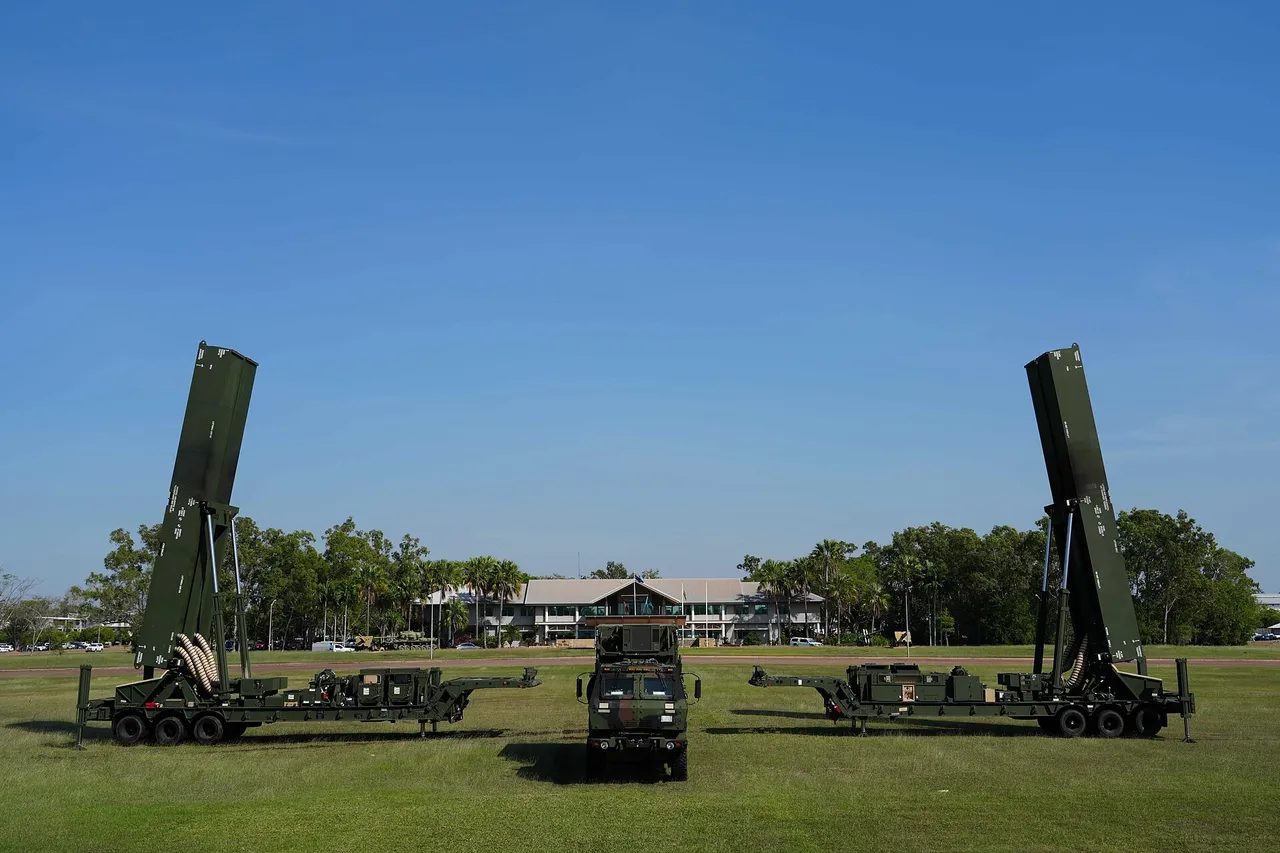
Guam's delegate to the US Congress, James Moylan, has acknowledged that the Army's Dark Eagle long-range hypersonic missile system was recently deployed to Tinian in the Northern Mariana Islands, while telling local lawmakers he knows of no plan to place offensive missiles on Guam permanently. His written testimony was read into the record on Monday, 26 October, at an informational briefing on the military buildup held by Senator Telo Taitague, who chairs the legislature's buildup oversight committee, the Pacific Daily News and The Guam Daily Post reported.
Moylan wrote that, as far as he understood, no plans exist to station offensive missile systems on Guam permanently. He said he was aware of the recent Dark Eagle deployment to Tinian and that the system might in future be deployed temporarily or move through the second island chain, the line US planners draw through the Marianas and Micronesia. He also described the Tinian deployment as different from the routine short-term shifts in military posture around Guam, according to the Pacific Daily News.
The Pacific Daily News noted that Stars and Stripes reported in July that the hypersonic weapon had been sent to Guam during the Valiant Shield exercise, and that The Washington Times later reported, citing Pacific Command, that it had in fact gone to Tinian. The newspaper said Moylan's statement appears to confirm the Tinian deployment.
Missile defence, not a launch pad
Moylan also addressed concern that the Guam Defense System, the island's integrated air and missile defence network now under construction, could be used to support offensive missiles. He passed on a statement cleared for release by Pacific Command saying the system is built to protect Guam, is the command's top priority and will provide persistent, all-round air and missile defence against advanced threats. The statement acknowledged that its sensors can feed wider joint force operations but said defending Guam is the objective. Moylan said he had asked for classified briefings to follow up on public concerns about missile deployments.
According to The Guam Daily Post, Moylan also wrote that he had not been told of any Pentagon plan to bring nuclear microreactors to Guam, and that he and Representative Jill Tokuda of Hawaii are working to strip a microreactor provision from the House version of the 2027 defence bill.
Commanders stay away
Neither of the two invited Navy commanders, Rear Admiral Brett Mietus and Rear Admiral Joshua Lasky, the head of Joint Task Force Micronesia, attended or sent a representative, and Moylan did not appear in person. Joint Region Marianas told the Post that both admirals had been invited and declined, and that the commands prefer separate quarterly meetings with government and legislative leaders. Taitague recessed the session after about an hour and 25 minutes rather than closing it, the Post reported.
The briefing also showed shifting figures for the planned Marine Corps relocation to the island. Taitague said about 4,000 Marines are now expected on Guam, compared with the 8,900 once planned, while written testimony from Vera Topasna of the Community Defense Liaison Office said local planning assumes about 5,000, with peak activity between 2027 and 2037 and dates subject to change.
Residents and former delegate Robert Underwood used the session to press for more information on housing, utilities, environmental contamination and health effects linked to the buildup. KUAM reported that Taitague said the scope of the buildup has changed, and may change again, because of shifting federal priorities and rising tensions in the region.
Sources
More in Indo-Pacific

South Korea's military has lost more than a third of its staff sergeants in four years
Defence ministry data show too few new junior NCOs joining, not more leaving, as conscript pay rises close the gap with the sergeants who lead them.
TaiwanDefence · 2h ago · 2 min read

Japan's security advisers say tax rises should not be ruled out to pay for more defence
At its fifth meeting, Japan's panel on rewriting the three security documents weighed how to fund higher spending as Tokyo set out a new defence-industry body.
TaiwanDefence · 5h ago · 3 min read
China sends its Manila defence attache, not its defence minister, to ASEAN defence talks in Cebu
Beijing has cut its delegation to the ADMM-Plus meeting hosted by the Philippines to embassy level after sending its defence minister in each of the past two years.
TaiwanDefence · 8h ago · 3 min read
Discussion (0)
Comments are not currently available.