
India's Bhargavastra counter-swarm drone system finishes Pokhran trials, ready for an Army prototype demo
Solar Defence and Aerospace says rockets fired at real drone swarm targets hit their aim points during in-house trials from 20 to 24 November.

TAIPEI —
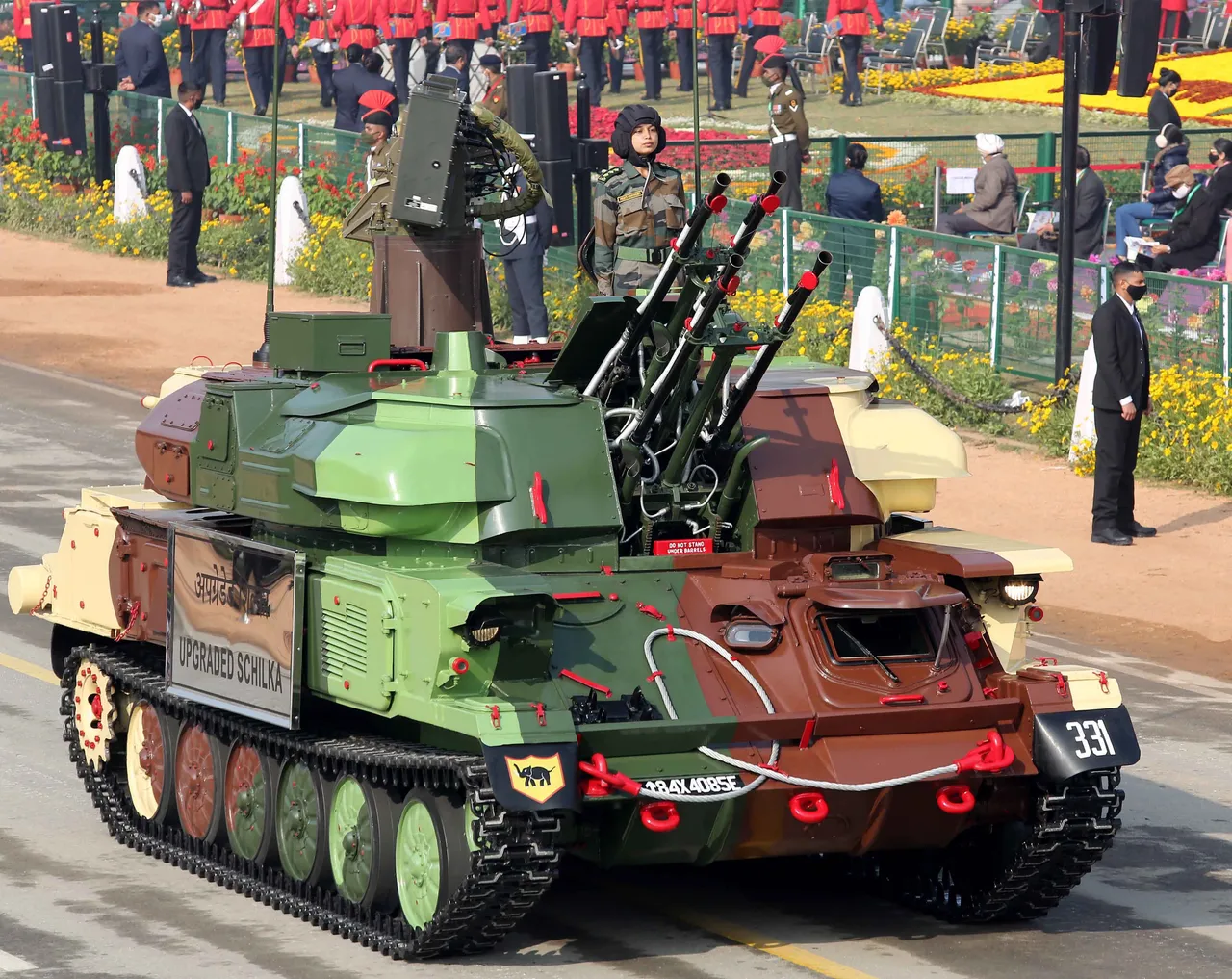
Solar Defence and Aerospace Limited (SDAL), a private Indian defence company, said on 26 November that it had completed in-house development trials of Bhargavastra, a vehicle-mounted system built to shoot down drone swarms, at the Pokhran field firing ranges in Rajasthan between 20 and 24 November. The company said the system is now ready for a prototype demonstration in the configuration it would be delivered in.
According to SDAL, several rockets and micro-missiles were fired during the trials. The rockets were aimed at real swarm drone targets that had been detected and tracked by the system's own sensors and command network, and the company said their warheads hit the designated points. Separate firings showed that the micro-missiles could guide themselves onto drones and home in during the final phase of flight, it said.
Two layers on three vehicles
Bhargavastra combines two weapons. Version I fires unguided air defence micro-rockets from a 64-tube launcher, while Version II carries 64 guided micro-missiles that use autonomous guidance and an infrared seeker to pick out individual targets. The launchers, sensors and command and control equipment are spread across three vehicles already in Army service.
Radio-frequency detectors and surveillance radars find and track incoming drones, and electro-optical sensors keep them in view by day and night. An AI-enabled command, control, communications, computers and intelligence system links the sensors, tracking and weapons. The Defense News reported a radar detection range of up to 10 km, electro-optical tracking out to about 6 km and an engagement range of up to 2.5 km for both weapons, with the micro-rockets designed to cover a lethal radius of 20 metres.
A Make-II project for the Army
The system answers qualitative requirements set by the Indian Army. The Ministry of Defence's Department of Defence Production issued a project sanction order on 9 July 2024 to several private companies to develop a vehicle-mounted counter-swarm drone system under the Make-II (Buy Indian-IDDM) category, with 31 March 2027 as the probable completion date. The order covers one prototype set and 12 sets to be delivered after a successful prototype demonstration.
The Army initially asked only for the rocket-based Version I. SDAL said it went further and developed the guided Version II on its own. The company also said the rockets, micro-missiles and software were designed, developed and made in India, that it owns the full intellectual property rights, and it describes Bhargavastra as the first Indian-designed two-layer vehicle-mounted counter-swarm system.
SDAL, a subsidiary of the Nagpur-based Solar Group, said further optimisation and trials are planned to raise the system's engagement and kill probability. The Defense News reported that the company is planning to hand the system over to the Indian Army in January 2027.
Sources
More in Industry
Japan's defence procurement agency takes delivery of its first home-built AI interceptor drones
Terra Drone says it built and delivered the Terra B1, aimed at Shahed-type attack drones, about three months after winning a fast-track contract.
TaiwanDefence · 14h ago · 2 min read
Hanwha Aerospace starts building a 10 trillion won AI data centre for South Korea's military
The 180-megawatt centre in Changwon is due to open in part in July 2028, with the military keeping control of its data while Hanwha runs the servers.
TaiwanDefence · 1d ago · 2 min read
South Korea lines up 820 billion won in loan guarantees for defence suppliers as KAI pledges new investment
Hanwha Aerospace, Hyundai Rotem and KAI joined three banks and the state export insurer on 23 November to ease credit for their smaller subcontractors.
TaiwanDefence · 3d ago · 3 min read
Discussion (0)
Comments are not currently available.