
Japan weighs folding its Northeastern Army into the Eastern Army and closing the Sendai headquarters
A plan inside Japan's defence ministry would merge two Ground Self-Defense Force regional armies as early as the end of fiscal 2027, Jiji Press reports.
TAIPEI —
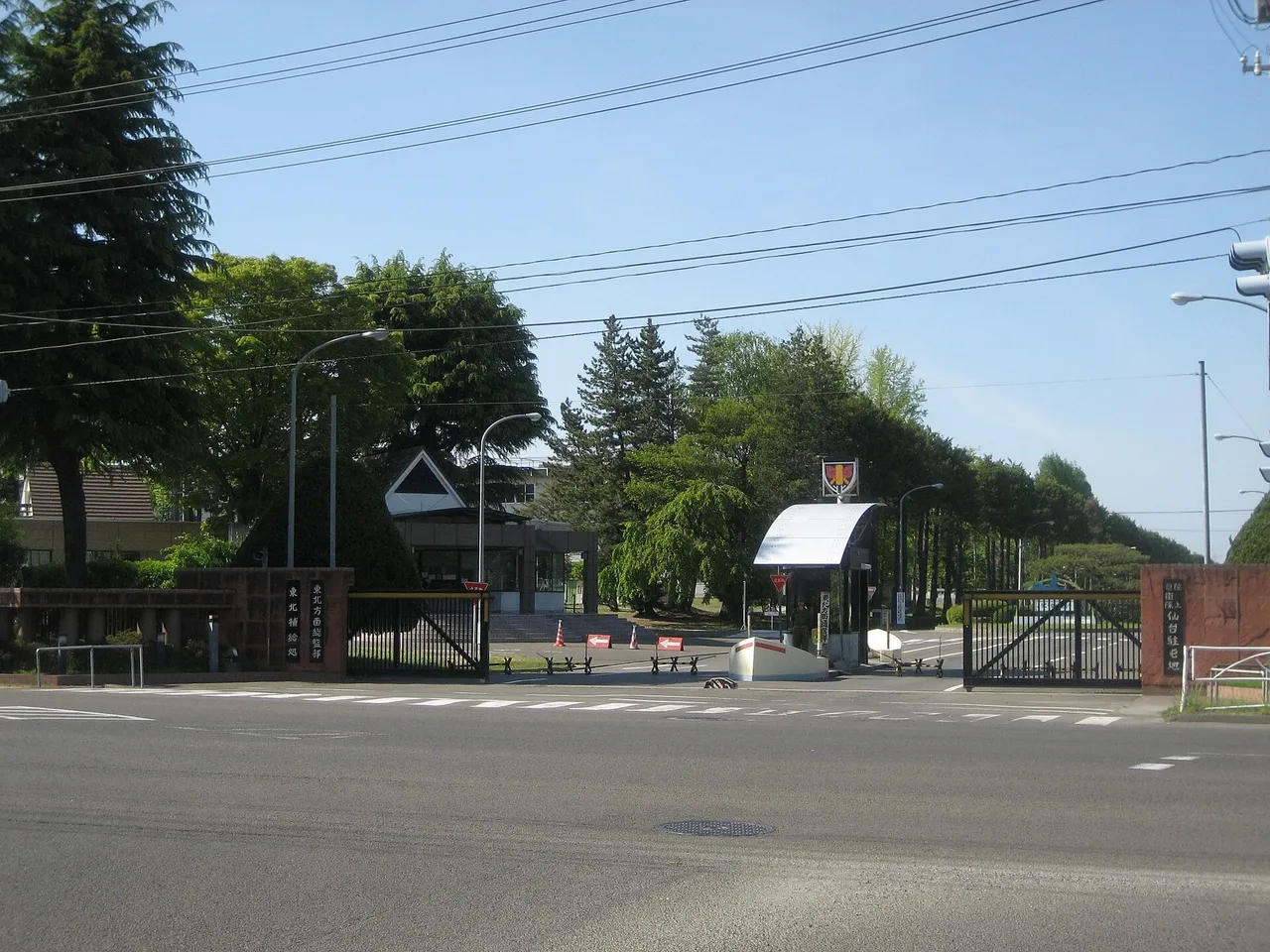
Japan's Ministry of Defense is considering a plan to merge the Ground Self-Defense Force's Northeastern Army into its Eastern Army and to close the Northeastern Army headquarters in Sendai, Jiji Press reported on 7 November 2026. The news agency said several government officials disclosed the plan on 6 November. Its stated aims are to run operations more efficiently and to secure personnel after the creation of a single joint command over all three branches of the Self-Defense Forces.
The ministry is looking at carrying out the change as early as the end of fiscal 2027, according to the report. Jiji cautioned that talks could prove difficult, because local governments and others are likely to press for the Sendai headquarters to stay. The plan has surfaced inside the ministry but has not been announced as a final decision.
The Ground Self-Defense Force splits Japan into five regional armies, the Northern, Northeastern, Eastern, Middle and Western Armies, each responsible for defence, security and disaster response in its area. The Northeastern Army covers six prefectures in the Tohoku region: Aomori, Iwate, Miyagi, Akita, Yamagata and Fukushima. Under the plan, headquarters functions would be gathered at the Eastern Army headquarters in Nerima, Tokyo. The Eastern Army's area, which now covers Tokyo and 10 prefectures across the Kanto and Koshinetsu regions and Shizuoka, would grow sharply. Jiji said units and garrisons in Tohoku are expected to stay largely in place.
In the chain of command, the regional armies sit below the Joint Operations Command and the Ground Component Command, and above the divisions and brigades. Jiji reported that when the joint command was launched in March 2025, more complicated command and control lines and the difficulty of finding enough headquarters staff were flagged as problems. The ruling Liberal Democratic Party called in a June proposal for intermediate headquarters to be cut.
The Joint Operations Command itself was formally set up on 24 March 2025 at the defence ministry in Tokyo's Ichigaya district, with an initial staff of 240 led by General Kenichiro Nagumo, the Japan Times reported at the time. It was created to oversee the ground, maritime and air branches centrally and to smooth operations across domains in emergencies, including a possible crisis over Taiwan.
There is a recent precedent. In March 2025 the Maritime Self-Defense Force merged its Ominato District, based in Mutsu in Aomori Prefecture and responsible for waters north of Aomori, into the Yokosuka District in Kanagawa Prefecture. TBS reported that about 350 service members and guests attended a ceremony on 24 March 2025 as the unit was recast as the Ominato District Unit. Jiji noted that strong local demands to keep the base led the navy to keep its staffing level and to create a district commander post there.
Local resistance in Tohoku is likely to centre on disaster relief. During the 2011 Great East Japan Earthquake, the Sendai headquarters directed the disaster relief units and played a central role in the response, Jiji recalled.
For Taiwan and Japan's other neighbours, the proposal matters less for the northeast itself than for what it shows about how Tokyo is reshaping its ground forces. Japan is trying to thin out intermediate headquarters and to put scarce staff where the joint command, built partly with a Taiwan emergency in mind, needs them. The units in Tohoku would remain, so the change would affect command structure rather than the number of troops in the region.
Several questions remain open. The report did not say how many headquarters posts would be cut, where the staff would be reassigned, or when a final decision would be taken, and the ministry has not set out the plan publicly. The outcome is likely to depend on how hard Tohoku's local governments push to keep the Sendai command.
Sources
More in Indo-Pacific
Japan moves to build a signals intelligence satellite to find targets for its counterstrike missiles
The Defence Ministry plans to begin sensor research next year and launch a demonstration satellite by fiscal 2031, the Yomiuri Shimbun reports.
TaiwanDefence · 1h ago · 3 min read
Prosecutors seek prison for Moon-era defence chiefs accused of tipping off THAAD protesters
Seoul prosecutors want jail terms for Chung Eui-yong, Jeong Kyeong-doo and Suh Choo-suk over leaked details of missile defence operations at Seongju.
TaiwanDefence · 4h ago · 3 min read
Japan signs deal to give the Philippine military a coastal radar and surveillance drones
Tokyo's 4.3 billion yen aid package sends a coastal radar to the Philippine Navy and surveillance drones to the Philippine Air Force.
TaiwanDefence · 9h ago · 3 min read
Discussion (0)
Comments are not currently available.