Royal Australian Air Force releases first US HACM hypersonic missile test unit
The US Air Force says the RAAF released a Hypersonic Attack Cruise Missile flight test unit over an Australian range, the delayed programme's first step into flight testing.
TAIPEI —
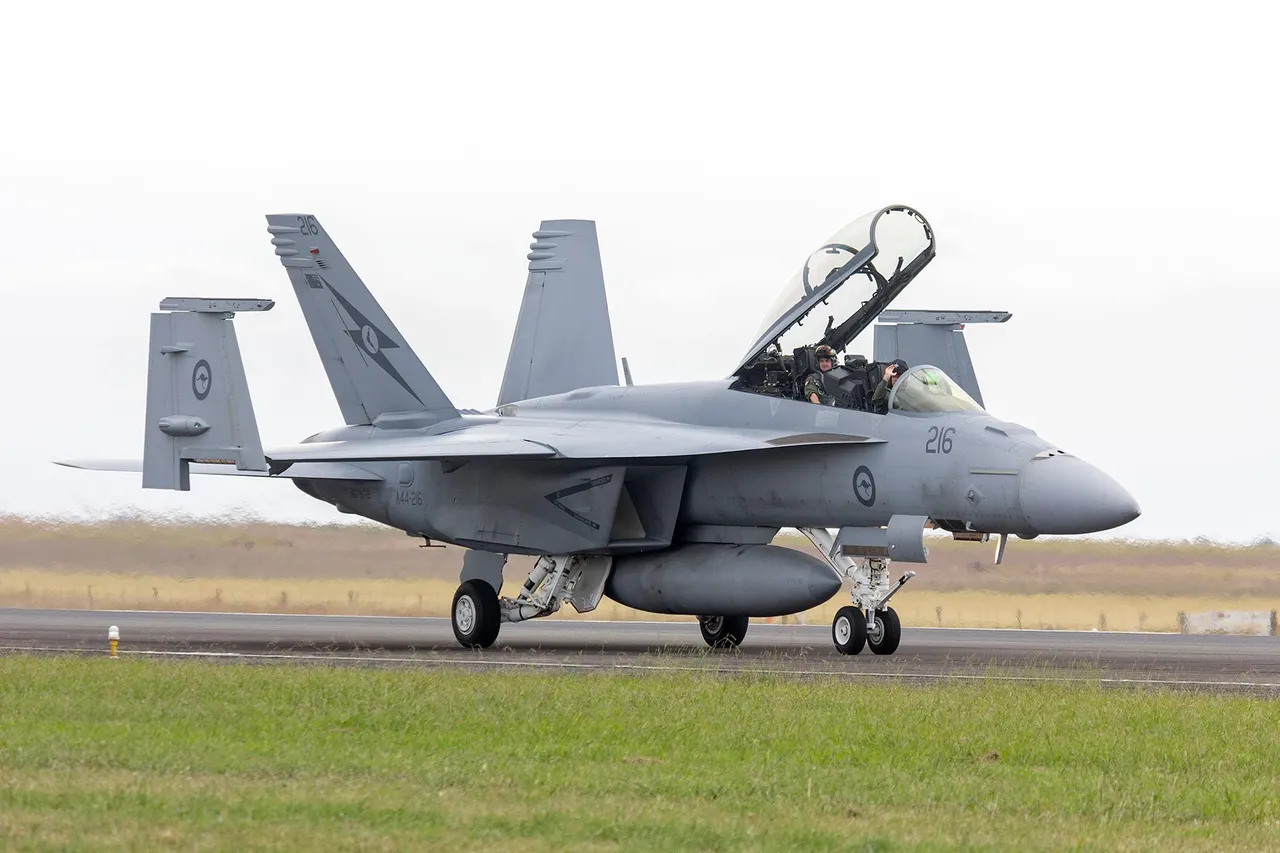
The US Air Force has confirmed that its Hypersonic Attack Cruise Missile, known as HACM, has entered flight testing, with the Royal Australian Air Force releasing a flight test unit over a designated test range in Australia. An Air Force spokesperson gave the confirmation to The War Zone, which reported it on 5 October US time.
According to the spokesperson, the test was carried out in partnership with Australia under the Southern Cross Integrated Flight Research Experiment, or SCIFiRE, a collaborative agreement that both governments say builds on more than 15 years of joint hypersonic research. The spokesperson said the flight gathered data to advance the programme and was the culmination of an extensive series of tests designed to measure the missile's performance under realistic flight conditions.
The Air Force did not say when the release took place, which range was used or which aircraft carried the missile. It also did not say whether the missile flew under its own power after release. The War Zone said it had asked for more detail. Australia's Woomera Range Complex in South Australia has long been expected to host HACM launches, and The Nightly reported in March on sensitive US and Australian activity there, but the Air Force did not name the range.
What HACM is
HACM is an air-launched missile powered by a scramjet, an air-breathing engine that only works once a vehicle is already moving very fast. The US Government Accountability Office has described it as a two-stage design: a rocket booster accelerates the missile, then a scramjet cruiser separates and eventually dives toward its target. Raytheon, now part of RTX, won a US$985 million contract in 2022 to develop the missile, working with Northrop Grumman.
Australia's Department of Defence, as quoted by The Nightly, describes the SCIFiRE weapon as a Mach 5-class precision strike missile that could be carried by the F/A-18F Super Hornet, EA-18G Growler, F-35A Lightning II and P-8A Poseidon. The GAO has previously reported that RAAF Super Hornets would conduct at least some HACM test launches, which fits the Air Force statement that it was the RAAF that executed the release. The US Air Force's first launch platform is expected to be the F-15E Strike Eagle.
A schedule with no margin
The programme has slipped repeatedly. Flight testing was first planned for 2024, then moved to 2025 and then 2026. In a report published in July, the GAO said the programme was on track for a first flight test in the second quarter of fiscal 2026 but had effectively zero schedule margin, and had already cut its rapid prototyping effort from seven planned flight tests to five.
The GAO warned that a significant test failure would probably prevent the programme from completing all five tests within its five-year prototyping window. It said completing at least the first three tests was critical to an Air Force decision to begin rapid fielding and buy HACM in fiscal 2027, a target the GAO placed in the first quarter of that fiscal year, which began on 1 October. The Air Force's budget request for fiscal 2027 includes US$404 million to begin buying the weapon, DefenseScoop reported.
Why the Pacific matters
US and Australian officials have repeatedly described hypersonic weapons as important for a high-end conflict, including one in the Pacific against China, because their speed and manoeuvrability shorten an opponent's reaction time and help them penetrate air defences. The War Zone noted that US hypersonic programmes across the Air Force, Navy and Army have suffered setbacks over the past decade, feeding concern about a gap with China.
Australia's role as both test partner and potential operator gives the programme a regional dimension. Australian ranges and aircraft are being used to prove a weapon that Canberra's Department of Defence says could later arm RAAF Super Hornets, Growlers, F-35As and P-8As, although neither government has announced a purchase for the Royal Australian Air Force.
Sources
More in Indo-Pacific
China's Southern Theater Command says it warned off Philippine patrol plane over Scarborough Shoal
Beijing's military answered Manila's J-16 complaint by accusing the Philippine C-208 of entering what it calls Chinese territorial airspace, and told the Philippines to stop provocations.
TaiwanDefence · 5h ago · 3 min read
Defence ministry report says US experts will join 130 Taiwan planning sessions and map war games
The ministry's latest written report lists 50 in-person and 80 video sessions with Pentagon policy staff and the Institute for Defense Analyses.
TaiwanDefence · 9h ago · 3 min read
Yui presses Trump to speed stalled 14 billion dollar Taiwan arms package
Taiwan envoy Alexander Yui told Bloomberg he expects approval of the delayed arms package, heavy on air defence, and said Taipei must not become a bargaining chip.
TaiwanDefence · 11h ago · 2 min read
Discussion (0)
Comments are not currently available.