
ANALYSIS
Ukrainian think tank says Taiwan needs at least 1,600 drone boats as its navy readies a 1,320-boat tender
A Serpens Center study presented on 20 October 2026 says mass decides drone-boat warfare. Taiwan's own plan is smaller and slower to reach swarm control.
TAIPEI —
This article is an original Taiwan Defence analysis based on the cited public sources. It distinguishes reported facts from analytical judgments and does not represent original field reporting.
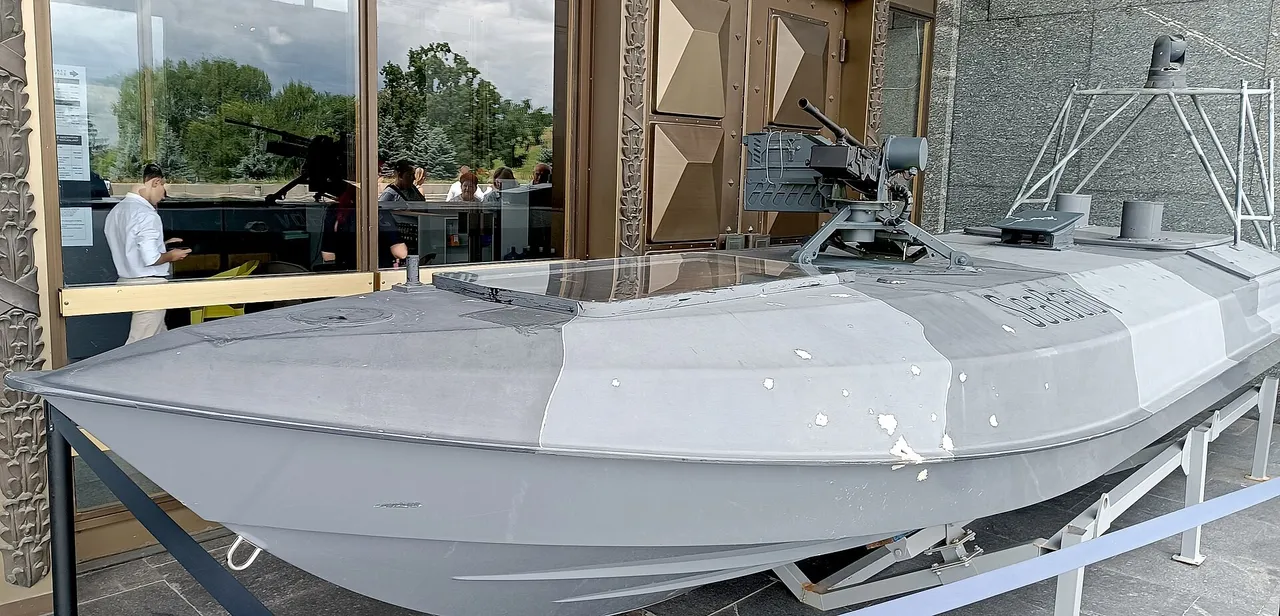
A Ukrainian think tank, the Serpens Center for International Security, presented a study on 20 October 2026 at an event hosted by the Foundation for Defense of Democracies arguing that Taiwan's defence at sea depends on building up large stocks of cheap, expendable uncrewed surface vessels before any war with China begins. The report, titled The Black Sea Blueprint for Taiwan, draws on Ukraine's use of drone boats against Russia's Black Sea Fleet, National Defense Magazine reported.
The numbers in the study are stark. It puts the low end of a credible pre-war Taiwanese drone-boat fleet at about 1,600 vessels by around 2030 and the high end at about 5,000. The lead author, Catarina Buchatskiy, told the event that Taiwan should plan on losing at least 50 to 60 per cent of the drones it deploys, because Chinese warships are likely to be better prepared than Russian ones. The report treats a 25 per cent loss rate as the best case and 75 per cent as pessimistic but possible. Mark Montgomery of the foundation urged Taiwan to aim for the top of the range.
Taiwan's own programme is reaching a decision point. The navy was expected to publish specifications this month for a drone-boat programme worth NT$29.66 billion, the Taiwanese news site CM Media reported on 20 October. The supplementary budget sent to the legislature in September spreads that sum from 2026 to 2031 and pays for 1,320 small attack boats built in Taiwan, with about NT$3.01 billion in the first year for an initial batch of 120, the Liberty Times reported at the time.
According to CM Media, the tender, including trials of sample boats, is expected to take about five months, and acceptance of the first deliveries is tentatively set for November 2027. Capability is planned in three phases: basic detection and assisted navigation in 2027 and 2028, better three-dimensional target recognition in 2029 and 2030, and swarm control from 2031 to 2033. Senior officials have decided not to enlarge the hull to the nine metres a US bidder had pushed for, keeping it at about six metres, and have shifted the approach to foreign autonomy software combined with hardware made in Taiwan.
The argument
Set side by side, the two sets of figures point to a gap that is about tempo as much as numbers. The 1,320 boats in the budget fall below the study's floor of 1,600, although the comparison is approximate: the navy figure covers attack boats for the armed forces and excludes coast guard needs, while the study speaks of Taiwan's pre-war maritime drone fleet as a whole. The calendar matters more: the study frames its stockpile around 2030, but the navy's swarm control is not due until the early 2030s.
The loss rates show what those numbers could mean in practice. If Taiwan launched all 1,320 boats and lost 50 to 60 per cent of them, as the study suggests planning for, roughly 530 to 660 would get through. That is arithmetic, not a forecast, but it shows why the study's authors stress stockpiles built in peacetime: Buchatskiy argued that mass matters even more for Taiwan than for Ukraine, because an island may have far less access to resupply once fighting starts.
Evidence and constraints
Production is the common difficulty. The study notes that real production rates often fall short of targets, and Montgomery said peacetime stockpiles are hard to size when systems date quickly, though drone boats appear to change more slowly than other autonomous systems. In Taipei, the argument is over who builds what. CM Media reported that one camp inside the military favours making the National Chung-Shan Institute of Science and Technology the prime contractor and bringing in combat-proven US or Ukrainian designs under licence.
CM Media's sources also said every subsystem, from hull and propulsion to autonomy, sensors and payload, has to be integrated and proven at sea, and a defence technology expert told the outlet that bidders should be judged on long sea trials of the exact configuration they offer, not on top speed or hull size. A senior official made a similar point to the Liberty Times in September, saying hours logged by foreign autonomy software on other hulls do not prove that a new combination works, and that sea-trial hours would be the main technical risk if the navy moved quickly.
What could change
The specification notice is the next marker. If it appears this month and the five-month tender holds, the first boats would arrive in late 2027. The institute already has agreements with two US firms, MARTAC since September 2025 and Saronic since April 2026, covering autonomy and modular hulls. Funding more boats or bringing swarm control forward would narrow the gap the study describes; slippage in the tender would widen it.
Why it matters
Taiwan has accepted the case for drone boats. The question the Ukrainian study raises is whether a programme sized at 1,320 attack boats, and paced to reach swarm control only in the early 2030s, matches the scale and speed its authors believe a Chinese assault would demand. Ukraine built its fleet while fighting. The study's central warning is that Taiwan would need its fleet in hand before the first shot.
Sources
More in Analysis
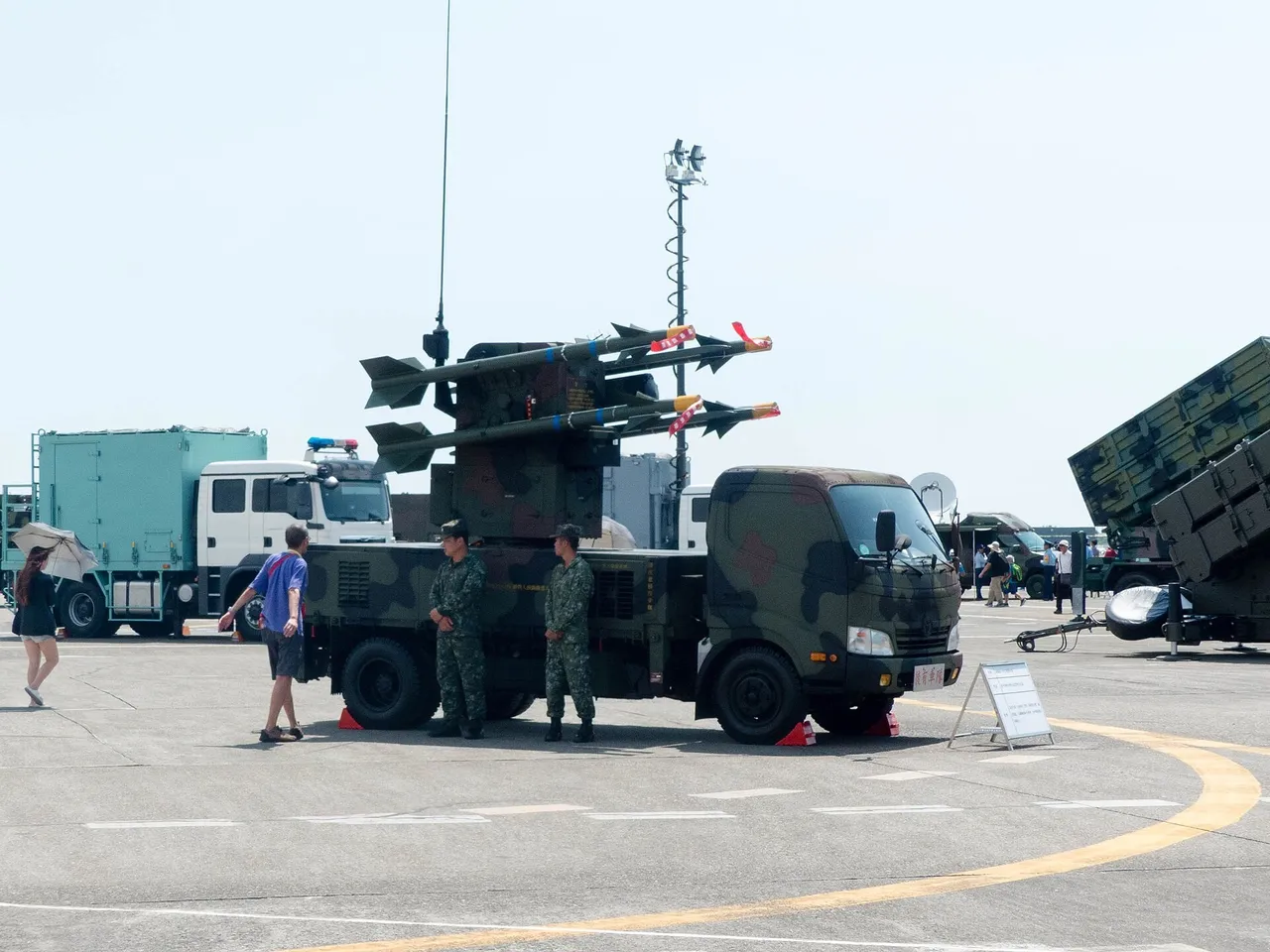
Taiwan's new NT$3.1bn missile upkeep deal shows how much it still leans on ageing air defences
A maintenance contract reported on 20 October 2026 and a life extension for the 20-year-old Antelope show Taiwan paying to bridge the gap until NASAMS arrives.
TaiwanDefence · 4h ago · 4 min read
Taiwan's army is building its tank force around the M1A2T as frozen funds put its upkeep at risk
With Abrams tanks bound for the Lien Yung drill in late 2026 and CM11s headed for storage, a frozen NT$1.3 billion parts budget is the weak link.
TaiwanDefence · 1d ago · 3 min read
US Space Force's counterspace warning shows the satellites a Taiwan fight depends on are now targets
An Oct. 13, 2026 Space Systems Command assessment says China fields weapons that can jam or destroy the satellites US forces would lean on near Taiwan.
TaiwanDefence · 2d ago · 3 min read
Discussion (0)
Comments are not currently available.