
US Army's Typhon missile launcher arrives at Kadena Air Base on Okinawa for storage
Japan's Okinawa Defense Bureau says the Typhon launcher has moved from Kanoya in Kyushu to Kadena, where it will be stored with no end date given.
TAIPEI —
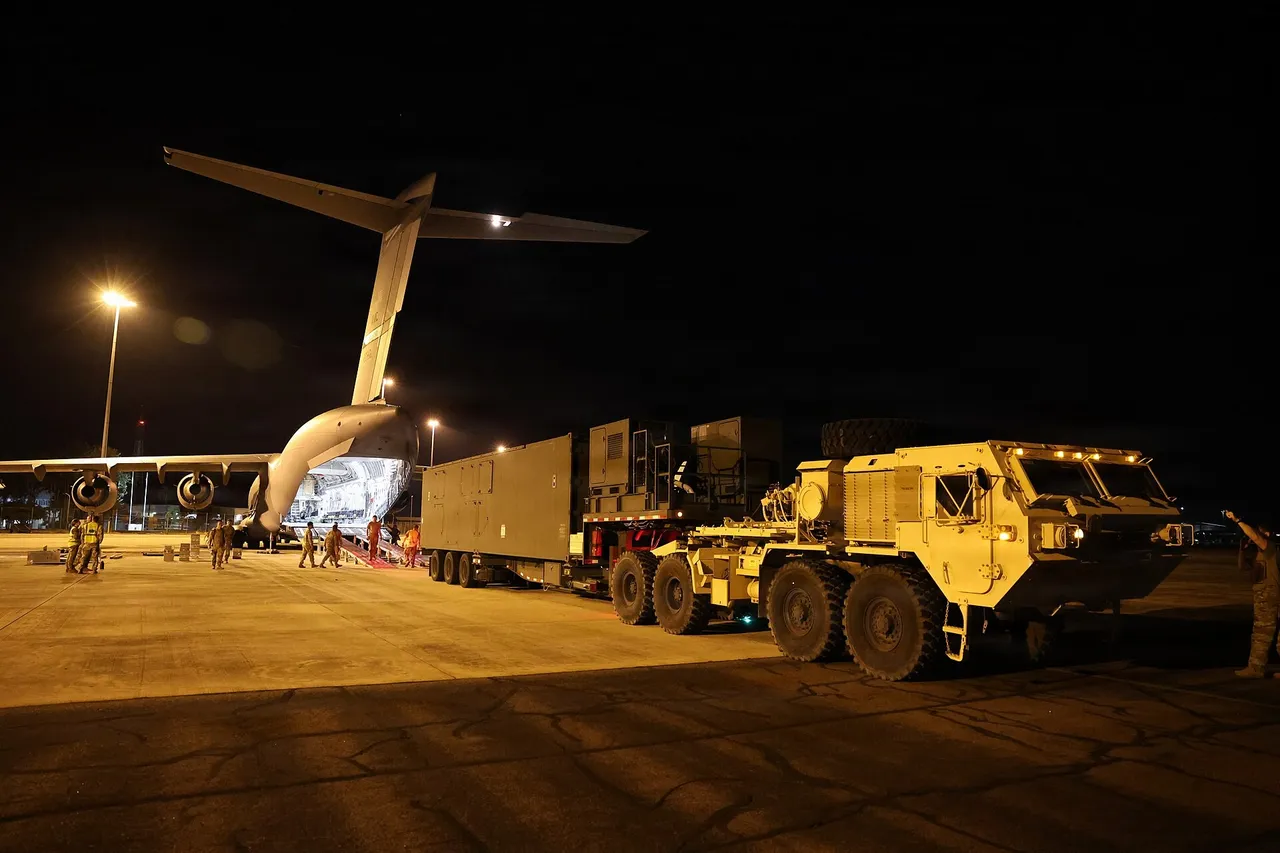
The US Army's Typhon mid-range missile launcher has arrived at Kadena Air Base on Okinawa, Japan's Okinawa Defense Bureau said on 23 October. The system had been temporarily deployed at the Japan Maritime Self-Defense Force's Kanoya Air Base in Kanoya, Kagoshima Prefecture. According to Kyodo News reports carried by Okinawan newspapers, the bureau, a regional office of the Ministry of Defense, did not say exactly when the launcher reached Kadena.
The arrival completes a transfer that Japan's defence ministry announced in late September. An information sheet posted on the bureau's website at the time said Typhon and the High Mobility Artillery Rocket System, known as HIMARS, would be stored at Kadena from mid-October after being flown from Kanoya on US Air Force C-17 Globemaster III transport aircraft, Stars and Stripes reported.
The move out of Kyushu was already finished by mid-month. The Kagoshima broadcaster MBC, in a report carried by TBS NEWS DIG, said the withdrawal of Typhon and other US equipment from Kanoya had been completed by 13 October. The base had hosted the systems this year for joint training between US forces and the Self-Defense Forces.
The ministry's September notice set limits on the storage plan. It said no operational units would be transferred to Kadena and no increase in personnel was expected, and it stated that storing the systems does not mean they will be permanently deployed in Japan. It did not say how long they would remain. The Japan Times described the storage arrangement as indefinite, and the latest announcement gives no end date either.
Typhon came to Kanoya through exercises. The Army's 3rd Multi-Domain Task Force sent an unspecified number of the systems there during the Valiant Shield drills in June and July and then the annual Orient Shield exercise, Stars and Stripes reported. The Japan Times said Orient Shield, which began on 8 September, was the first time the launcher had taken part in that series.
The system includes launchers, missiles and a battery operations centre and can fire both SM-6 and Tomahawk missiles, according to Stars and Stripes. It is designed to sit between the Army's shorter-range precision strike weapons and its long-range hypersonic missile. The Japan Times said Typhon is believed able to fire Tomahawk cruise missiles as far as about 1,600 kilometres, which would put parts of China and Russia within range.
The launcher has been used in live fire elsewhere in the region. The Army first fired it in the Western Pacific in July 2025, hitting a target at sea from the Bradshaw Training Area in Australia during Talisman Sabre. During the Balikatan exercise in the Philippines in April and May this year, the Army used it to strike a target nearly 400 miles away on Luzon, Stars and Stripes reported.
The storage plan has drawn objections. Kadena town, which shares the air base with Chatan town and Okinawa city, opposes having the weapons within its borders even without extra personnel and planned a formal protest to the Defense Bureau in September. Russia's foreign ministry spokeswoman Maria Zakharova also objected to the Typhon deployment on Kyushu, in comments posted on 18 September. US Army Japan declined to give further details at the time, citing operational security.
The transfer moves a ground-launched system able to carry Tomahawk missiles from southern Kyushu to Okinawa, further along Japan's southwestern island chain, and keeps it in Japan after the exercises that brought it there have ended.
Sources
More in Indo-Pacific
US Army activates a permanent air defence battalion on Guam against Chinese and North Korean missiles
The 3rd Battalion, 43rd Air Defense Artillery replaces Task Force Talon on Guam and is due to run Patriot, THAAD and counter-drone systems.
TaiwanDefence · 24m ago · 3 min read
India unveils new Army land warfare doctrine shaped by drones, AI and Operation Sindoor
Defence Minister Rajnath Singh released the doctrine in New Delhi, setting a framework for multi-domain war, unmanned teaming and joint operations.
TaiwanDefence · 3h ago · 3 min read
Japan's defence minister plans to rebuild military research labs around AI, cyber and command
Shinjiro Koizumi says the procurement agency's research institutes will be reorganised by function rather than by type of equipment, to speed up detection and decisions.
TaiwanDefence · 4h ago · 3 min read
Discussion (0)
Comments are not currently available.