
US Navy asks shipyards who can build its next-generation SSN(X) attack submarine
A market-research notice asks which US yards could be prime builders for the Virginia-class successor, which is not expected in service until the 2040s.

TAIPEI —
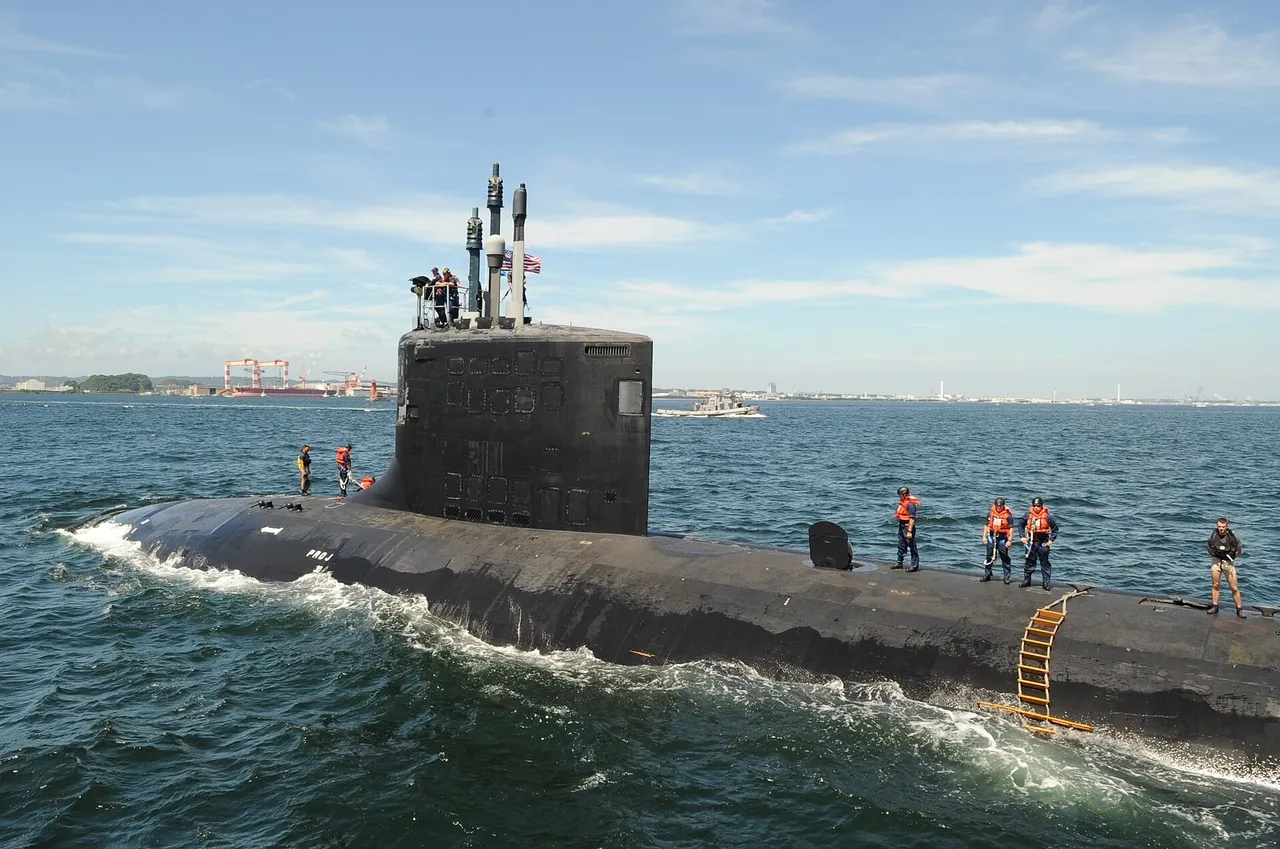
The US Navy has formally asked American shipyards to say whether they could serve as prime builders for SSN(X), the nuclear-powered attack submarine meant to succeed the Virginia class. A sources-sought notice, numbered N00135-27-SSNX, was posted on 9 October with responses due on 15 October.
The notice was issued by the Navy's Director of Submarine Programs, its Director of Design and Construction and the SSN(X) programme office, PMS 351. It is market research only. The Navy says it wants to establish a baseline of domestic industrial capability, identify future capital spending needs and inform the acquisition strategy for the SSN(X) shipbuilding pipeline, and it stresses that there is no solicitation and no commitment to award a contract.
What a prime yard must do
A prime yard would have to handle complex manufacturing, complete hull fabrication, modular outfitting, precision systems integration, installation of the reactor compartment and post-delivery testing. The programme office is asking for details on each yard's operating capacity, drydock availability, specialised tooling and qualified design workforce.
The facility list is demanding: certified graving docks or floating drydocks, heavy module fabrication shops and gantry cranes able to lift and move whole submarine modules. Respondents also need mature quality management and non-destructive testing, and certified welding procedures for high-yield submarine steels, advanced non-ferrous alloys and acoustic treatments.
Naval News judged that those criteria leave practically two candidates: General Dynamics Electric Boat at Groton, Connecticut, and Huntington Ingalls Industries' Newport News Shipbuilding in Virginia. Both build Virginia-class boats today, with Electric Boat as the lead contractor.
A long road to the 2040s
SSN(X) is still early in its life. Its funding was cut by roughly $121 million, to about $315 million, in the president's budget request for fiscal 2027, according to Naval News, though design work continues and the programme is expected to move on to firming up requirements and then an acquisition strategy next year. Construction is pencilled in for around 2034, with service entry in the early to mid 2040s.
Possible improvements include higher transit speed to reach patrol areas faster, the ability to work with several uncrewed underwater vehicles, new propulsion technology and a new set of weapons and sensors.
Until then the Navy will keep buying Virginia-class submarines, likely ending with more than 60 in service. Blocks V, VI and VII remain to be built. Blocks V and VI add the Virginia Payload Module, an extra hull section that can carry 28 more Tomahawk-size weapons or 12 Conventional Prompt Strike missiles, while budget documents suggest Block VII may serve as a bridge for technology meant for SSN(X).
The notice is an early, low-key step, but it shows the Navy has started measuring the industrial base it would need for a submarine that is not expected to join the fleet for well over a decade.
Sources
More in Navy
Taiwan's Hai Kun submarine returns to sea for its 26th trial after a 39-day gap
The prototype submarine left Kaohsiung for its 20th dive test as an analyst said a June torpedo firing met the minimum bar for delivery, which could come by January.
TaiwanDefence · 1d ago · 2 min read

India's navy and coast guard line up 76 utility helicopters to retire their Chetaks and Cheetahs
The roughly Rs 15,000 crore plan, 51 for the navy and 25 for the coast guard, is due before a high-level defence ministry meeting, defence sources say.
TaiwanDefence · 1d ago · 2 min read
GRSE hands India's navy the submarine hunter Ashank, 18 days after Amini
The shallow-water anti-submarine craft was accepted on 23 November, and GRSE now has two more of the class left to finish for the Indian Navy.
TaiwanDefence · 2d ago · 2 min read
Discussion (0)
Comments are not currently available.