Taiwan tests AI-guided uncrewed vessels with federated learning off Kaohsiung
Ocean Affairs Council reports domestically built AI navigation and federated-learning software finished open-water USV patrol trials off Kaohsiung.
TAIPEI —
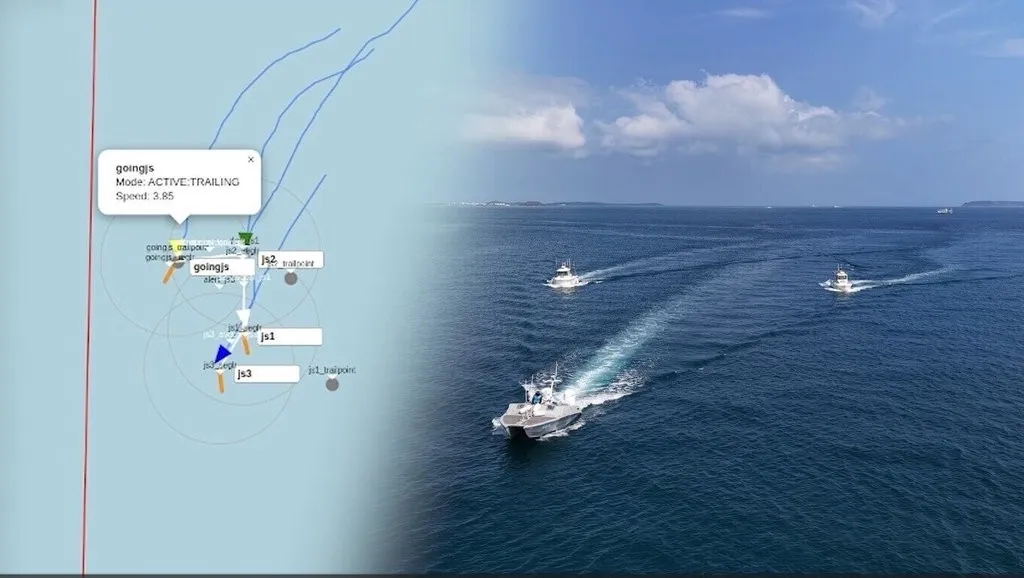
Taiwan's Ocean Affairs Council said a domestically developed package that pairs artificial-intelligence navigation with federated learning has finished autonomous patrol trials on medium- and large-sized uncrewed surface vessels in waters off Kaohsiung, marking a practical step toward smarter coastal monitoring without pooling classified imagery across platforms.
The work sits under the council's Marine Technology Project Program and carries the formal title covering AI navigation and federated learning for maritime object recognition, including feasibility and reliability testing for scalable uncrewed surface vessels. Officials framed the project as part of a broader push to put smart maritime systems into operational use around Taiwan's ports and nearshore waters.
According to the council, maritime imagery has often been collected as isolated snapshots, while national and port-security rules limit how widely datasets can be shared. That fragmentation has constrained conventional AI training because models need large, diverse examples of ships, fishing boats, and other surface objects.
Federated learning is intended to break that bottleneck without moving raw pictures. Each vessel trains locally, then exchanges model parameters rather than the underlying photographs, allowing the fleet to improve recognition performance while sensitive images remain on the originating platform. The council described the approach as keeping data in place and moving only the learned model updates.
Researchers also applied elastic weight consolidation to reduce catastrophic forgetting, a failure mode in which a model that learns new object classes loses earlier skills. The technique is meant to let craft absorb unfamiliar markers such as newly introduced maritime warning buoys without degrading detection of commercial ships and fishing boats already in the training set.
Open-water stress tests were run off Fengbitou near Kaohsiung Harbor in sea states of force 2 or higher and under difficult lighting. The vessels completed point-to-point obstacle avoidance, hexagonal routing, Z-shaped patrol legs, and large-area lawnmower search patterns while operators monitored performance against published recognition and latency targets.
The council reported mean average precision above 90 percent for core object detection, inference speed of at least 15 frames per second, and a forgetting rate kept below 10 percent for previously learned classes. Those figures were presented as evidence that the autonomy stack remained stable enough for repeated patrol tasks rather than only laboratory trials.
The project also produced what the council called Taiwan's first standard operating procedures for running medium and large uncrewed vessels in open waters. An emergency control path is designed to restore human authority within three seconds if communications fail, a safeguard intended to keep uncrewed craft from continuing unsupervised when links drop.
All algorithms in the system were developed domestically, the council said, with the explicit goal of reducing dependence on foreign technologies that can be restricted by export controls. Officials linked that localization agenda to stronger resilience in marine research and maritime security governance around Taiwan's busy southern approaches.
Central News Agency and Taipei Times both carried the announcement on consecutive Taipei dates, describing the same Kaohsiung trials, federated-learning architecture, and performance thresholds. Taken together, the reporting portrays a coast-facing autonomy program that pairs recognition accuracy with data-sovereignty constraints rather than a single demonstration sortie.
If the procedures and model-sharing workflow move from trials into routine deployments, Taiwan would gain another tool for persistent surface awareness near major harbors while limiting how much sensitive imagery must leave individual platforms. The council cast the results as a foundation for wider uncrewed fleets rather than a finished operational network.
This report was produced through TaiwanDefence’s automated publishing system and includes links to its supporting sources.
Discussion (0)
Comments are not currently available.