
Hanwha Aerospace to build South Korea's first 10,000-pound jet engine for a stealthy spy drone
The Agency for Defense Development picked Hanwha for a 177.3 billion won project to build four high-bypass turbofans for a low-observable reconnaissance drone by 2031.

TAIPEI —
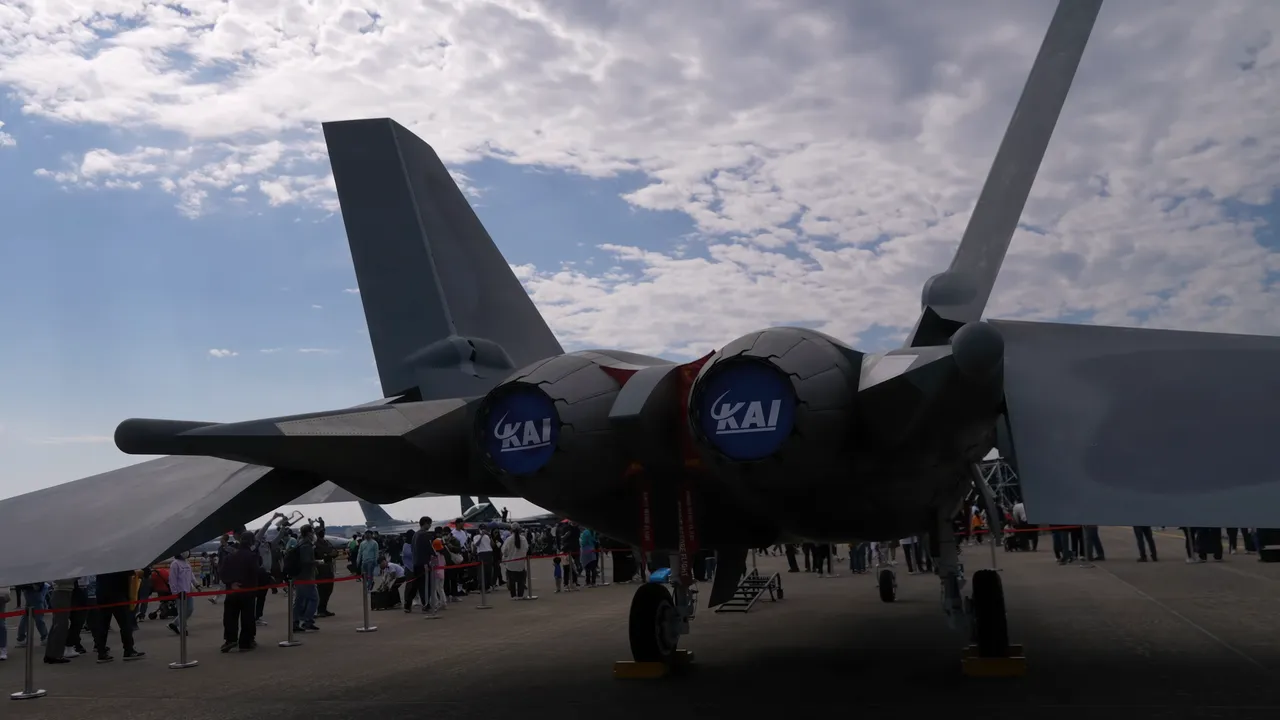
South Korea's Agency for Defense Development (ADD) has chosen Hanwha Aerospace to develop the country's first aircraft engine in the 10,000-pound thrust class, a high-bypass turbofan meant to power a low-observable reconnaissance drone. Hanwha said on 13 November that it had been named preferred bidder for the ADD-led project, which is worth 177.3 billion won in total and runs until October 2031.
Seoul Economic Daily put the value at about US$121 million, while BusinessKorea gave a figure of roughly US$130 million. No engine of this thrust has been developed in South Korea before, according to all three reports.
Under the project, Hanwha will cover the full cycle of work: detailed engine design, manufacture of key components, assembly, production and test and evaluation. It is to deliver four complete engines. The company said that handling every stage itself, from drawing board to test stand, is meant to build up a home-grown capability to design, make and test aircraft engines.
The technical goals are demanding. The engine is supposed to run for thousands of hours over its service life and to reach the highest turbine inlet temperature yet achieved by an engine developed in South Korea. A hotter turbine inlet generally raises thermal efficiency and output. It is also to have a high bypass ratio, meaning that a large share of the air drawn in flows around the engine core rather than through it, which improves propulsive efficiency and cuts fuel use. Such engines are normally found on airliners and on military reconnaissance aircraft.
During the competition Hanwha proposed design changes to cut the engine's weight. A lighter engine would give the drone more range, lower fuel consumption and more room for payload, which BusinessKorea said could include additional weapons and equipment.
Hanwha will not start from scratch. It plans to reuse the core of a 5,500-pound-class turbofan that it is already developing with ADD, namely the high-pressure compressor, combustor and high-pressure turbine that largely determine an engine's performance and efficiency. BusinessKorea described the new project as nearly doubling the thrust of that existing design.
The company frames the work as one rung on a longer ladder. It wants to be able to scale its core technology into derivative engines across several thrust classes, and Seoul Economic Daily reported that the heat-resistance, long-life and lightweight design skills gained here are meant to feed into advanced engines for next-generation fighters such as the KF-21 Block 3. BusinessKorea noted that Hanwha has 47 years of experience in aircraft engine design, manufacture, assembly and maintenance.
A Hanwha Aerospace official called the project a key milestone that would raise the thrust and performance of South Korea's own aircraft engines and secure core technologies needed to develop advanced engines step by step. The official added that the company would contribute to self-reliance in aircraft engines and to the competitiveness of the country's future aviation industry.
The reports did not name the drone the engine is meant for or say when it might fly. For now the selection makes Hanwha the developer of the engine for that future low-observable reconnaissance drone, in addition to the smaller 5,500-pound-class turbofan it is already working on with ADD.
Sources
More in Industry
US space firms tell Taiwan its biggest gaps are orbital surveillance, secure links and satellite tracking
After an AIT space industry day with Taiwan's space agency and defence officials, US companies said orbital ISR, cable-proof communications and space awareness top the list.
TaiwanDefence · 4h ago · 3 min read
Japan's navy gets a home repair base for its V-BAT drones under a Shield deal with NIPPI
A Kawasaki Heavy Industries subsidiary will maintain the Japan Maritime Self-Defense Force's V-BAT drones and train Japanese technicians to keep them flying.
TaiwanDefence · 18h ago · 3 min read

L3Harris stages a live battle network demonstration in Taiwan, linking AI targeting and drone defences
The US contractor's three-day EVEREST event in Miaoli tied Palantir's Maven software, Link 16 and counter-drone kit into one network, though no contract has been announced.
TaiwanDefence · 1d ago · 3 min read
Discussion (0)
Comments are not currently available.