
ANALYSIS
Why China's unannounced 100-ship drill, revealed on 13 November 2026, matters more than a named exercise
Taiwanese officials said on 13 November 2026 that China massed over 100 ships in an unnamed drill larger than Justice Mission 2025. The missing name is the point.

TAIPEI —
This article is an original Taiwan Defence analysis based on the cited public sources. It distinguishes reported facts from analytical judgments and does not represent original field reporting.
The argument
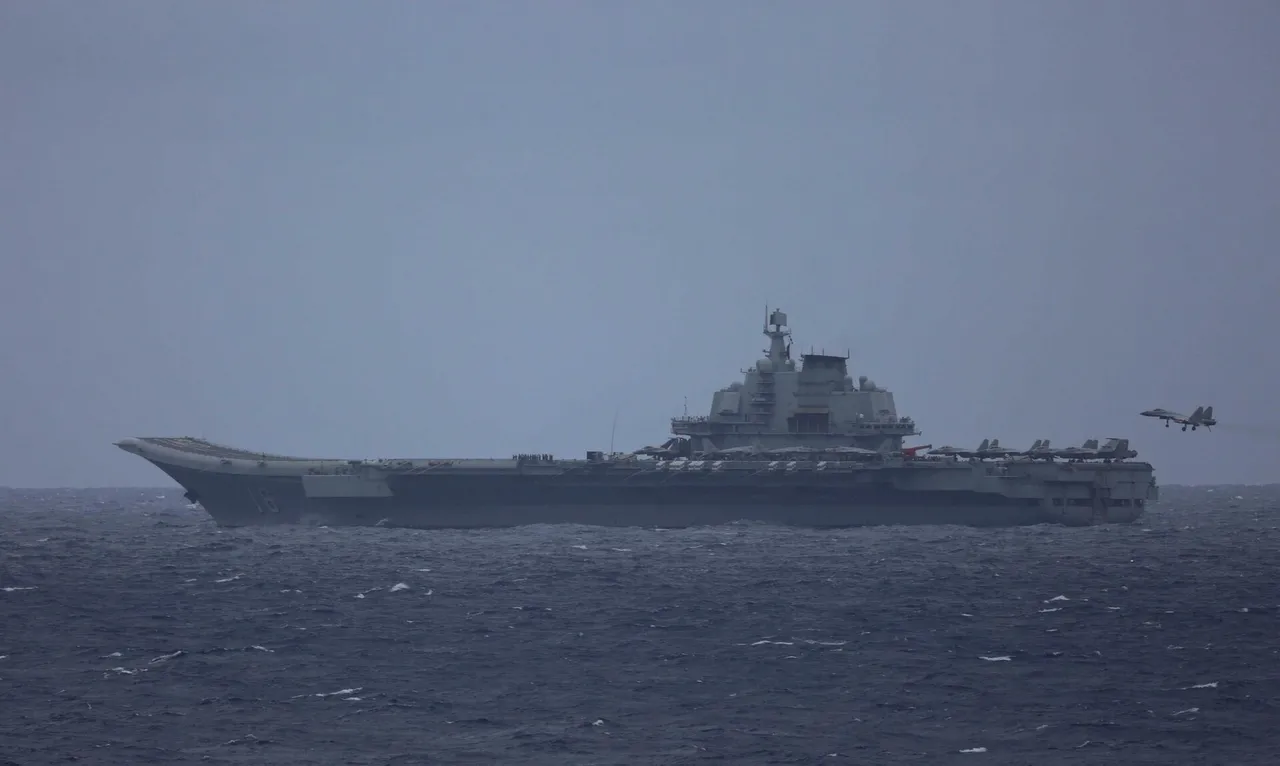
On 13 November 2026 a senior Taiwanese security official told Reuters that China's navy and coast guard had at one point massed more than 100 vessels across the western Pacific and around Taiwan earlier this month, in drills that included simulated attacks on other militaries and on cities, Taiwan's among them. The official said the deployment was larger than Justice Mission 2025, the last formally named Chinese exercise aimed at Taiwan, yet Beijing never announced it.
The lack of a name is not a detail. A declared exercise gives Taipei, Washington and Tokyo a fixed moment to protest, surge forces and rally statements. An unnamed one of greater size lets Beijing rehearse the same operations while leaving its opponents to argue about whether anything unusual happened at all.
What was reported
According to the Taiwanese official, the drills drew on naval forces from China's eastern, northern and southern theatre commands, a spread that suggested Beijing was rehearsing not only a blockade of Taiwan but wider operations across the western Pacific and trying to merge regional fleets into a single far-seas force. The official also said a Chinese submarine launched an intercontinental ballistic missile from the Yellow Sea into the Chinese mainland during the period.
The Taipei Times, adding its own reporting to the Reuters account, quoted a national security official as saying the movements of the Liaoning carrier group since mid-October showed rehearsals of breaking through First Island Chain defences and of striking military forces elsewhere in the region. That official described submarine-launched missile drills from waters east of Taiwan toward inland targets, a different launch area from the one in the Reuters account.
Defence Minister Wellington Koo said earlier in the week that China was conducting area denial drills in the western Pacific with a carrier and other naval formations. China has said the carrier is on routine training not directed at any country.
Not a blockade, but not routine
France 24 set out how quickly the numbers moved. Joseph Wu, secretary-general of Taiwan's National Security Council, reported about 100 Chinese navy and coast guard ships in the western Pacific on 3 November, the same day Taiwan's defence ministry counted 49 Chinese military aircraft near the island. By 8 to 9 November the ministry counted one aircraft and eight ships, while ship-tracking data showed civilian vessels still leaving Taiwanese ports and transiting the strait at the height of the activity.
HEC Paris researcher Emmanuel Véron told the broadcaster that online claims of a blockade were false, but that the naval mobilisation was unprecedented in size and, unlike earlier pressure campaigns concentrated on the side of Taiwan facing China, spread across the north, south and centre. Reuters reported that the deployment had fallen to around 70 vessels inside the First Island Chain by 13 November.
Those two pictures fit together. The surge was short, wide and scattered across several seas rather than drawn tight around Taiwan, which is what a rehearsal for keeping outside navies away would look like, rather than a rehearsal for sealing the island's ports.
Why silence helps Beijing
A foreign intelligence source told Reuters that the absence of any announcement looked deliberate, letting Beijing apply pressure while avoiding a diplomatic backlash. The timing supports that reading. China is hosting the APEC leaders' summit in Shenzhen next week, where Donald Trump and Xi Jinping are expected to meet, and Xi gave a policy speech on Taiwan on 12 November that urged peaceful unification and did not mention force.
An unnamed drill lets Beijing keep both messages running at once: conciliation in public, rehearsal at sea. It also costs Taiwan something specific. Without an official start and end, Taipei has to make the case for itself that an exercise took place, through anonymous briefings and ship counts, which is weaker than pointing to a Chinese announcement.
What it means for Taiwan's warning time
Named exercises such as Justice Mission 2025 trained observers to treat a Chinese announcement as the signal. If the larger rehearsals now come without one, the useful indicators become the ones Taiwan's officials cited: the number of hulls at sea, how many theatre commands contribute them, and how far east carrier groups operate.
That favours partners who can watch the whole western Pacific together. A drill spread from the Yellow Sea to the waters east of Taiwan and beyond the First Island Chain is the kind no single navy can follow alone, which puts a premium on pooled surveillance among Taiwan, Japan, the United States and the Philippines.
What to watch
Three things will show whether this becomes the pattern. The first is whether Beijing later names or describes the November activity, as France 24's analyst suggested it might. The second is whether Chinese ship numbers surge again around the APEC summit in Shenzhen. The third is whether Taiwan's defence ministry starts publishing fuller far-seas counts, rather than leaving the record to anonymous briefings.
Sources
More in Analysis
Why Zhang Shengmin's rise, detailed on 13 November 2026, shows Xi putting PLA loyalty before war-readiness
A report on 13 November 2026 showed the PLA purge enforcer is now the only other member of Xi's military commission, a sign discipline outranks combat command.
TaiwanDefence · 12m ago · 4 min read
Why China's coast guard patrol east of Taiwan on 12 November 2026 is a contest over jurisdiction
A Chinese coast guard ship told a Taiwanese cutter off Orchid Island on 12 November 2026 that it was enforcing Chinese law, a day after the G7 warned about the east.
TaiwanDefence · 7h ago · 4 min read
Why a US audit of F-35 spare parts, published on 9 November 2026, matters for Pacific air forces
A US audit published on 9 November 2026 found the Pentagon cannot reliably track 31 billion dollars in F-35 parts, a weak spot for allies building around the jet.
TaiwanDefence · 2d ago · 3 min read
Discussion (0)
Comments are not currently available.