
ANALYSIS
Why China's coast guard patrol east of Taiwan on 12 November 2026 is a contest over jurisdiction
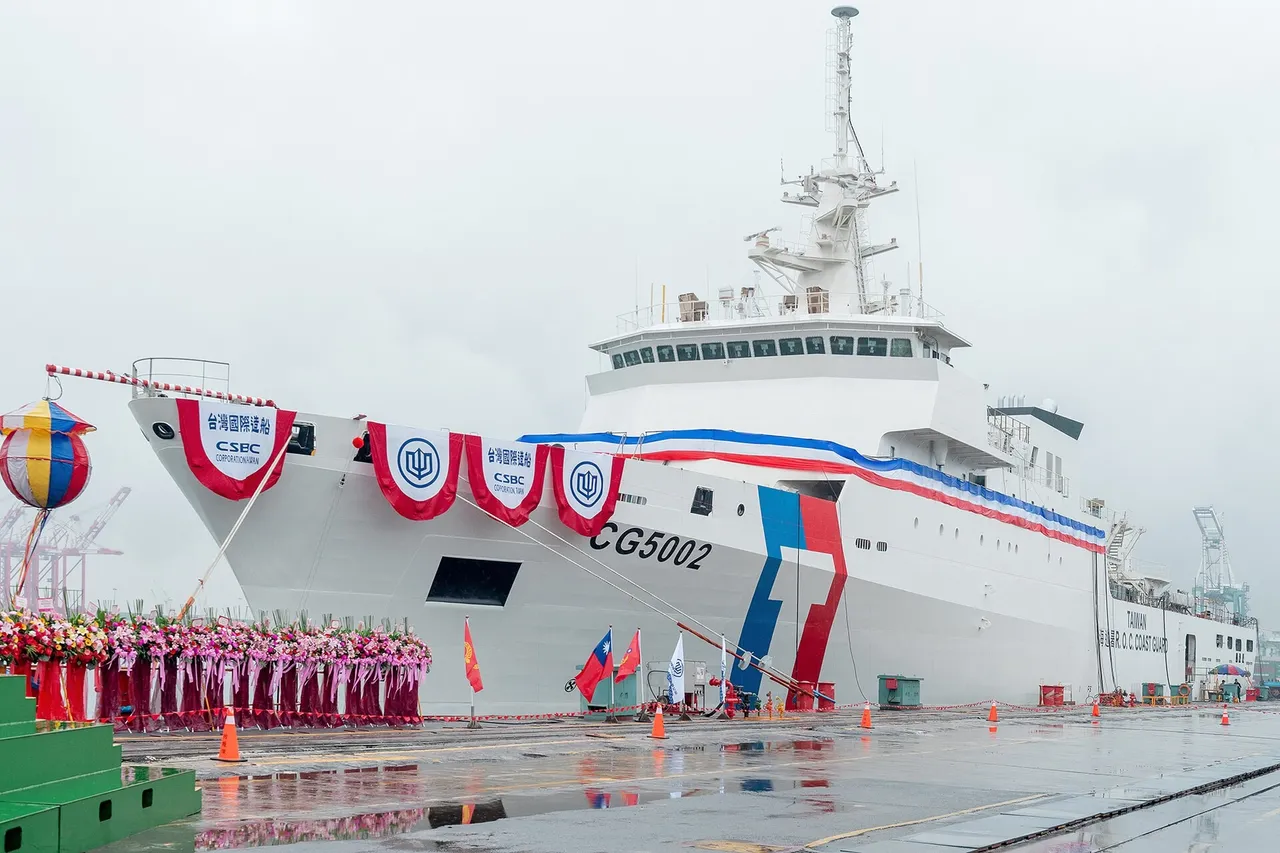
A Chinese coast guard ship told a Taiwanese cutter off Orchid Island on 12 November 2026 that it was enforcing Chinese law, a day after the G7 warned about the east.

TAIPEI —
This article is an original Taiwan Defence analysis based on the cited public sources. It distinguishes reported facts from analytical judgments and does not represent original field reporting.
The argument
At about 3 p.m. on 12 November 2026 the Taiwanese coast guard cutter Hualien found China Coast Guard ship 2503 some 40 nautical miles south-east of Orchid Island, according to Taiwan's Coast Guard Administration as reported by the Central News Agency. As the cutter moved to expel it, the Chinese crew announced by radio that they were carrying out a law-enforcement inspection patrol in waters east of what they called China's Taiwan, and told ships to obey Chinese law.
The episode was not a collision, a boarding or a blockade. Its significance lies elsewhere. Beijing is using coast guard patrols to build a record of claimed jurisdiction in the waters east of Taiwan, the side of the island that Taipei regards as its wartime lifeline, and the message arrived a day after the Group of Seven singled out exactly those waters as a threat to stability.
What happened at sea
The Chinese ship stayed outside Taiwan's restricted waters, about 14 nautical miles beyond their limit, but inside the exclusive economic zone that Taiwan claims, public broadcaster PTS reported. Its radio message denied that the Republic of China exists and described the People's Republic as the sole legal government of all China.
The Hualien answered by radio that Taiwan and the People's Republic are not subordinate to each other, that the area is part of Taiwan's exclusive economic zone, and that the Chinese ship enjoys no sovereign rights or jurisdiction there. The Coast Guard Administration described the Chinese broadcast as fake law enforcement aimed at a real expansion of power, a form of cognitive warfare that it said breaches the UN Convention on the Law of the Sea. By 8 a.m. on 14 November the Chinese ship had moved out to about 67 nautical miles south-east of Hualien port, and Taiwanese ships were still shadowing it.
Evidence and constraints
The patrol fits a pattern that has been building for months. Reuters, in a report carried by the Asahi Shimbun, said China has stepped up activity off Taiwan's east coast since June with regular coast guard patrols, and that after a patrol in October Taipei accused Beijing of harassing shipping and trying to exert a fictional jurisdiction. PTS, citing coast guard figures, said Taiwan detected 481 Chinese official vessels in July and August 2026 alone.
Coast guard patrols also do not travel alone. In the 24 hours to 6 a.m. on 14 November, Taiwan's defence ministry tracked 10 Chinese military aircraft sorties, eight warships and three official ships around the island, with four sorties crossing the median line into central, south-western and eastern airspace, on.cc reported. Defence Minister Wellington Koo said earlier in the week that China was running area-denial drills in the Western Pacific involving an aircraft carrier, according to Reuters.
The constraints cut both ways. The Chinese ship did not board, inspect or detain anyone, and it kept clear of the restricted waters, so this was a claim staged in words rather than enforced in deeds. Taiwan's answer was also words, plus shadowing. Neither side changed the facts on the water, which is precisely why the wording matters: an inspection patrol that is announced, filmed and repeated can later be cited as precedent, while a rebuttal by radio leaves no comparable record.
What could change
The G7 foreign ministers, meeting in Paris, said in a joint declaration published late on 11 November that China's increasingly assertive activities east of Taiwan threaten regional stability, freedom of navigation and the safety of international shipping. Reuters called it the strongest unified expression of concern yet, and Taiwan's presidential office welcomed it. China's foreign ministry did not immediately respond to a Reuters request for comment.
The next steps to watch are operational rather than rhetorical. If Chinese coast guard ships begin hailing, inspecting or diverting civilian vessels east of Taiwan, or if their patrols are timed to coincide with carrier drills in the Western Pacific, the claim would shift from narration to practice. If patrols stay at the current level and Taiwan, Japan and other G7 members keep documenting them, Beijing gains less from each repetition.
Why it matters
According to Reuters, Taiwanese officials believe China is practising for a possible maritime blockade by layering military, paramilitary and civilian assets, and Taipei sees the east coast as critical to supply routes from allies in a blockade or war. The west of the island faces the Strait and the mainland; the east is where help would have to arrive.
That is why a radio exchange off Orchid Island deserves more attention than its quiet ending suggests. Each patrol that asserts Chinese law in those waters tests whether Taiwan and its partners will treat the claim as noise or as a step towards the legal cover a quarantine would need. The Coast Guard Administration's rebuttals and the G7 statement show that, for now, the claim is being contested on the record, which is the main tool Taipei has short of matching Beijing ship for ship.
Sources
More in Analysis
Why Zhang Shengmin's rise, detailed on 13 November 2026, shows Xi putting PLA loyalty before war-readiness
A report on 13 November 2026 showed the PLA purge enforcer is now the only other member of Xi's military commission, a sign discipline outranks combat command.
TaiwanDefence · 12m ago · 4 min read
Why China's unannounced 100-ship drill, revealed on 13 November 2026, matters more than a named exercise
Taiwanese officials said on 13 November 2026 that China massed over 100 ships in an unnamed drill larger than Justice Mission 2025. The missing name is the point.
TaiwanDefence · 1h ago · 4 min read
Why a US audit of F-35 spare parts, published on 9 November 2026, matters for Pacific air forces
A US audit published on 9 November 2026 found the Pentagon cannot reliably track 31 billion dollars in F-35 parts, a weak spot for allies building around the jet.
TaiwanDefence · 2d ago · 3 min read
Discussion (0)
Comments are not currently available.