
ANALYSIS
Taiwan's pitch to build China-free drones with Japan now has to survive the Jiin Ming case
On 12 October 2026, Taoyuan prosecutors said a military drone supplier hid Chinese chips, a day after Taiwan was pitched to Japan as a China-free partner.
TAIPEI —
This article is an original Taiwan Defence analysis based on the cited public sources. It distinguishes reported facts from analytical judgments and does not represent original field reporting.
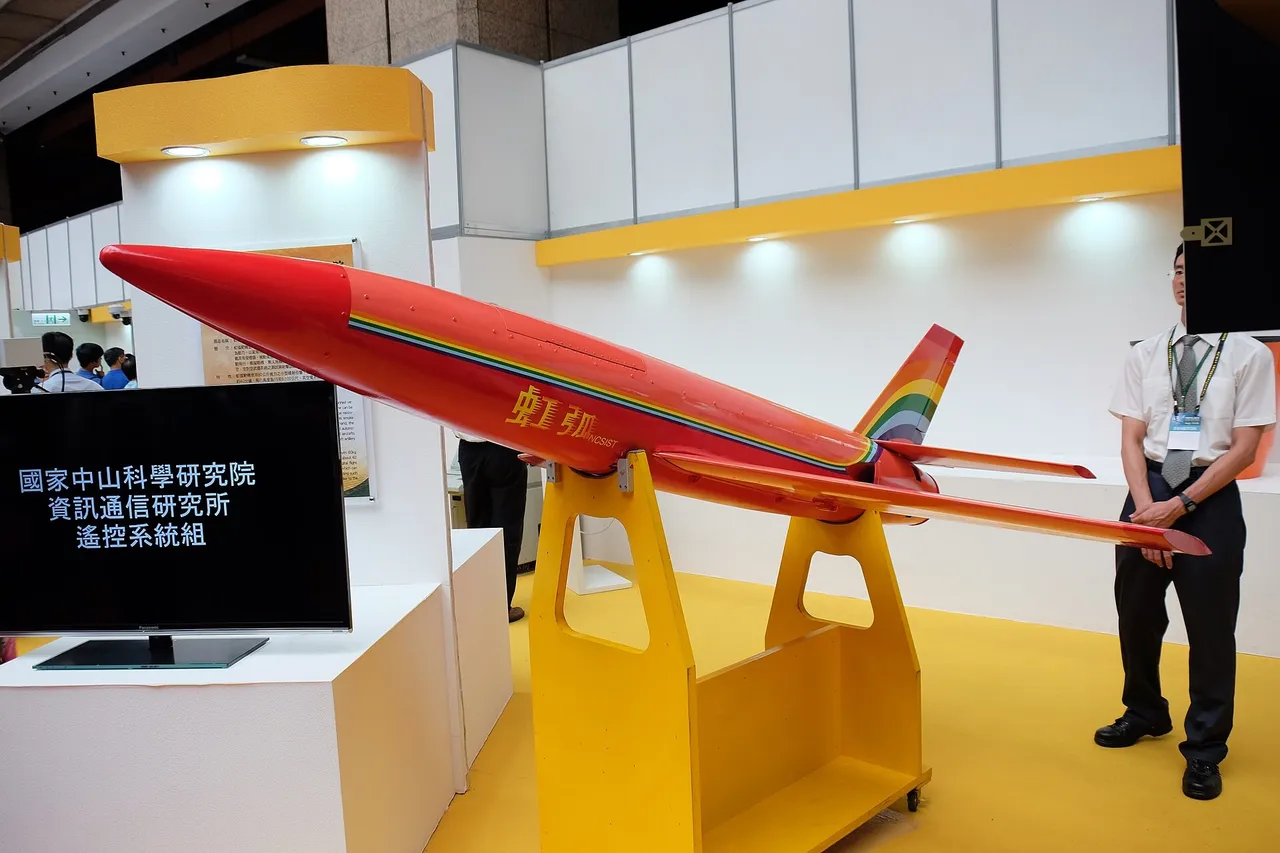
On 12 October 2026, prosecutors in Taoyuan said two executives of Jiin Ming Industry, a listed company that supplies drones to Taiwan's military, had been detained over the alleged use of banned China-made chips and camera lenses in drones delivered under recent military contracts. The day before, a retired Japanese general stood in Taipei and pitched Taiwan to Japan as the partner that could help it build drones without Chinese parts.
The two events belong to the same argument. Taiwan's case for drone cooperation with Japan rests on trust that its supply chain is free of Chinese components. The Jiin Ming case shows that this trust cannot be asserted at forums; it has to be proven part by part, and the proof that matters is traceable component origin, not production volume.
What Japan wants
Kiyofumi Iwata, a former chief of staff of the Japan Ground Self-Defense Force, told the Taiwan-Japan Future Technology Forum on 11 October that Chinese manufacturers hold about 90 percent of Japan's drone market, which he called a very serious problem. He noted that Japan's trade ministry proposed last December to build capacity for 80,000 drones a year by 2030, with domestic motors, batteries, communications modules and flight-control chips, and to work with like-minded partners including Taiwan.
Iwata argued that near-term cooperation should focus on dual-use components and modules, which face no export ban, rather than fighters or missiles. According to Storm Media, he suggested Taiwan could provide mass production, flight control, communications modules and battery packs, while Japan contributed high-performance motors, magnetic and battery materials and sensors. He said he hoped joint work could reach a production system for tens of thousands of drones.
The logic of that pitch is that Japan is trying to escape dependence on China, so the value of a Taiwanese partner lies in what is not inside its products. A Taiwanese flight controller or battery pack is worth more to Tokyo than a cheaper equivalent only if it can be shown to contain no Chinese chips.
What prosecutors allege
Prosecutors said they raided Jiin Ming, its subsidiaries and suppliers on 8 October. They suspect vice chairman and president Chien Hao-ting and business manager Chen Yang-cheng of breaching the National Security Act by knowingly supplying Chinese-made products under military procurement contracts, as well as falsifying business records and aggravated fraud. The Taoyuan District Court ordered both held for two months without visitors, citing national security implications and the risk of collusion.
The Liberty Times reported that the company and its subsidiary bid on several military drone procurements and are suspected of fitting the banned chips and lenses, then submitting false certificates of origin so military units could carry out acceptance. The paper described Jiin Ming as yet another bidder on military drone contracts suspected of using Chinese parts. The court also cited the number of transactions and the volume of sales to the military as a risk of repeat offences.
The company said operations continue as normal and that it will cooperate with investigators. It said drones made up about 3.3 percent of its revenue through September, with defence-related drone orders about 1.1 percent. The suspects have not been convicted.
Why paperwork is the weak point
The alleged method matters more than the company's size. If the case is proven, banned parts did not slip past because no rule existed; Taiwan's military contracts already forbid Chinese components. They allegedly passed because acceptance relied on certificates that could be falsified. That is the same kind of assurance a Japanese buyer would be relying on when it ordered Taiwanese flight controllers or communications modules.
It also cuts against the division of labour Iwata described. Flight control and communications modules, the pieces he suggested Taiwan supply, are exactly where a hidden Chinese chip would matter most for security. A partnership built on those modules needs inspection that goes below the paperwork to the parts themselves.
None of this means Taiwanese industry is unreliable as a whole. Investigators found the case, prosecutors acted within days of the raids, and the court took the national security angle seriously. Seen from Tokyo, a system that catches its own violations may look more credible than one that reports none.
What to watch
The test for the Japan-Taiwan drone idea will be whether either government sets up shared rules on component origin, such as audited bills of materials or independent parts testing, before any joint production starts. Iwata noted that Taiwan is not among the 17 countries allowed to receive Japanese defence transfers, which keeps cooperation at the level of dual-use parts for now. In that space, the side that can prove where every chip came from will set the terms.
Closer to home, the Jiin Ming investigation will show how far the falsified certificates reached and whether the defence ministry tightens drone acceptance testing. Both answers will be read in Tokyo as closely as in Taipei.
Sources
More in Analysis
Japan's first ACSA fuel draw in the Philippines is logistics practice Taiwan would need
On 9 October 2026 Tokyo confirmed its ASDF drew fuel from the Philippine Air Force under ACSA for the first time during Doshin-Bayanihan drills.
TaiwanDefence · 9m ago · 4 min read
Taiwan's pilot fill rate hides an F-16 manning crunch as Block 70s arrive
On 12 Oct 2026 Taipei said pilot fill is 87.8% and F-16 units are the manning crunch as Block 70s arrive.
TaiwanDefence · 3h ago · 4 min read
Taiwan's new F-16 Block 70s will train before their jamming shield is ready
On 12 October 2026, defence leaders told lawmakers Viper Shield software is still in development even as more jets may ferry this month.
TaiwanDefence · 5h ago · 4 min read
Discussion (0)
Comments are not currently available.