
US Navy fits Ohio-class subs with DRAKE to jam drones near ports
October 2026 disclosures say Northrop Grumman's soft-kill jammer will cover surfaced SSGN port and transit windows; Taiwanese coverage flags lessons as Hai Kun nears delivery tests.
TAIPEI —
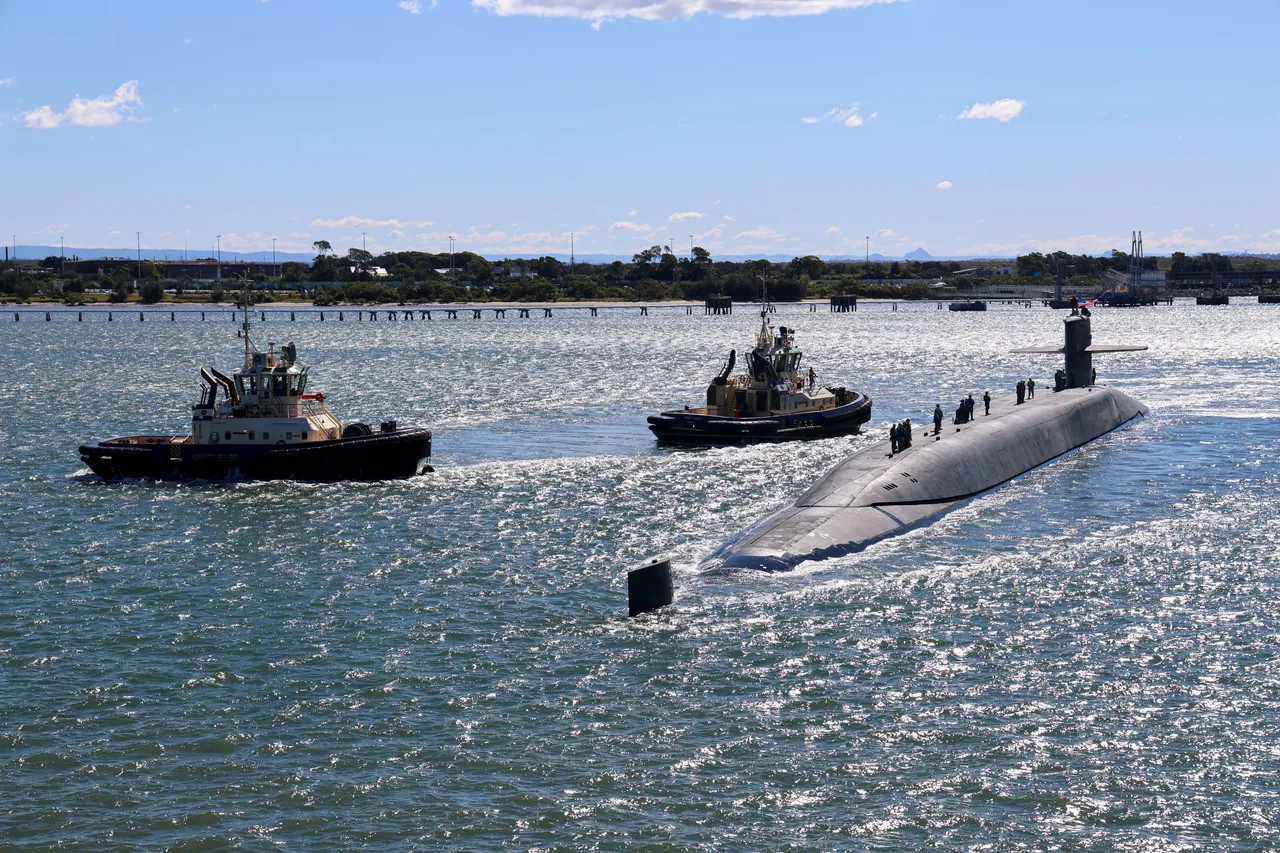
The US Navy is fitting Northrop Grumman's DRAKE counter-drone electronic warfare system to Ohio-class guided-missile submarines, including USS Ohio, to detect, track and jam small unmanned aircraft during surfaced transits, harbour approaches and pierside periods, according to Navy officials cited ahead of the Association of the United States Army exhibition in Washington in October 2026.
DRAKE, short for Drone Restricted Access Using Known Electromagnetic Warfare, uses a software-defined radio to monitor the electromagnetic environment for signals linked to small drones. Operators can watch a contact without immediately jamming, then cut the radio-control link when authorised, avoiding kinetic interceptors that are hard to integrate on a submarine.
Nuclear-powered boats depend on underwater concealment for survival, yet they become visible to cheap commercial drones with cameras whenever they surface for port calls, special-operations transfers or strait transits. Army Recognition reported that the same vulnerability window has pushed counter-drone electronic warfare from the surface fleet onto the Navy's highest-capacity conventional strike submarines.
Northrop Grumman is rolling software and hardware updates drawn from field use, including an Android operator interface meant to simplify counter-drone work. The company says DRAKE draws on Joint Counter Radio-Controlled Improvised Explosive Device Electronic Warfare technology already used by the US Army, Navy and Air Force, and that new threat libraries can be loaded without ripping out installed hardware.
USS Ohio is one of four Ohio-class ballistic-missile submarines converted to conventionally armed guided-missile boats that can carry up to 154 Tomahawk land-attack missiles and embark special operations personnel. The Navy has not published which DRAKE variant the SSGNs carry, antenna locations, detection ranges or how many of the four boats have received kits.
The timing matters for first-island-chain navies watching Taiwan Strait grey-zone pressure. Taiwanese reporting on 14 October highlighted the DRAKE fit as evidence that even strategic US platforms now treat small drones as a pier and transit threat, not only a land-force problem.
Taiwan itself is pushing the indigenous Hai Kun submarine toward late-October deep-dive and overnight endurance tests before a planned year-end delivery window. When that boat and the upgraded Hai Lung class leave or approach home waters, they will face the same class of low-cost aerial ISR that DRAKE is meant to blunt without firing a missile.
Analysts note DRAKE only addresses radio-controlled drones. Fibre-optic guided or fully autonomous aircraft fall outside its soft-kill model, so submarine force protection still rests on base defences, emission control and staying submerged. For Taiwan, the US move is a readiness signal: port and strait C-UAS for submarines is now mainstream US Navy practice, not an experimental add-on.
Sources
More in Indo-Pacific
Retired Japanese admiral warns China is using a ripe-persimmon strategy
Former MSDF chief Tomohisa Takei told a Taipei sea-lane conference on 14 October 2026 that Beijing is shortening grey-zone timelines and urged Japan, Taiwan and the Philippines to share coast-guard awareness.
TaiwanDefence · 4h ago · 2 min read

US says South Korea has not met conditions for a key wartime command test, and annual defence talks may slip
Washington told Seoul its future combined command has not met FOC conditions, clouding a 2027 handover target as the allies' defence talks look set to move.
TaiwanDefence · 16h ago · 3 min read

US Army in Korea wants to become the spare-parts factory for American forces across the Indo-Pacific
Eighth Army is printing and machining parts for troops in Okinawa and Guam, to keep US forces supplied inside the First Island Chain off China's coast.
TaiwanDefence · 1d ago · 3 min read
Discussion (0)
Comments are not currently available.