
ANALYSIS
Why CENTCOM's unmanned surge matters more for Taiwan as a joint-force scaling template
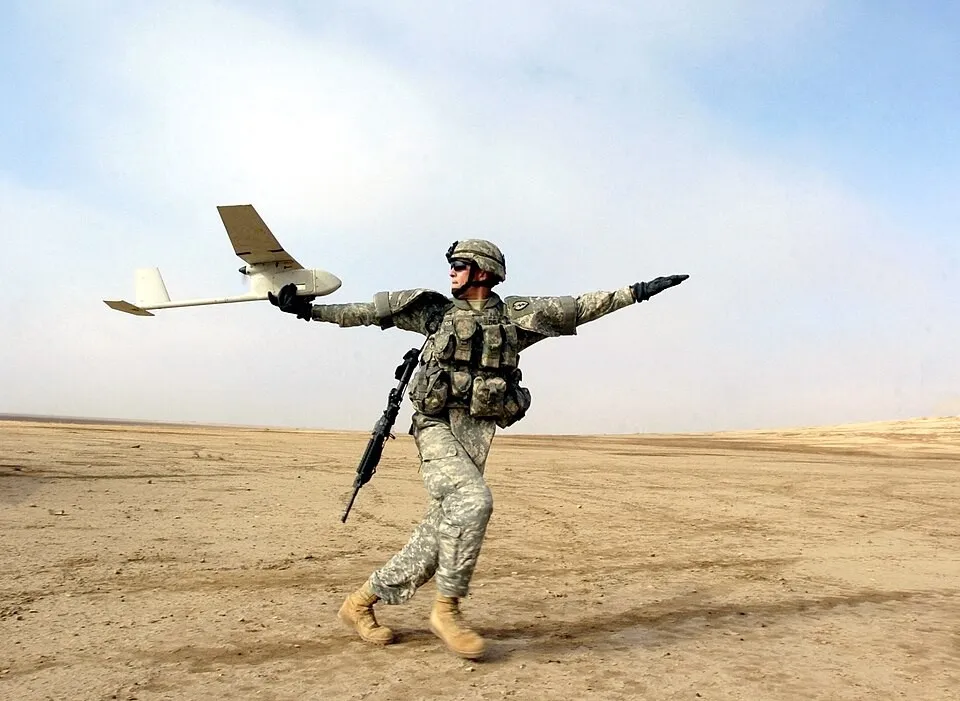
In November 2026 the Pentagon said Central Command received more than 25,000 unmanned systems this year, a fielding it frames as the start of joint-force scaling toward the Pacific.
TAIPEI —
This article is an original Taiwan Defence analysis based on the cited public sources. It distinguishes reported facts from analytical judgments and does not represent original field reporting.
In November 2026 the US Department of War said units in the Central Command area had received more than 25,000 unmanned aircraft and counter-drone systems so far this year. The disclosure, published by the Pentagon on 4 November and reported in Taipei on 8 November, is the first detailed public accounting of how many of those systems have already reached a single combatant command in 2026.
The same account broke that total into more than 24,000 counter-drone systems fielded through Joint Interagency Task Force 401, more than 1,300 one-way attack drones, and more than 100 uncrewed surface and underwater vessels. The Pentagon said the effort was backed by about 782 million dollars.
The argument
Those figures are easy to file as another Middle East logistics story. The more useful reading for Taiwan is that Pentagon managers are treating the Central Command deliveries as proof that a new acquisition office can push cheap, attritable mass to a combatant command and then copy that method across the joint force.
Owen West, the Pentagon official who directs the unmanned-systems portfolio and leads Project Agincourt, said the thousands of systems operating across Central Command this year were only the beginning. He said the goal was to scale those capabilities across the joint force.
Defence Industry Europe reported on 7 November 2026 that the Pentagon planned to keep supplying Central Command while expanding deliveries to US forces in the Pacific and Europe and across the wider joint force. Liberty Times carried that same Pacific expansion point in Taipei the next day.
Evidence and constraints
The fielding sits under a Direct Reporting Portfolio Manager for Unmanned Systems created this year to speed the development, purchase and delivery of autonomous systems. The Pentagon said the office brought together Joint Interagency Task Force 401, the War Department Innovation Unit and the Defense Autonomous Warfare Group.
In September the defence secretary added Project Agincourt, an effort led by West and Navy Senior Chief Max Strasiser to prepare an Autonomous Warfare Command. The Pentagon and later specialist reporting describe that command as a planned four-star organization due to stand up by 1 October 2027.
The Pentagon said that over the past year the department had invested more than 6 billion dollars in unmanned systems across air, land and maritime domains. It also described a sequence of industrial gauntlets intended to draw commercial manufacturers into larger production runs, raising planned orders toward 150,000 low-cost drones by January 2028 while cutting the price per drone.
Officials said they were expanding production on commercial lines and using modular software so that new equipment could reach troops faster. The stated aim is to give commanders lower-cost systems they can use in large numbers, reducing the need to fire munitions that cost millions of dollars each.
What could change
The November accounts describe the Autonomous Warfare Command as a planned organization with a 2027 target date, not as a command that already exists. They also describe the Central Command deliveries as the start of a wider effort rather than its completed end state.
A second constraint is geographic. Counter-drone shields designed to protect forward-deployed forces in the Middle East do not automatically become the maritime reconnaissance and one-way strike web that US and Taiwanese units would need against a larger navy and a denser missile force in the western Pacific.
Production scale could change that picture if the next batches are actually tailored for a maritime fight and sent to Pacific units, as specialist reporting says is the plan. If the industrial machine stays pointed at Central Command, the 25,000-system figure will remain a regional stockpile rather than a template.
Why it matters
For Taiwan, the useful question is not whether 25,000 systems already in the Middle East change the balance in the Taiwan Strait today. They do not. The useful question is whether the United States is building a repeatable way to manufacture, field and replenish unmanned mass that can also be sent to the Pacific.
The November 2026 disclosure, together with reporting that later deliveries are meant to reach the Pacific, suggests that Washington wants the Central Command experience to become that method. Whether industry hits the cheaper unit prices, whether the 2027 command is stood up on time, and whether Pacific forces receive systems suited to a maritime fight remain open. The subject matters because Taiwan's defence problem is a contest of replenishment as much as of platforms already on hand. A scaling template that never leaves Central Command would leave that problem untouched. A template that does reach the Pacific would be one of the few US industrial moves that could change the mathematics of a prolonged Taiwan fight.
Sources
More in Analysis
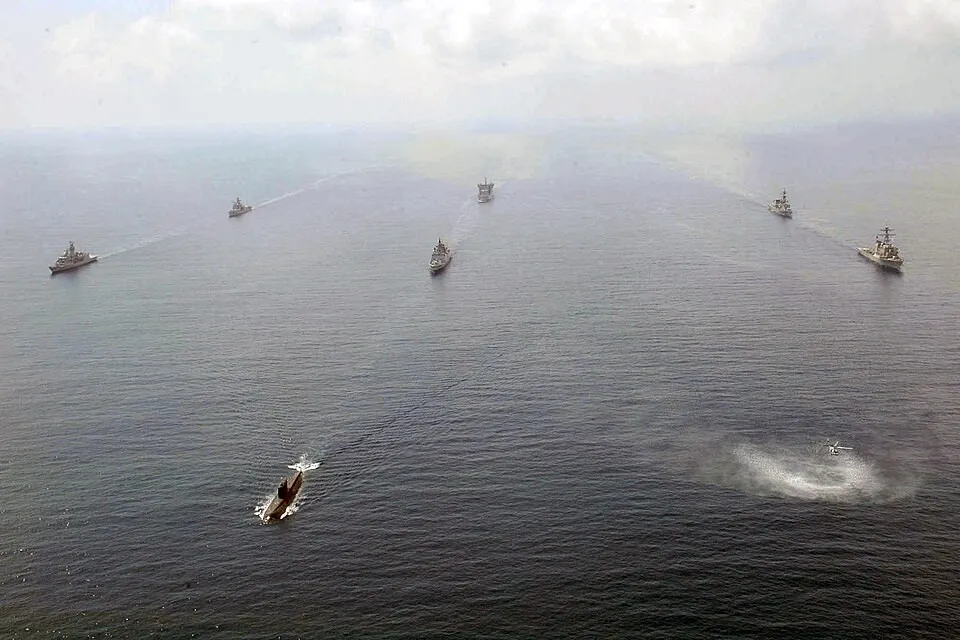
Why Malabar 2026's sub-hunting focus matters more for Taiwan than the Quad summit optics
Malabar 2026 opened on 5 November with the Quad navies rehearsing submarine hunts while China kept more than 100 ships at sea around Taiwan's approaches.
TaiwanDefence · 2h ago · 4 min read

Why China's dark-ship coast guard probes at Pratas matter more than the expulsion count
On 31 October 2026 a Chinese coast guard ship ran dark into Pratas restricted waters, the 13th such entry this year, and analysts say the real test is supply access.
TaiwanDefence · 2h ago · 4 min read
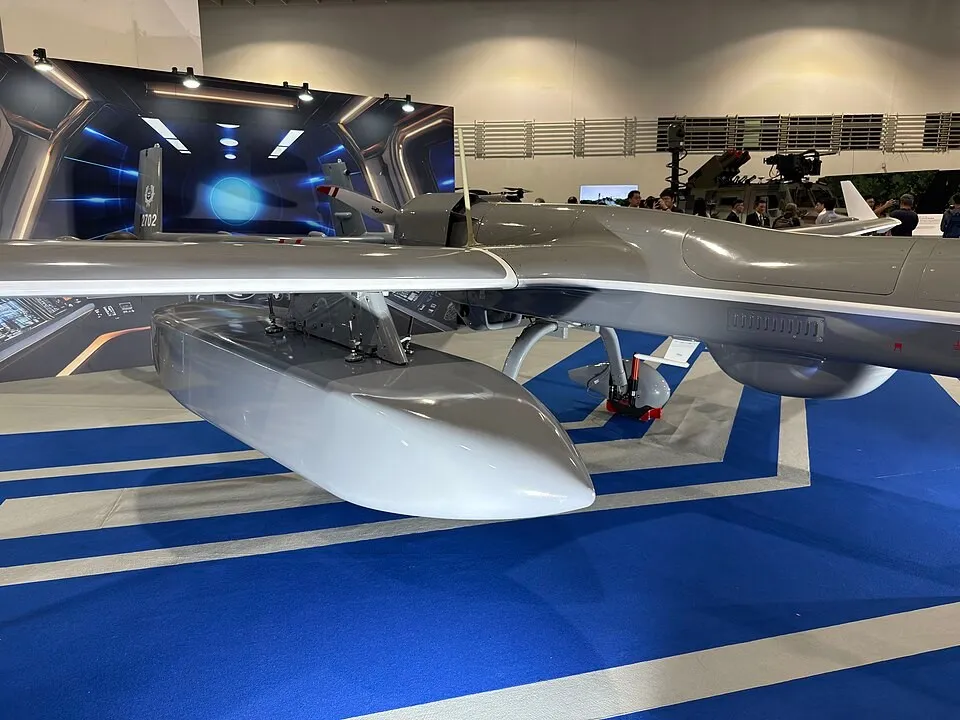
Why the navy's NT$990m Yilan drone airfield plan matters for watching Taiwan's northeast seas
A 2027 budget line reported on 8 November 2026 puts a navy drone runway in Yilan, aiming to cut transit time and give drones a wartime refuge.
TaiwanDefence · 4h ago · 4 min read
Discussion (0)
Comments are not currently available.