
ANALYSIS
Why China's dark-ship coast guard probes at Pratas matter more than the expulsion count
On 31 October 2026 a Chinese coast guard ship ran dark into Pratas restricted waters, the 13th such entry this year, and analysts say the real test is supply access.

TAIPEI —
This article is an original Taiwan Defence analysis based on the cited public sources. It distinguishes reported facts from analytical judgments and does not represent original field reporting.
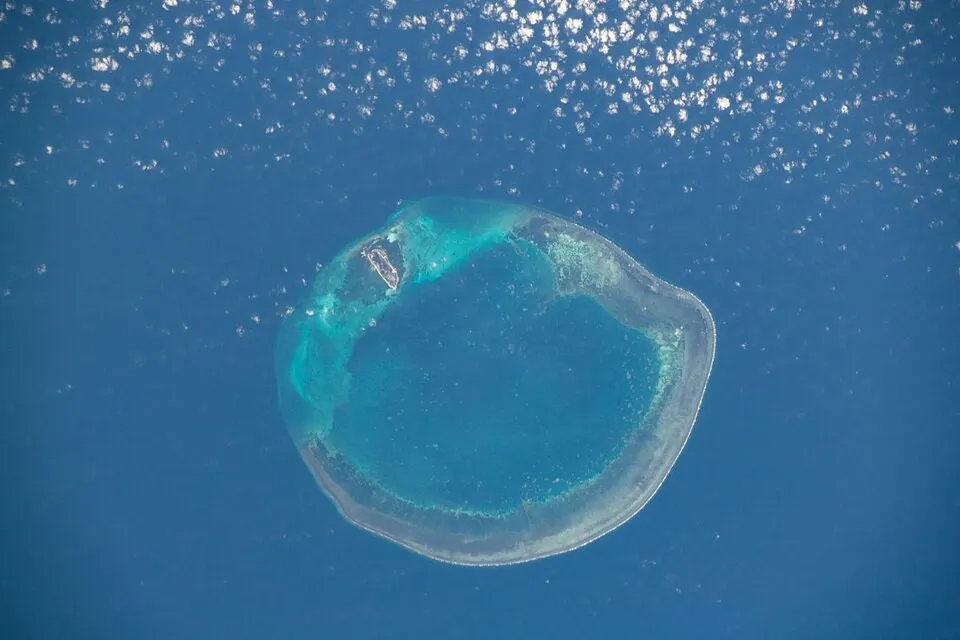
On 31 October 2026 a China Coast Guard ship switched off its automatic identification system and sailed into the restricted waters around Taiwan-held Pratas, the remote atoll Taiwan calls Dongsha. Taiwan's Coast Guard Administration said the ship, hull number 3102, was first spotted before dawn northwest of the island and crossed into the restricted zone from the west at about 04:00 local time.
The administration sent the patrol vessel Xunhu No. 7 forward to shadow it. The two ships came within about one nautical mile of each other while Taiwanese crew broadcast repeated demands in Chinese and English for the intruder to leave, and the coast guard said it shadowed the ship throughout and acted to expel it.
According to the Taiwanese account, the Chinese ship answered by radio that it was carrying out a law enforcement patrol in waters under the jurisdiction of the People's Republic of China. That is Beijing's claim. Taiwan rejects it and says the Republic of China holds sovereignty over the atoll and the surrounding sea.
The argument
Coverage of these episodes tends to focus on the tally. The coast guard said it had now expelled Chinese coast guard ships from Pratas waters 13 times this year, involving 16 ship visits, and Radio Free Asia counted the 31 October entry as the third Pratas incident of October after encounters on 1 October and 18 October.
The more useful reading is that the count matters less than the method. A ship running without its transponder, entering from an unexpected direction and broadcasting a claim of law enforcement is testing whether Taiwan can detect, track and answer it each time. That is the groundwork Beijing would need before it tried to regulate who reaches the island.
Analysts interviewed by Radio Free Asia drew that line explicitly. Benjamin Blandin, a visiting fellow at Taiwan's Institute for National Defense and Security Research, described a path that runs from normalising a Chinese presence, to asserting jurisdiction, to controlling access. Sylwia Gorska of the University of Central Lancashire said the larger risk was that Beijing might eventually try to enforce the authority it now only asserts.
Evidence and constraints
Pratas sits more than 400 kilometres from Taiwan's main island and about 260 kilometres from the Chinese mainland. Its exposed land holds an airstrip and two piers, so the coast guard and military personnel based there depend on sea and air resupply.
Taiwan has thickened its local response. Radio Free Asia reported that a wharf renovation finished on 1 July allows newly built 100-ton patrol boats to be based at the atoll alongside larger cutters that rotate nearby. In a 4 November report to lawmakers, the Ocean Affairs Council said its coast guard had expelled 588 intruding Chinese vessels in the reporting period, detained 14 and logged 464 sightings of Chinese government ships, and said it had answered coast guard incursions around both Kinmen and Pratas.
The same week, Taiwan's coast guard said two other Chinese coast guard ships were patrolling off the island's east coast, and an Ocean Affairs Council specialist said Beijing was presenting repeated incursions as routine administration in order to narrow Taiwan's ability to exercise jurisdiction. Taiwan's public broadcaster reported that Taiwan's defence ministry also tracked 22 Chinese military aircraft sorties on the day of the Pratas entry.
The analysts were careful about what the record does not yet show. They said the more consequential test would come if Chinese ships began issuing instructions to Taiwanese supply missions and then enforcing compliance, and both cautioned that the encounters so far do not establish that Beijing has decided to cut the island off.
What could change
The signals worth watching are specific. Blandin said demands for identification, inspections or course changes aimed at Taiwanese ships would show China moving to exercise authority, while repeated obstruction of deliveries or evacuations would point to an isolation campaign. Gorska said a requirement for advance permission, especially combined with interference with flights, would be a step change.
Any such move would carry risk for Beijing too. Gorska said that stopping a single delivery leaves room to back down, but repeatedly turning back escorted ships or aircraft could set off a wider cross-strait crisis.
Why it matters
Radio Free Asia noted that the Philippines, which resupplies its outpost at Second Thomas Shoal under Chinese pressure, has a mutual defence treaty with Washington backed by US guidance that covers armed attacks on Philippine coast guard vessels in the South China Sea. Taiwan has no equivalent treaty, and the Taiwan Relations Act does not set out a US military response to interference with supplies to Pratas.
That leaves Pratas as the place where the gap between presence and control is narrowest and least protected. It also makes each dark-ship entry less a headline number than a rehearsal of the moment that would actually matter: a Chinese coast guard ship telling a Taiwanese supply vessel where it may go. Taiwan's ability to keep detecting these probes early, answering them proportionately and keeping its resupply routine unbroken is therefore a better gauge of the Pratas balance than the rising expulsion count.
Sources
More in Analysis
Why Malabar 2026's sub-hunting focus matters more for Taiwan than the Quad summit optics
Malabar 2026 opened on 5 November with the Quad navies rehearsing submarine hunts while China kept more than 100 ships at sea around Taiwan's approaches.
TaiwanDefence · 2h ago · 4 min read

Why CENTCOM's unmanned surge matters more for Taiwan as a joint-force scaling template
In November 2026 the Pentagon said Central Command received more than 25,000 unmanned systems this year, a fielding it frames as the start of joint-force scaling toward the Pacific.
TaiwanDefence · 3h ago · 4 min read

Why the navy's NT$990m Yilan drone airfield plan matters for watching Taiwan's northeast seas
A 2027 budget line reported on 8 November 2026 puts a navy drone runway in Yilan, aiming to cut transit time and give drones a wartime refuge.
TaiwanDefence · 4h ago · 4 min read
Discussion (0)
Comments are not currently available.