
ANALYSIS
Why the navy's NT$990m Yilan drone airfield plan matters for watching Taiwan's northeast seas
A 2027 budget line reported on 8 November 2026 puts a navy drone runway in Yilan, aiming to cut transit time and give drones a wartime refuge.
TAIPEI —
This article is an original Taiwan Defence analysis based on the cited public sources. It distinguishes reported facts from analytical judgments and does not represent original field reporting.
Taiwan's navy plans to build a dedicated drone airfield at the Hongchailin army camp in Sanxing Township, Yilan County, at a cost of about NT$991.6 million, according to the defence ministry's 2027 budget book as reported by the Liberty Times on 8 November 2026. The project would run from 2027 to 2030 and give the northeast coast its first publicly known runway built for naval tactical drones.
The budget book lists six facilities: one runway, an operations apron, a readiness building, a drone assembly and test hangar that doubles as a maintenance shed, a garage and a generator room. The navy has asked for only NT$6.755 million in 2027 for early planning and project management, with design and construction following from 2028 and final acceptance due in 2030.
The argument
The airfield matters less as a construction project than as a statement about where the navy expects its new long-endurance drones to fight. A runway in Yilan turns endurance on paper into hours actually spent watching the sea northeast of Taiwan, and it gives the drone force a place to scatter to in wartime. The risk is timing: the aircraft are arriving years before the base that is meant to make the most of them.
The budget justification makes that case directly. It says a Yilan base would shorten transit flights and lengthen time on patrol, letting the navy track activity at sea more quickly in response to Chinese grey-zone harassment and joint maritime operations. It also says the site would support joint sea-control operations by identifying targets and passing real-time targeting information to strike units, and would serve as a dispersal field to preserve drone strength in wartime.
Evidence and constraints
Eastern Taiwan already has some drone infrastructure, but none of it sits in the northeast. The Liberty Times noted that the Taimali drone field in Taitung has hosted testing and training of the Rui Yuan I and Rui Yuan II drones by the National Chung-Shan Institute of Science and Technology and the military, that Chihhang Air Base has a published military drone training route, and that military drones have used Hualien Air Base. It found no public record of a dedicated field for navy tactical drones in Yilan.
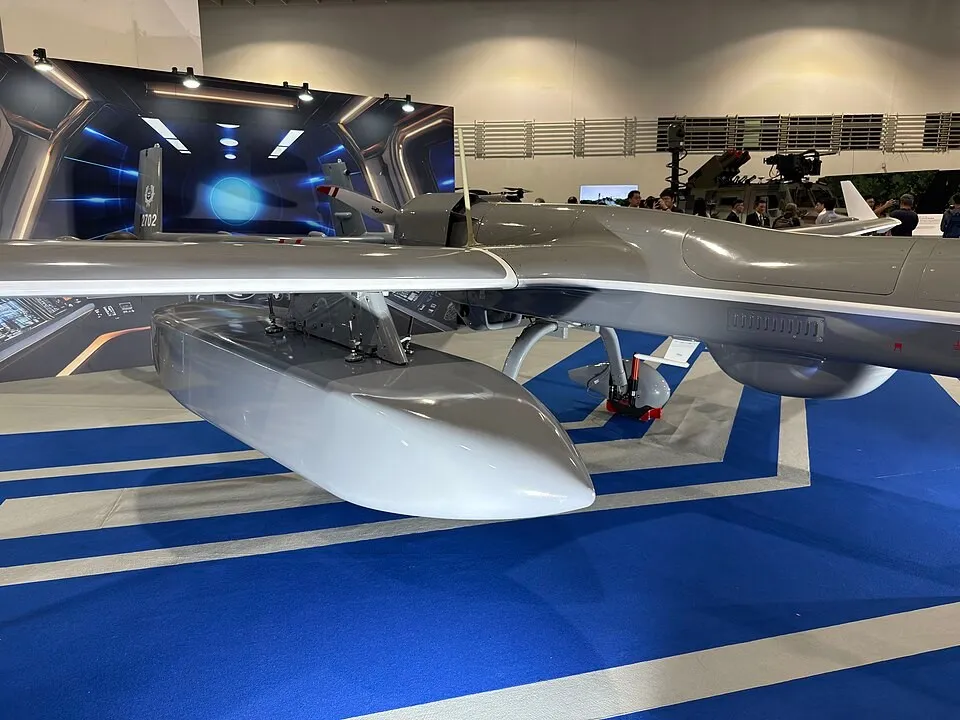
The aircraft the airfield is meant to serve are now in production. Carbon-based Technology, which builds the Rui Yuan II under contract to the institute, said on 22 October that it had delivered all four aircraft in its commissioned batch on schedule and was preparing for series production. CM Media reported that the navy plans to buy 32 Rui Yuan II drones, eight mobile control stations and 48 transport vehicles between 2026 and 2029 under a programme worth NT$16.78 billion.
According to the same report, the Rui Yuan II can stay aloft for more than 16 hours, can be controlled at ranges beyond 300 kilometres, and can carry sonobuoy pods or Chien Feng I attack drones, giving it both surveillance and strike roles. The report also described it as a possible backup sensor for Tien Kung III air-defence missiles and a low-end partner for MQ-9B high-altitude drones.
The navy also set up a Littoral Combat Command in July of this year to bring shore-based anti-ship missiles, maritime surveillance and drone units under one headquarters, the Liberty Times reported. The surveillance and targeting role written into the Yilan plan matches that command's job of linking sensors to anti-ship fire.
Money for wider drone buying is still moving through the legislature. The Commercial Times reported on 2 November that NT$55.9 billion of the NT$145.7 billion in defence spending in this year's supplementary budget covers three drone items, including coastal surveillance drones, with NT$13.8 billion for this year and NT$42.1 billion for next year. Lawmakers have set a 20 November deadline for passing the package, and recent reports that some government drones used Chinese-made chips are expected to sharpen their scrutiny.
What could change
Three things will show whether the plan holds. The first is whether the 2027 planning money survives budget review, since a small opening line is easy to cut or freeze. The second is whether Rui Yuan II series production keeps to its 2029 target, because an airfield finished in 2030 adds little if the aircraft are late or few. The third is how the navy covers the northeast before 2030, when its drones will still have to fly from existing fields further south.
Why it matters
The waters off Yilan face the approaches Chinese warships and aircraft use when they operate east of Taiwan, and endurance only helps if a drone can reach its patrol box quickly and land somewhere close by when it is done. The Hongchailin plan suggests the navy now sees basing and dispersal, not just the number of aircraft, as the limit on how much of the sea it can watch. Whether that insight arrives in time depends on a four-year construction schedule that starts with a single small budget line.
Sources
More in Analysis
Why Malabar 2026's sub-hunting focus matters more for Taiwan than the Quad summit optics
Malabar 2026 opened on 5 November with the Quad navies rehearsing submarine hunts while China kept more than 100 ships at sea around Taiwan's approaches.
TaiwanDefence · 2h ago · 4 min read

Why China's dark-ship coast guard probes at Pratas matter more than the expulsion count
On 31 October 2026 a Chinese coast guard ship ran dark into Pratas restricted waters, the 13th such entry this year, and analysts say the real test is supply access.
TaiwanDefence · 2h ago · 4 min read
Why CENTCOM's unmanned surge matters more for Taiwan as a joint-force scaling template
In November 2026 the Pentagon said Central Command received more than 25,000 unmanned systems this year, a fielding it frames as the start of joint-force scaling toward the Pacific.
TaiwanDefence · 3h ago · 4 min read
Discussion (0)
Comments are not currently available.