
ANALYSIS
Why China's November 2026 objection to Japan's radar aid for Manila is about being watched
Beijing says Tokyo is stirring up trouble by giving the Philippines a coastal radar and surveillance drones; Manila's 29 November 2026 reply shows why sensors have become the flashpoint.

TAIPEI —
This article is an original Taiwan Defence analysis based on the cited public sources. It distinguishes reported facts from analytical judgments and does not represent original field reporting.
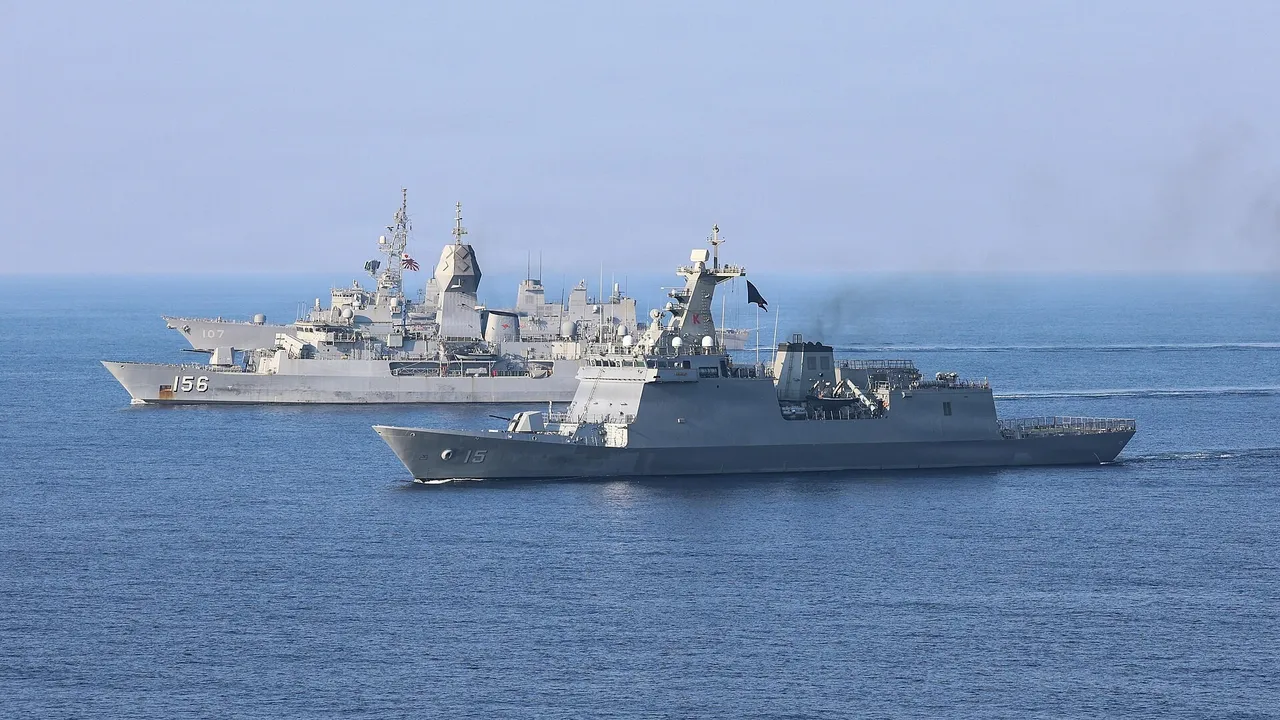
On Sunday 29 November 2026 the Philippine Department of National Defense rejected criticism from China's defence ministry of Japan's plan to give the Philippine military a coastal surveillance radar and unmanned surveillance aircraft. In a statement, the department's spokesperson, Assistant Secretary Arsenio Andolong, said the Philippines alone decides who its defence partners are and how it builds its defences, and that this was not open to compromise of any kind.
Manila was answering remarks made on 26 November by the Chinese defence ministry spokesperson, Senior Colonel Chen Xi, at a regular press conference in Beijing. According to China's state news agency Xinhua, as reported by The Defense Post, Chen accused Japan of supplying weapons and equipment to countries such as the Philippines and of stoking tension in the South China Sea. He said Tokyo was not a party to the disputes and had no right to comment on them. Those are Beijing's characterisations; the Japanese grant itself covers surveillance equipment, not weapons.
Chen also attacked a China security report published by Japan's National Institute for Defense Studies, which, according to Xinhua's account, recommends that Japan keep a presence in the South China Sea and strengthen cooperation with allies and partners.
What Japan is actually sending
The package at issue is modest. Under a grant of 4.3 billion yen, about 1.72 billion pesos, from Japan's Official Security Assistance programme for fiscal 2026, the Philippine Navy is to receive a coastal surveillance radar and the Philippine Air Force surveillance drones, the Manila Bulletin reported. Foreign Affairs Secretary Theresa Lazaro and the Japanese ambassador, Kitagawa Katsuro, signed and exchanged diplomatic notes in Manila on 9 November. The paper described the deal as the first transfer of finished defence equipment under the programme, which Tokyo launched in 2023 to give equipment, supplies and infrastructure to partner militaries.
When the notes were signed, USNI News reported that neither the drone variant nor the number of aircraft had been specified. It noted that Japanese firms had shown coastal watch radars at a reception in Manila in October, ranging from short-range sets that track vessels out to about 24 nautical miles to multirole radars able to detect maritime targets about 140 nautical miles away. Japan has earlier handed over TC-90 turboprops to the Philippine Navy for maritime patrol.
Counting ships is already a policy tool
Manila already turns surveillance into public pressure. On 25 November the military's spokesperson for the West Philippine Sea, retired Rear Adm. Roy Vincent Trinidad, said 48 China Coast Guard and People's Liberation Army Navy vessels had been monitored around Ayungin Shoal, Scarborough Shoal, Escoda Shoal and Pag-asa Island from 17 to 23 November, against 19 the previous week and 29 from 3 to 8 November, ABS-CBN News reported. Of the 48, 31 were coast guard ships and 17 were navy warships. Trinidad linked the dip to the week the Philippines hosted the ASEAN summit.
Andolong's reply leans on exactly that practice. He said only those acting unlawfully in waters under Philippine sovereignty, sovereign rights and jurisdiction had reason to fear the maritime domain awareness capabilities Japan was providing, and that Beijing's strong objection to tools meant only to observe amounted to an admission that its conduct in those waters could not withstand scrutiny.
That framing matters more than the hardware. Weekly counts such as Trinidad's are assembled from patrols, aircraft and partner support, and they are open to dispute. A fixed coastal radar run by the navy, backed by drones that can be sent to look at a contact, would let the Philippines build a steadier track record of who is where and when. In that light Beijing's objection is less about any military threat from a radar than about losing control of the account of what happens at sea.
Words against conduct
Andolong also said China could not claim to seek dialogue while its coast guard fires water cannon at Philippine vessels, rams ships and injures Philippine personnel, and he urged Beijing to respect the 2016 arbitral award and the UN Convention on the Law of the Sea. He argued that China's condition that partnerships respect its sovereignty and maritime rights was itself an objection, because those claims rest on the nine-dash line. The 2016 ruling found no legal basis for China's claims to historic rights to resources within that line.
The exchange shows how far the dispute has moved from ships to sensors. China's spokesman cast a grant of radars and drones as interference by an outside power; Manila cast it as transparency. Neither the radar nor the drones changes the balance of force at Scarborough or Ayungin, where coast guard numbers decide most encounters, but they could change how quickly and how convincingly incidents are documented and shown to other governments.
What to watch
The test now is delivery. None of the reports names a delivery date, a radar site or the drone type. Japan is also discussing the transfer of retiring Abukuma-class destroyer escorts to the Philippine Navy, USNI News reported, which would be a far larger step than sensors. If Beijing reacts this sharply to a radar and surveillance drones, a warship transfer would draw stronger protests, and whether Manila publishes what the new radar sees will show how far it means to use surveillance as a diplomatic instrument.
Sources
More in Analysis
Why the US backing of IAEA talks on Seoul's nuclear submarines in November 2026 matters
The State Department's 27 November 2026 answer to China keeps South Korea's Article 14 safeguards talks with the IAEA, but fuel supply and board politics remain the programme's weak points.
TaiwanDefence · 8h ago · 4 min read
Why South Korea is turning to drone-armed reservists as its active army shrinks towards 2040
A 27 November 2026 visit to the 72nd Infantry Division showed Seoul's plan for 100 reserve drone units by 2030 and 50,000 standing reservists by 2040, a bet that covers only part of the gap.
TaiwanDefence · 1d ago · 4 min read
Why Guam's missile shield, mapped out in November 2026, still leaves its air and naval bases waiting
A joint terrain walk and a congressional report in November 2026 show the Army racing to put 20 IFPC launchers on Guam by mid-2027, but only to guard Army sites.
TaiwanDefence · 1d ago · 3 min read
Discussion (0)
Comments are not currently available.