
ANALYSIS
Why China's warplanes nearly vanished around Taiwan in the November 2026 summit week but its warships stayed
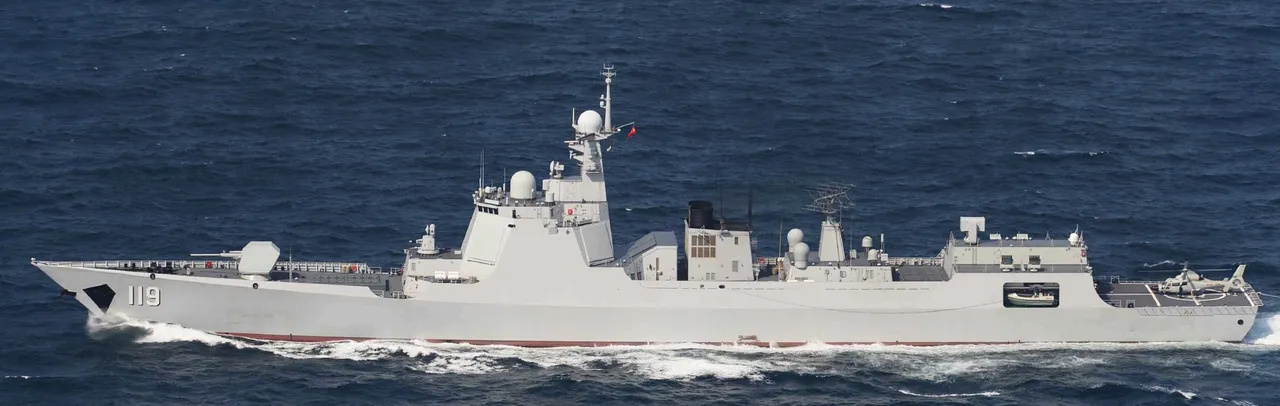
Taiwan counted just two Chinese military aircraft on 21 November 2026, down from 32 at the start of the month, yet six to eight warships stayed around the island every day.

TAIPEI —
This article is an original Taiwan Defence analysis based on the cited public sources. It distinguishes reported facts from analytical judgments and does not represent original field reporting.
Taiwan's Ministry of National Defense said on 21 November 2026 that it had detected only two sorties by Chinese military aircraft around the island in the 24 hours to 6 a.m. local time. Both entered Taiwan's southwestern and eastern air defence identification zone. In the same period the ministry counted six People's Liberation Army Navy ships and one other Chinese government vessel, and Taiwan responded with patrol aircraft, warships and coastal missile systems.
The Central News Agency, citing the ministry's map, said the two aircraft were support planes that operated in the southwest on the morning of 20 November, one of them extending its flight into the east. Four Chinese balloons also crossed the Strait's median line west of Taichung that afternoon at altitudes between 18,000 and 22,000 feet and disappeared over Taiwan itself about an hour later.
Taken alone, two aircraft is a routine figure. Set against the month so far, it marks a sharp contrast between what China is doing in the air and what it is doing at sea.
A steep fall in the air
According to daily ministry figures compiled by the Taiwanese outlet Shotnews on 18 November, Taiwan detected 32 Chinese military aircraft on 1 November, 26 of which crossed the median line, and 22 on 4 November, when 14 entered the air defence zone. The number then slid to a single aircraft on 15 November, followed by four, five and nine sorties in the next three daily reports.
That decline came as US President Donald Trump travelled through Asia ahead of his meeting with Chinese leader Xi Jinping and Russian President Vladimir Putin in Shenzhen on 19 November, during the APEC summit hosted by China. Shotnews noted that a similar dip occurred in November 2023, when Xi met then-President Joe Biden at APEC in San Francisco, and that Taiwan detected nine aircraft crossing the median line in a joint combat readiness patrol soon after that summit ended.
No pause at sea
The navy figures tell a different story. Since 8 November, Taiwan has counted between six and eight Chinese warships around the island every day, with one to three other government ships alongside them, the Shotnews compilation shows. Even on 15 November, when only one Chinese aircraft was detected, Taiwan counted eight warships. The 21 November report of six warships fits the same band.
The quiet in the air also followed one of China's largest naval deployments in the region. Reuters, in a report carried by the Taipei Times on 13 November, quoted a senior Taiwanese security official as saying that China's military and coast guard had at one point massed more than 100 vessels across the western Pacific and around Taiwan early in the month, in an unannounced exercise larger than the Justice Mission 2025 drills. The official said about 70 vessels were still operating inside the first island chain on 13 November.
National Security Council Secretary-General Joseph Wu said on 12 November that naval groups from the Northern, Eastern and Southern Theater Commands and the Liaoning carrier group remained in waters east of the Philippines, and that Chinese air activity near Taiwan was still high at that point. China has said the carrier was on routine exercises not aimed at any country. Taiwanese officials described the drills as silent intimidation timed before major international meetings.
What the split suggests
The pattern points to a deliberate choice of which pressure to show. Daily aircraft counts are the figures most widely reported abroad and most easily read as escalation during a leaders' summit, so trimming them carries diplomatic benefit at low military cost. Warships on station, by contrast, keep the People's Liberation Army practised at the sustained presence that a blockade or quarantine of Taiwan would require.
The balloons fit the same logic. They add to the daily tally of activity reaching Taiwan's airspace while being far less provocative than combat aircraft crossing the median line. On 20 November, all four drifted over the island itself rather than staying offshore.
The evidence has limits. Daily totals vary with weather and training cycles, and neither the ministry nor Beijing has said why flights fell. A single low day after the summit does not establish a trend.
The test is what follows. If Chinese air activity rebounds toward the 20 to 30 sorties seen at the start of November once Trump has left the region, as it did after the 2023 summit, the lull will have been a diplomatic courtesy rather than a policy change. The steady presence of warships around Taiwan suggests the underlying pressure has not eased.
Sources
More in Analysis
Why the November 2026 US missile count points to a range gap, not a bomb gap, in any war with China
A CSIS estimate of 10 November 2026 finds the Iran war used up to two-thirds of key US missiles, leaving cheap short-range bombs that China's defences could blunt.
TaiwanDefence · 2h ago · 3 min read
Why the US Navy's 19 November 2026 drone pledge makes the F-35C, not F/A-XX, its first drone partner
On 19 November 2026 the Navy's under-secretary pick said carrier drones need not wait for F/A-XX, putting early hopes on the F-35C and on control software.
TaiwanDefence · 4h ago · 3 min read
Why Korea's nuclear-sub bidding race of 16 November 2026 hinges on parts neither shipyard controls
Hanwha and HD Hyundai squared off on 16 November 2026 for Seoul's nuclear submarines, but the reactor, fuel and budget that set the pace stay with the state.
TaiwanDefence · 6h ago · 3 min read
Discussion (0)
Comments are not currently available.