
ANALYSIS
5 October 2026: Japan fields six V-BATs as Taiwan funds drones
On 5 October 2026, Jiji and The Japan Times reported Japan MSDF flying six V-BATs. Taiwan's 27 August NT$240bn drone law and same-day Altius LOA keep the delivery test through 2026-28.
TAIPEI —
This article is an original Taiwan Defence analysis based on the cited public sources. It distinguishes reported facts from analytical judgments and does not represent original field reporting.
What Japan and Taiwan disclosed
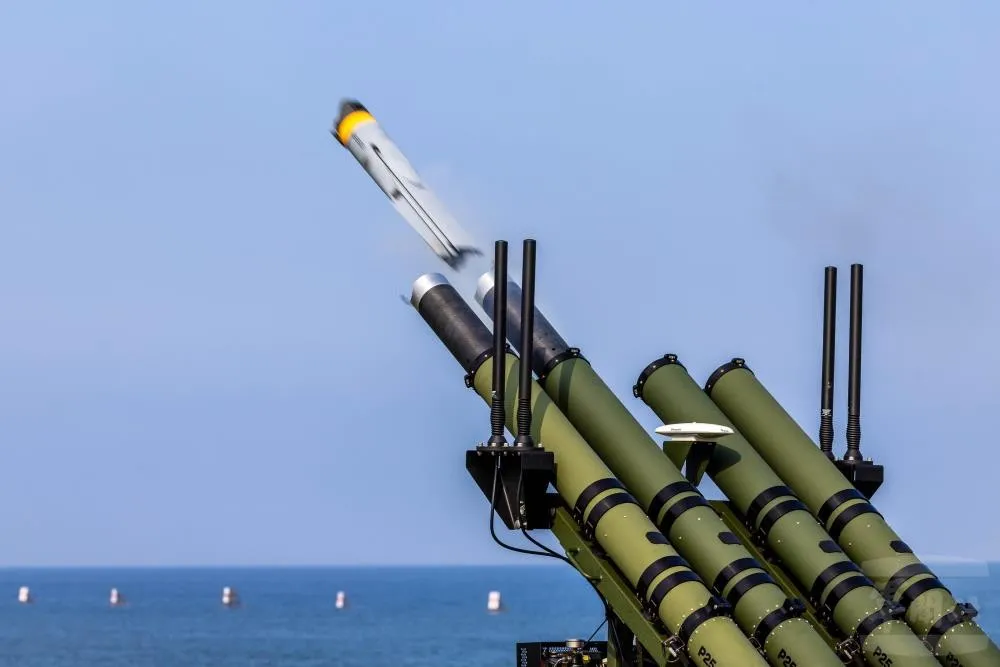
On 5 October 2026, Jiji and The Japan Times reported that the Japan Maritime Self-Defense Force is now flying six Shield AI V-BAT vertical-take-off drones. Adnkronos AKI carried the same Tokyo report the same day. The aircraft patrol pre-set routes on their own, stream infrared video to a command ship and can stay aloft for about 12 hours on those patrols. The disclosure is timely because it confirms service entry of the full FY2025 six-airframe buy while Japan continues to expand unmanned maritime surveillance. Both outlets described autonomous route patrol and real-time video to a command vessel as core features of the six-aircraft force.
Tokyo paid roughly 4 billion yen for the six systems in its FY2025 budget, mainly to equip new Sakura-class offshore patrol vessels. Measuring about 2.9 metres long with a 3.8-metre span, each V-BAT carries an infrared camera in the nose. Officials described the buy as part of a wider push to ease aircrew load while keeping watch over approaches to Japanese waters. The aircraft can be folded for shipboard storage and assembled by a small crew for deck launch without a runway.
Five weeks earlier, on 27 August 2026, Taiwan's Legislative Yuan rejected a Cabinet NT$210 billion special drone budget and instead passed a KMT-drafted law capping indigenous uncrewed-vehicle spending at NT$240 billion over six years, in principle NT$40 billion a year through the ordinary budget. The same day, reporting compiled by Taiwan Security Monitor said the Ministry of National Defense signed the Letter of Offer and Acceptance for 1,554 Altius-700M loitering munitions and 478 Altius-600M ISR drones.
Separately, Army Recognition, citing the Liberty Times, said Taiwan's Navy budget covers 280 V-BATs between 2026 and 2029, with early tranches due this year and next. That planned maritime VTOL mass sits far above Japan's initial six-airframe buy and is the clearest published democratic counterpart to the MSDF milestone. If executed on schedule, the Navy programme would concentrate distributed maritime ISR on small ships and coastal routes.
Taiwan's documented Altius force is clearer than most regional inventories but still uneven on schedules. Taipei Times reported full delivery of 291 Altius-600M munitions between August 2025 and March 2026. The August LOA adds more than two thousand further Altius airframes, though Taiwan Security Monitor notes a reported final delivery deadline stretching toward 2033.
The August law funds coastal attack drones, coastal reconnaissance drones and small suicide USVs without locking the cancelled Cabinet proposal's headline unit counts into statute. Annual NT$40 billion tranches still have to clear ordinary budget politics, so the statutory ceiling does not by itself guarantee 2026-28 mass delivery. Contracted ambition can still slip past the window that matters most for credible attrition stocks.
What the disclosures show about Asia's UAV race
Read together, the Japanese service entry and Taiwan's August decisions frame Asia's UAV contest as of early October 2026. China remains the only regional power that leads across high-end ISR, strike concepts, maritime use and industrial depth on the public record available for this cut. Taiwan sits in a second tier with Japan, South Korea, India and Australia on fielded high-end fleets, yet it is the democracy writing the most specific maritime mass-attrition drone plan for an anti-landing fight.
This analysis does not invent PLA inventory totals; authoritative open numbers for Chinese military drone stocks are not published. The comparative claim rests on breadth of classes and industry, and on the contrast between Japan's careful six-airframe V-BAT fielding and Taiwan's far larger published V-BAT and Altius asks. That contrast is the analytical point of pairing the 5 October Japan reports with the 27 August Taiwan package.
The open question is funding stability and delivery speed through 2026-28, not whether the airframes exist on paper. Japan's 5 October 2026 V-BAT milestone and Taiwan's 27 August law-plus-LOA package point to the same test: whether democratic buyers convert budgets into delivered, expendable magazines before the industrial gap with China widens further. That delivery race, not a missing sensor concept, is the binding constraint for Taipei through 2028. South Korea, India and Australia remain in that same second tier on serious uncrewed programmes, but none has matched Taiwan's six-year statutory drone funding frame paired with a navy-scale VTOL mass ask aimed at a Taiwan Strait landing under fire. Planners should therefore treat the October Japan reports and the August Taiwan package as a paired delivery test, not as proof that technology alone will close the gap.
Sources
More in Analysis
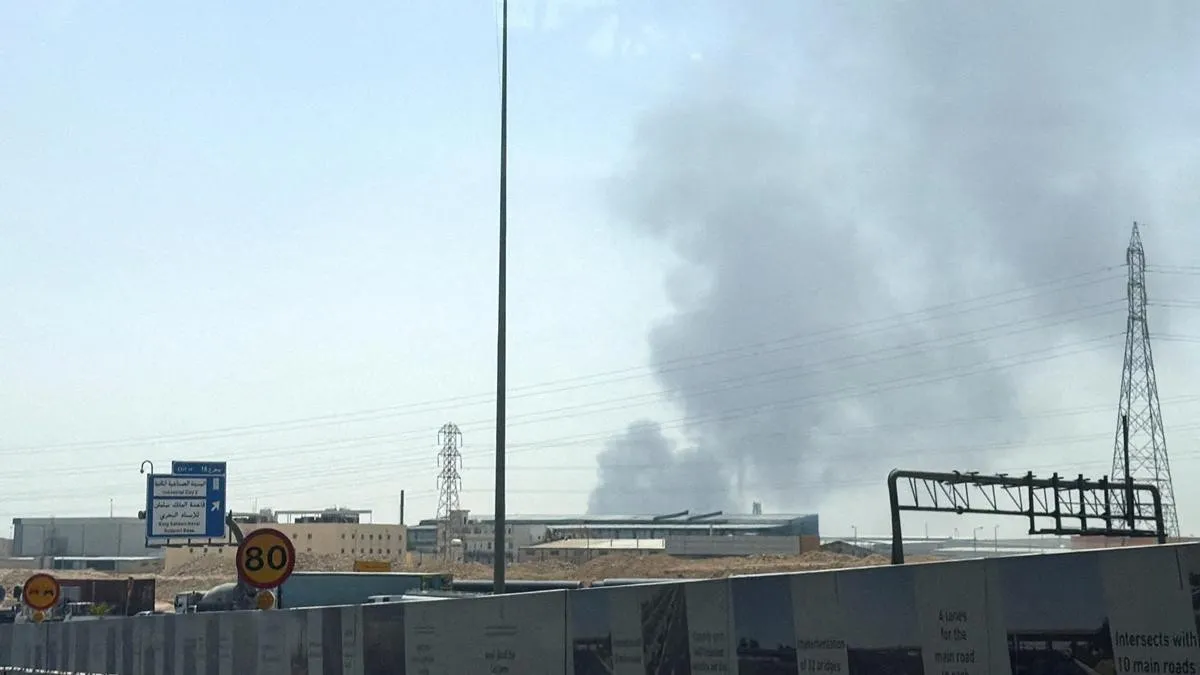
3 October: Houthis say missiles hit Aramco near Riyadh
On 3 October 2026 the Houthis said missiles and drones hit an Aramco site near Riyadh, timely because an AFP journalist saw the refinery on fire that afternoon.
TaiwanDefence · 15h ago · 4 min read
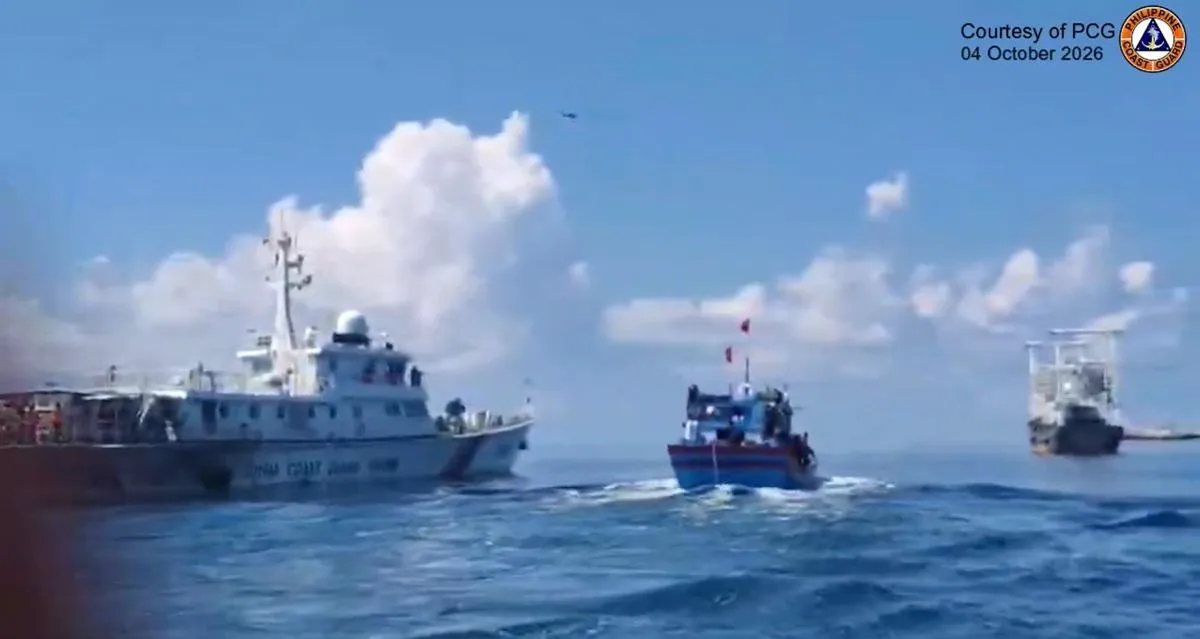
4 October: CCG 21581 blocked boat HSRB-019 off Pag-asa
On 4 October 2026 the Philippine Coast Guard said CCG 21581 blocked HSRB-019 near Pag-asa, timely because a PLA Navy helicopter circled the same boats that morning.
TaiwanDefence · 15h ago · 4 min read
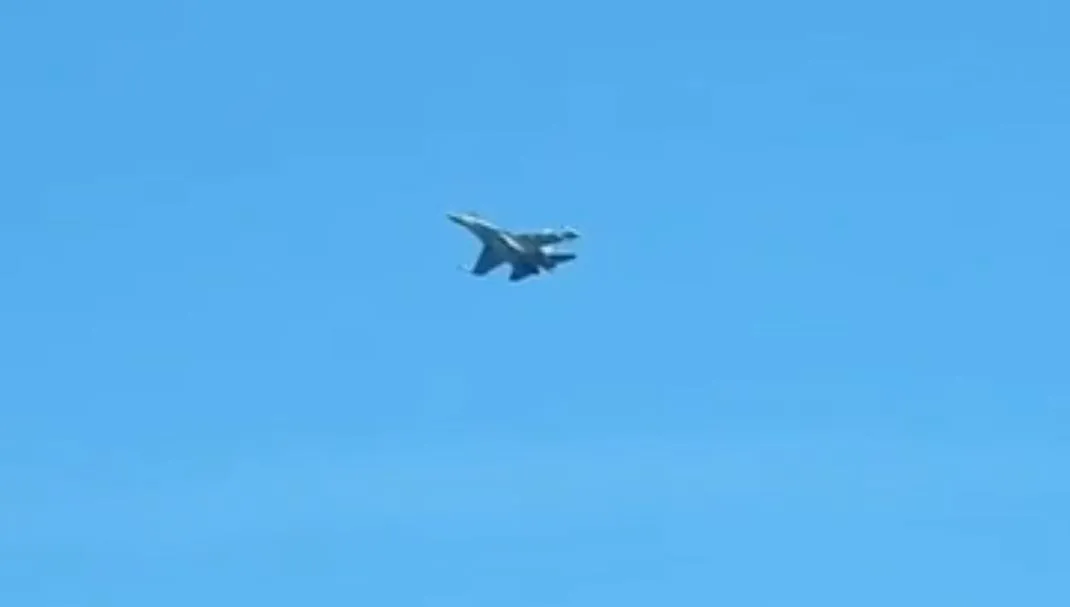
4 October: Manila says a J-16 flew in a Philippine patrol wake
On 4 October 2026 the Philippine military said a Chinese J-16 flew into the wake of a C-208 near Scarborough on 3 October, timely because Beijing had not answered.
TaiwanDefence · 16h ago · 4 min read
Discussion (0)
Comments are not currently available.