
Anwar says some Malaysian defence projects have dragged on for 20 years, blaming agents and high commissions
Malaysia's prime minister says the navy's ships were among the oldest and smallest he saw at Langkawi, and wants the armed forces, not politicians, to choose new equipment.

TAIPEI —
Malaysian Prime Minister Anwar Ibrahim said on Saturday, 14 November, that some defence procurement projects involving military aircraft and ships had remained unfinished for as long as 20 years, and he linked the problems to the use of middlemen and the high commissions paid to agents. He spoke during a dialogue session with trainees of the revived National Service Training Programme, known as PLKN 3.0, at the camp of the 515 Territorial Army Regiment in Kuala Lumpur.
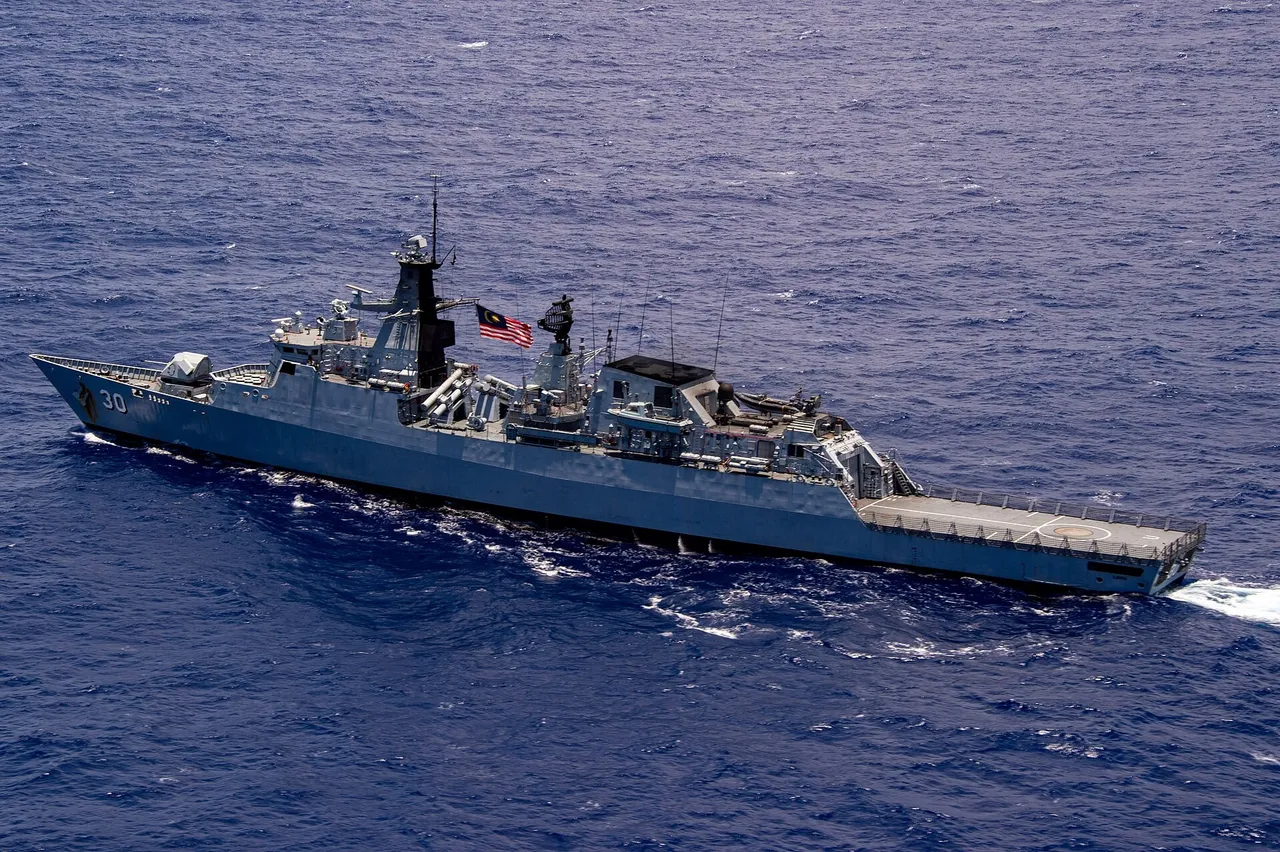
Anwar said he had seen the state of the Royal Malaysian Navy's vessels for himself during a visit to Langkawi, where warships from Russia, China, India, Indonesia and Brunei were also present. Set against those ships, he said, Malaysia's vessels were among the oldest and the smallest. He pointed to one ship built in 1976 and to frigates completed by the British yard Yarrow Shipbuilders in 1998.
The prime minister said the air force's aircraft and the army's tanks were also ageing, which he said was why the government had to spend across all of these areas. Anwar, who is also finance minister, said the government had raised the defence ministry's allocation to the highest level in its history, making it one of the largest recipient ministries alongside education and health, according to the national news agency Bernama, whose report was carried by Malay Mail.
He said the extra money was needed to replace obsolete naval vessels, aircraft and armoured vehicles used by the security forces. At the same time, he said, the government wanted to make sure that past problems would not be repeated, citing the use of agents and high commissions that had left ship projects worth millions of ringgit abandoned.
Anwar said decisions on what military equipment to buy should rest on professional assessments by the armed forces rather than on political interference. Neither ministers nor the prime minister should decide which aircraft or other equipment best suits operational needs, he said, adding that such questions belonged with the air force. Military specialists, he said, should set the operational requirements and recommend suitable equipment.
The prime minister also told the trainees that Malaysia's security landscape was no longer limited to conventional military threats. Cyber attacks, system intrusions and the movements of terrorist cells were now among the most critical challenges, he said, adding that the country faced thousands of attempted cyber attacks every month. He said he had met the top leadership of the Malaysian Armed Forces the previous week to discuss strengthening the cyber security unit within the military.
Anwar said the pattern of defence planning and asset procurement had to adapt quickly to modern technology such as drone operations, while not neglecting conventional defence, Bernama reported.
He also said the government had to look after the welfare of military and police personnel, including the condition of their quarters and workplaces, and he questioned the value of buying modern equipment if their basic living conditions were neglected. Steps to improve housing and facilities had already been taken, he said.
Anwar said the government faced the challenge of balancing a stronger national defence against other pressing priorities, including education, health care and assistance for low-income families. Public money had to be spent responsibly so that the country's limited financial resources were used effectively, he said, according to Harian Metro.
Sources
More in Indo-Pacific
US Army unit in South Korea tests a cheap acoustic sensor net to catch FPV drones
Project MANOWAR, run with South Korean troops at the ROK Army Drone Academy, pairs 3D-printed listening posts with soldier-built machine learning. The unit wants it made a programme of record.
TaiwanDefence · 3h ago · 3 min read
India's navy passes out its biggest recruit batch as Agniveers gain a route to permanent service
Of 3,358 trainees graduating at INS Chilka, 2,756 were Agniveers, and the navy chief told them a revamped scheme now lets them compete for full careers.
TaiwanDefence · 5h ago · 3 min read
Japan's navy masses minesweepers off Kyushu for 11 days of mine-clearing drills with the US Navy
Sixteen Japanese ships, two helicopters and a US Navy mine countermeasures vessel will train in the Hyuganada sea from 16 to 26 November, with about 1,000 personnel.
TaiwanDefence · 8h ago · 2 min read
Discussion (0)
Comments are not currently available.