
South Korea opens first military AI hub to train robots for mine clearance and bomb disposal
The Pangyo centre is the first of five planned defence AI hubs, as Seoul turns to humanoid and legged robots to keep soldiers out of the most dangerous jobs.
TAIPEI —
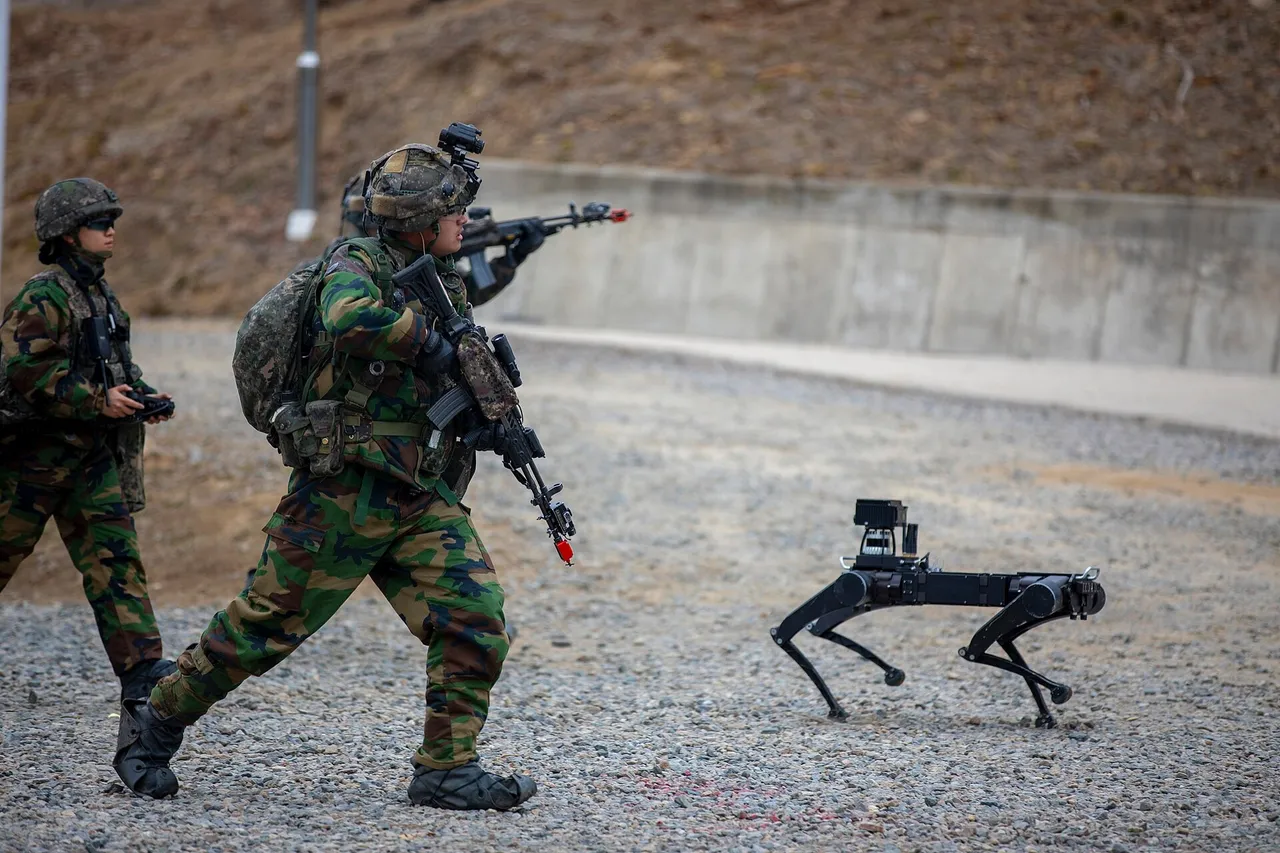
South Korea's defence ministry has opened the first of five planned military artificial intelligence hubs, a centre near Seoul that will train humanoid and multi-legged robots to clear land mines, dispose of explosives and carry supplies into dangerous areas so that fewer soldiers are exposed to those risks.
Defence Minister Kang Shin-chul led the opening ceremony on the afternoon of 12 October 2026 at Pangyo Techno Valley in Seongnam, Gyeonggi Province, a cluster of technology companies and start-ups south of the capital. About 150 people attended, including officials from the science, industry and small business ministries and the national AI strategy committee, as well as universities and defence companies.
The ministry calls the centres AX hubs, short for AI transformation. The Pangyo site is run by the army with Ajou University as its lead institution and will specialise in what officials call physical AI. It will gather real-world operating data and use it to train and test AI models on humanoid and legged robots before they are applied to military tasks.
Besides mine clearance, bomb disposal and moving supplies through hazardous ground, the ministry said the robots could be used for chemical, biological and radiological reconnaissance.
Four more hubs to follow
The Joint Chiefs of Staff and each service will run the remaining four hubs with selected partner universities, opening them in turn. A Joint Chiefs hub in Yongsan, central Seoul, with Korea University will test command and control applications using classified military data. An army hub in Daejeon with KAIST will focus on agentic AI, systems that can carry out multi-step tasks on their own.
A navy and marine corps hub in Busan with UNIST will work on maritime uses such as intelligent logistics support, and an air force hub in Yangjae, southern Seoul, with Seoul National University will work on automatic target recognition.
Kang told the ceremony that the hubs were places where the military's field experience would meet the technology of universities, research institutes and industry. He said advanced technology only becomes a tool for victory once the concept of how to fight has been settled, and that rapid scientific progress had created a battlefield where what is imagined becomes real.
Shrinking conscript pool
The ministry said it would widen joint research across all five hubs and link civilian AI and robotics work directly to front-line needs. The Korea Times reported that the push comes as a sharply falling number of military-age men pushes the armed forces towards autonomous systems that can sustain readiness and cut casualties.
The hubs do not yet amount to fielded robot units. No budget, delivery dates or numbers of robots were announced at the opening, and the remaining four centres have no published opening dates. What the launch does show is that Seoul is moving dangerous engineer and reconnaissance work towards machines as its manpower base shrinks.
Sources
More in Indo-Pacific
North Korea fires several ballistic missiles from Pyongyang area, Seoul and Tokyo say
South Korea's military detected the launches at about 9:20 a.m., and Japan believes two objects fell outside its EEZ, nine days after the 3 October test.
TaiwanDefence · 21h ago · 2 min read

Philippine coast guard confronts Chinese deep-sea research ship as PLA warships sail nearby
The PCG says the Tan Suo Yi Hao declared diving operations near Hubo Reef without consent, with two Chinese navy and two coast guard ships close by.
TaiwanDefence · 22h ago · 3 min read

Japan weighs counting railway upgrades as defence spending to keep its forces supplied in a crisis
Tokyo may add rail lines, wider tunnels and supply depots to its defence-related budget and name rail in security documents due by year-end.
TaiwanDefence · 1d ago · 2 min read
Discussion (0)
Comments are not currently available.