
ANALYSIS
Why China's 5 November TB-001 drone flight past Okinawa matters for Taiwan's eastern flank
China flew an attack-capable TB-001 drone toward Japan's Danjo Islands on 5 November 2026, one of several recent drone loops that also skirt Taiwan's east side.
TAIPEI —
This article is an original Taiwan Defence analysis based on the cited public sources. It distinguishes reported facts from analytical judgments and does not represent original field reporting.
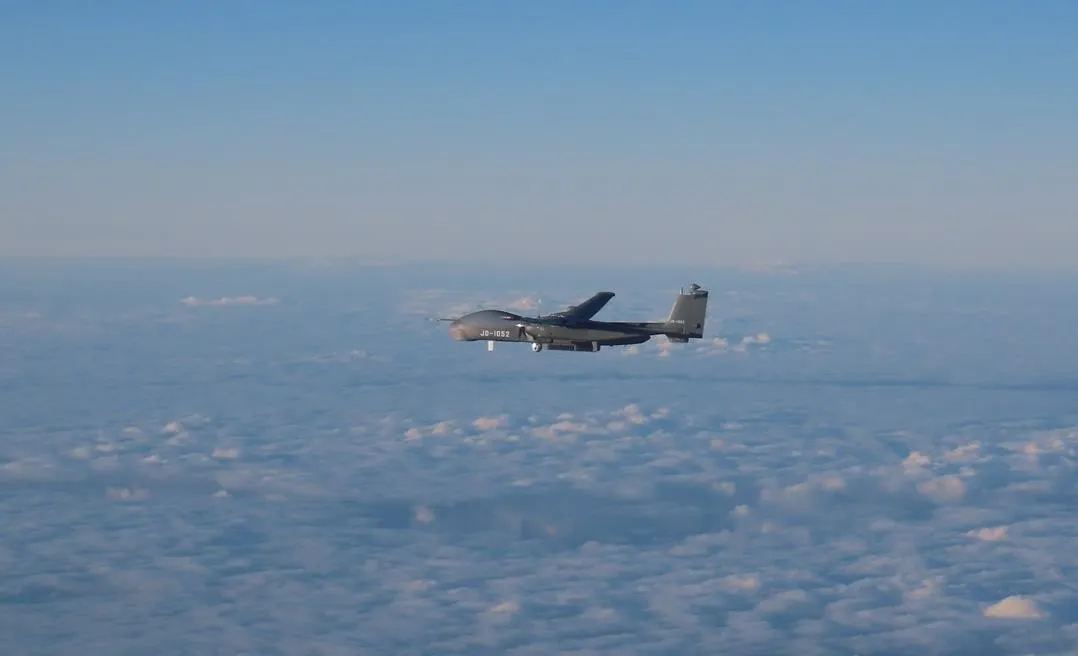
On 5 November 2026, a Chinese military TB-001 reconnaissance and attack drone flew from the Chinese mainland across the East China Sea to waters southwest of the Danjo Islands off Nagasaki Prefecture, according to Japan's Joint Staff Office. The drone then headed southwest, turned off Okinawa's main island and flew back toward the mainland. Fighters from the Air Self-Defense Force's Southwestern Air Defense Command and other units were scrambled in response.
The Joint Staff Office released photographs of the aircraft taken by the Air Self-Defense Force. Norimono News, a Japanese transport news site, reported on 9 November that the close-range images show the registration JD-1052 painted on the airframe. It described the TB-001 as a twin-boom design with hardpoints under its wings that can carry missiles or bombs.
The argument
Taken alone, one drone turning back off Okinawa is a routine intercept. Read alongside the other drone flights Japan has reported over the past three weeks, it looks like part of a steady habit of sending uncrewed aircraft on long loops around the Ryukyu chain, including through the gap between Yonaguni and Taiwan. For Taiwan, that habit matters because the waters east of the island are where any outside help would arrive and where Taiwan would want warning time. Drones that routinely fly that side of the island give China practice at watching it without risking aircrew.
Evidence and constraints
The 5 November flight was not isolated. On 29 October, a TB-001 flew from the East China Sea through the gap between Okinawa's main island and Miyako into the Pacific, circled and came back the same way, the Joint Staff Office said. A Chinese Y-9 patrol aircraft made a similar out-and-back flight through the same gap that day, and Southwestern Air Defense Command fighters were scrambled against both.
Two recent flights went past Taiwan itself. On 31 October, a drone that Japan presumed to be Chinese flew from the East China Sea between Yonaguni and Taiwan and on into the Pacific, prompting another scramble. On 19 October, a TB-001 took that same route between Yonaguni and Taiwan, flew north as far as waters off Amami Oshima, then turned and returned through the Okinawa and Miyako gap, while a BZK-005 drone and a Y-9 intelligence aircraft made a separate loop through that gap.
These flights add to a busier picture for Japan's air defences. The Joint Staff Office said in October that its fighters scrambled 442 times in the first half of fiscal 2026, from April to September, against 265 times in the same period a year earlier. About 65 per cent of those scrambles were against Chinese aircraft, including estimated cases. The latest drone flights were again met by fighters from the southwestern command based on Okinawa.
The record has limits. Japan's releases give routes in broad terms and say nothing about what sensors or weapons the drones carried. The 31 October aircraft was only presumed to be Chinese. Japan reports flights near its own territory, so drone activity further south and east of Taiwan may not appear in these notices. The releases also do not say how long each mission lasted or which airfields the drones flew from.
What could change
Signs worth watching include more flights routed between Yonaguni and Taiwan rather than through the Okinawa and Miyako gap, drones photographed with stores under the wings, and drones flying in coordination with naval groups in the western Pacific. Any of those would suggest the loops are moving from routine surveillance toward rehearsal for operations east of Taiwan. Fewer reported flights would not by itself mean less activity, since routes could shift outside the area Japan covers in its notices. Japan's full-year scramble figures for fiscal 2026 will show whether the faster pace of the first half held.
Japan's habit of publishing each intercept with photographs is itself useful to Taiwan. It gives a public, dated record of which Chinese drones fly where and when, and it lets analysts track individual airframes such as JD-1052 over time.
Why it matters
Taiwan's defence planning often focuses on the strait to its west, but its eastern coast and the seas toward Yonaguni and Okinawa are where warning, resupply and allied movement would matter most in a crisis. The 5 November 2026 TB-001 flight, and the loops around it, show China treating that eastern side as normal operating space for uncrewed aircraft. Taiwan and Japan both gain from comparing what each sees there, because a drone that crosses between Yonaguni and Taiwan passes through both of their air defence pictures in a few minutes.
Sources
More in Analysis
Why the November 2026 F-16 weapons report matters more for Taiwan than the new jets' arrival
A defence ministry report covered on 9 November 2026 shows Taiwan's new F-16s will fly for years before their glide bombs and jamming pods are complete.
TaiwanDefence · 12h ago · 4 min read
Why the Fujian carrier's 5 November first anniversary matters more for Taiwan than China's combat claims
China marked the Fujian carrier's first year in service on 5 November 2026; its repeated passages around Taiwan matter more than claims of full combat power.
TaiwanDefence · 16h ago · 4 min read
Why longer coast guard shifts matter more for Taiwan's grey-zone endurance than new hulls
Frontline Taiwan coast guard crews said on 8 November 2026 that sea shifts now stretch to about 12 hours. Holding off China's patrols depends on people as much as ships.
TaiwanDefence · 21h ago · 4 min read
Discussion (0)
Comments are not currently available.