
ANALYSIS
Why the Fujian carrier's 5 November first anniversary matters more for Taiwan than China's combat claims
China marked the Fujian carrier's first year in service on 5 November 2026; its repeated passages around Taiwan matter more than claims of full combat power.
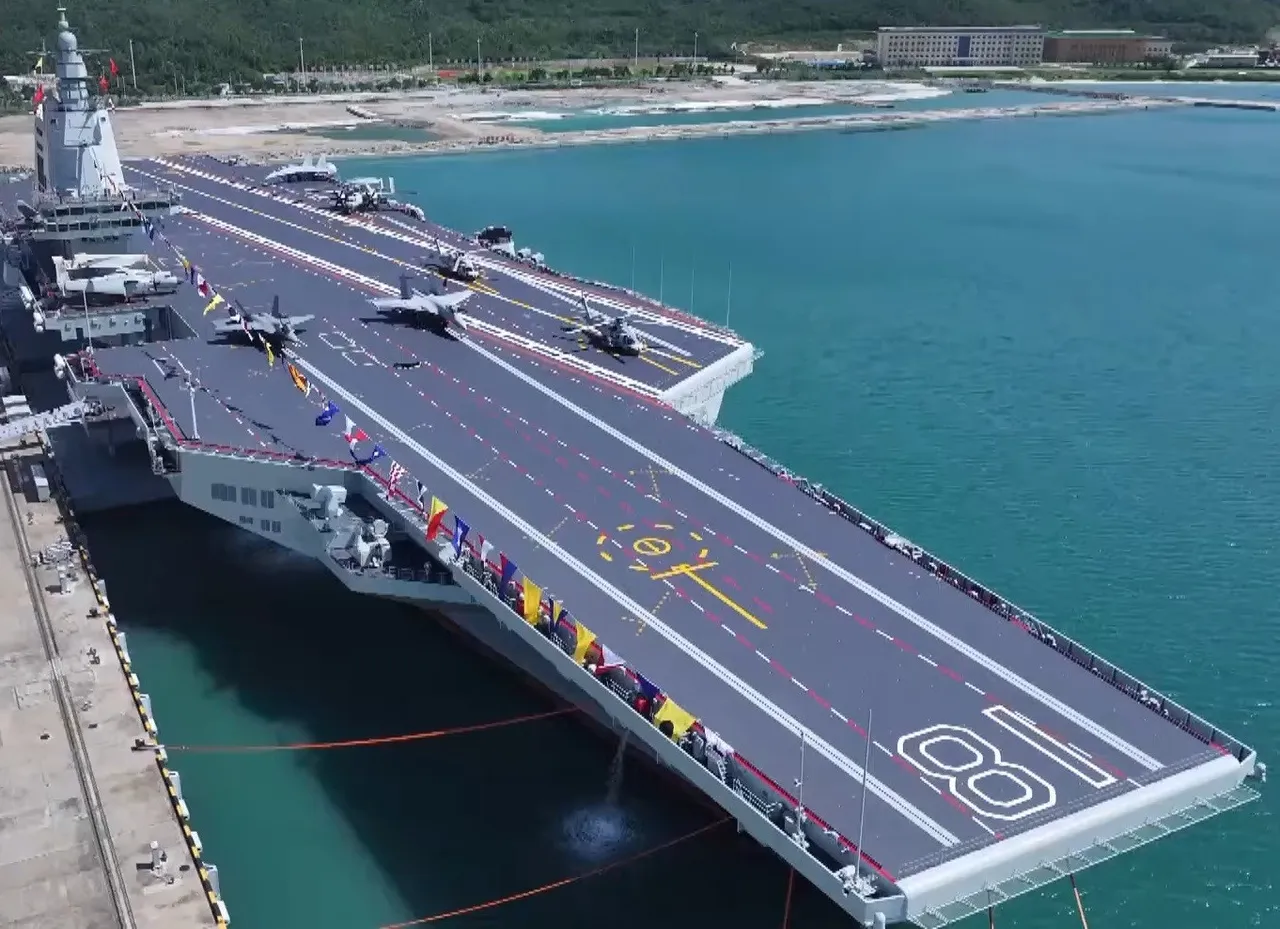
TAIPEI —
This article is an original Taiwan Defence analysis based on the cited public sources. It distinguishes reported facts from analytical judgments and does not represent original field reporting.
On 5 November 2026, China's aircraft carrier Fujian marked one year since it was commissioned at the naval port of Sanya on Hainan Island. It is China's third carrier and the first fitted with electromagnetic catapults. Taiwan's United Daily News noted that during the year the ship carried out its first live training with escort ships, sailed through the Taiwan Strait more than once and ran trials across several sea areas. A Chinese navy spokesman has said the carrier is permanently based at Sanya.
Chinese state media used the anniversary to describe the ship's progress in strong terms. The Global Times, citing state broadcaster CCTV, said 2026 had been the decisive year for taking the Fujian from initial to full combat capability. Chinese military commentators it quoted said the carrier had basically formed combat capability and might soon train in the Western Pacific. A Beijing Daily outlet quoted a CCTV commentator as saying the ship's power and propulsion systems had been fully tested. These are claims by Chinese state outlets and their commentators. They have not been independently verified.
The argument
For Taiwan, the useful question is not whether Beijing's claim of near full combat power is accurate. It is how ordinary the carrier's movements around the island have become. In its first year, a ship based far to the south at Sanya has used the Taiwan Strait as a regular route, timed at least one passage to coincide with a Taiwanese readiness drill and, according to a recent think-tank assessment, put to sea during a large Chinese deployment east and south of Taiwan. Each passage that passes without incident makes the next one look routine, and that routine is what an adversary would want before any real crisis.
Evidence and constraints
The passages are well documented. United Daily News reported that Taiwan's military publicly announced the Fujian sailing north through the Taiwan Strait on 16 December 2025, the first reported transit after commissioning. The military reported another passage on 23 June 2026, while Taiwan was holding five days of immediate combat readiness drills that began on 22 June. China's defence ministry spokesman called the June passage routine training and said such passages would continue. The Beijing Daily outlet counted three transits in all, including one in September 2025 before the ship entered service.
The most recent sighting places the carrier in the current wave of Chinese naval activity. Taiwan's Central News Agency reported on 9 November that the Institute for the Study of War and the American Enterprise Institute, in a 6 November update, said satellite imagery from 2 November showed the Fujian leaving Sanya and sailing east, possibly toward waters south of Taiwan. The two think tanks assessed that this put two of China's three carriers at sea at once, as part of an unannounced deployment drawing on three of the PLA's theatre commands. They also noted that Taiwan counted 49 Chinese military aircraft around the island on 2 November, 36 of them to its south.
Chinese reports also show what the air wing has practised. United Daily News, citing Chinese military media, said J-35, J-15T and J-15DT fighters and KJ-600 early warning aircraft made catapult launches and arrested landings during the first live training, less than half a month after commissioning. Commentators quoted by the Global Times said the remaining tests include launching aircraft continuously at high intensity, operating at night and in rough seas, and linking the carrier, its aircraft and its escorts into one command picture. That list comes from Chinese commentators and is a claim about China's own plans.
The public record has clear limits. No independent source gives sortie rates or confirms that Fujian pilots are qualified for night operations. China does not announce when the carrier is at sea. The think tanks' reading of its 2 November route is an assessment based on imagery, not a confirmed destination, and Taiwan's defence ministry has not publicly described the carrier's position in this deployment.
What could change
Several signs would show the Fujian moving from trials toward missions that bear directly on Taiwan. One is a deployment beyond the first island chain with a full escort group, which Chinese commentators themselves have predicted. Another is training alongside the Liaoning or Shandong in a two-carrier group. A third is further strait passages timed to Taiwanese drills, as in June. If none of these appear over the coming months, the claims of near full combat capability should be read with more caution.
Why it matters
A carrier is most useful to China in a Taiwan crisis if it can operate east and south of the island, away from Taiwan's coastal missiles and in the waters where outside help would arrive. The Fujian's first year shows the ship already treating the Taiwan Strait and Taiwan's southern approaches as normal training routes. Taiwan and its partners gain from tracking and publishing each passage, because a detailed public record is the best check on both the carrier's real progress and the official claims made about it.
Sources
More in Analysis
Why the November 2026 F-16 weapons report matters more for Taiwan than the new jets' arrival
A defence ministry report covered on 9 November 2026 shows Taiwan's new F-16s will fly for years before their glide bombs and jamming pods are complete.
TaiwanDefence · 12h ago · 4 min read
Why China's 5 November TB-001 drone flight past Okinawa matters for Taiwan's eastern flank
China flew an attack-capable TB-001 drone toward Japan's Danjo Islands on 5 November 2026, one of several recent drone loops that also skirt Taiwan's east side.
TaiwanDefence · 17h ago · 3 min read
Why longer coast guard shifts matter more for Taiwan's grey-zone endurance than new hulls
Frontline Taiwan coast guard crews said on 8 November 2026 that sea shifts now stretch to about 12 hours. Holding off China's patrols depends on people as much as ships.
TaiwanDefence · 21h ago · 4 min read
Discussion (0)
Comments are not currently available.