
ANALYSIS
Why longer coast guard shifts matter more for Taiwan's grey-zone endurance than new hulls
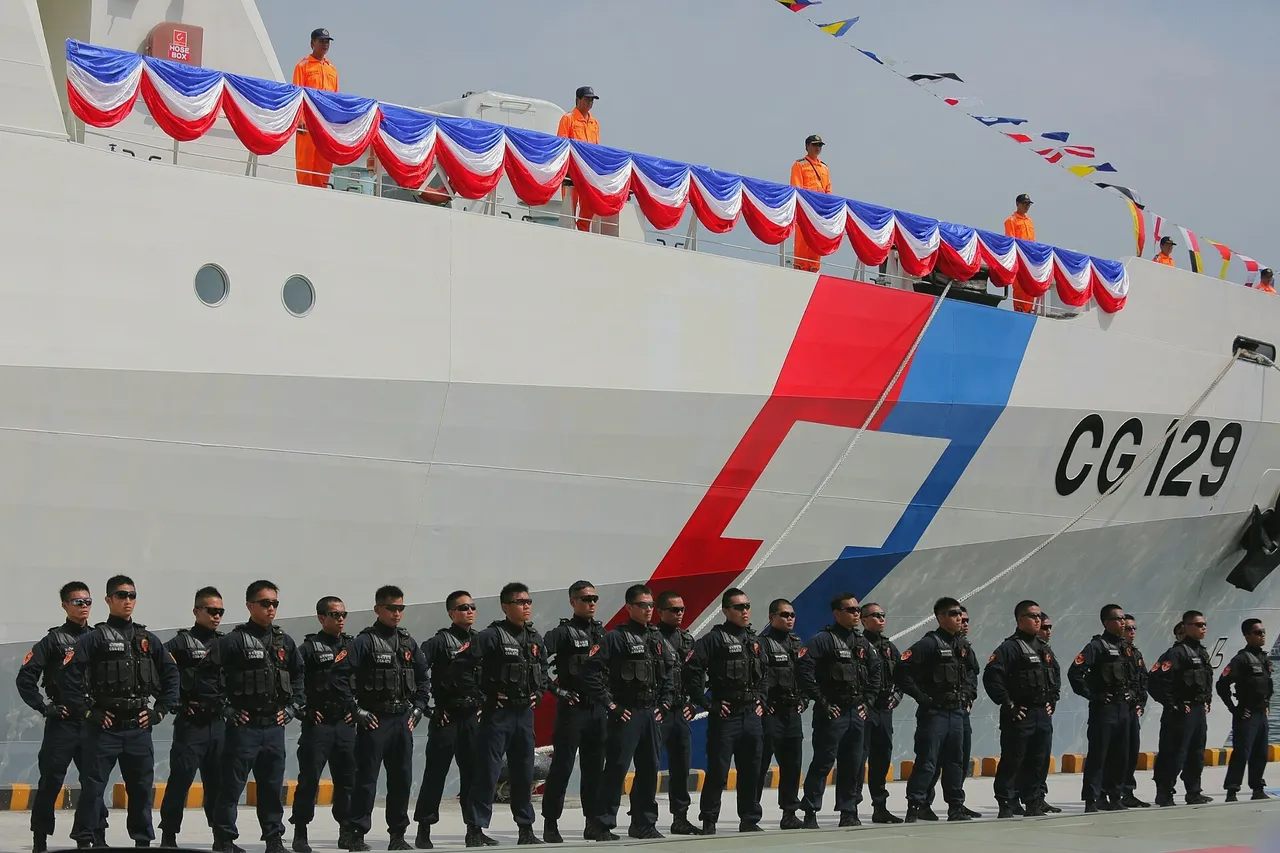
Frontline Taiwan coast guard crews said on 8 November 2026 that sea shifts now stretch to about 12 hours. Holding off China's patrols depends on people as much as ships.
TAIPEI —
This article is an original Taiwan Defence analysis based on the cited public sources. It distinguishes reported facts from analytical judgments and does not represent original field reporting.
On 8 November 2026, Taiwan's Coast Guard Day, public broadcaster PTS reported that frontline coast guard personnel say they now spend close to 12 hours a day on sea duty as Chinese coast guard ships keep operating near Taiwan, and that their duty allowances have not kept pace with that workload. The Coast Guard Administration replied that money to improve frontline pay is already in the 2027 budget.
The complaint surfaced a day earlier on a Facebook page that coast guard staff use to air grievances, in a post presented as the voice of rank-and-file officers. United Daily News reported that the post said sea shifts that once lasted eight hours now run to ten and almost routinely twelve, that special operations sometimes stretch to 30 hours, and that the sea-duty allowance had not been adjusted in more than 30 years. The post is anonymous, and its account of working hours has not been independently verified.
The argument
The government's Coast Guard Day message measured success in Chinese ships expelled, new ships ordered and budgets approved. For Taiwan's ability to keep resisting grey-zone pressure, a more telling number is how many hours the same crews must stand watch to produce those results. China's coast guard presence around Taiwan is built to be continuous, and a service that answers it with ever-longer shifts is drawing down a resource that new hulls cannot replace.
Evidence and constraints
At a Cabinet meeting on 5 November 2026, the Ocean Affairs Council reported that the coast guard had this year responded to Chinese coast guard incursions in Pratas waters 13 times and in Kinmen waters 39 times, and had investigated and expelled Chinese vessels 618 times, detaining 15 and confiscating 12, according to ETtoday. The council described its posture as avoiding provocation and conflict while neither backing away nor showing weakness.
The same report said the Cabinet had approved a NT$67.86 billion coast guard modernisation plan and a separate NT$28.46 billion resilience special budget, and that 141 new vessels and six ocean-going patrol ships are being built. At an early Coast Guard Day ceremony on 5 November, Cabinet Secretary-General Chang Tun-han said the government was continuing to strengthen ships, radar and drones for the service.
On pay, ETtoday reported that the Cabinet approved a coast guard pay adjustment plan on 26 August 2026 covering nine categories of allowances, including late-night hazardous duty, sea duty, surveillance and special-duty pay, with 7,728 person-times affected. Chang also cited nine adjusted pay items at the ceremony.
In its reply to the Facebook post, the agency described a six-allowance plan funded in next year's budget: higher sea-duty pay, higher pay-point rates for contracted ship crews, higher police-duty pay for investigators and higher hazard pay for civilian staff, plus new surveillance-duty and special-unit allowances. The post had complained that no clear and complete figure for the increase had been given, and the published accounts of the agency's reply did not include per-person amounts.
Ocean Affairs Council Minister Kuan Bi-ling said at the ceremony that Chinese coast guard ships were using routine formation patrols to create a false impression of jurisdiction over waters around Taiwan, and that Chinese research vessels often entered nearby waters in the name of scientific research. She said crews keep monitoring, broadcasting warnings and expelling such ships.
PTS ran the complaint alongside a report by two US think tanks suggesting China may be holding an unannounced exercise around Taiwan, and it noted National Security Council Secretary-General Joseph Wu's statement that more than 100 Chinese navy and coast guard vessels had recently been deployed in the western Pacific.
What could change
The test will come when the 2027 budget passes review and the new allowances actually reach frontline pay. If the increases are visible to crews and the 141 new vessels come with more trained people rather than only more hulls, the shift lengths described in the post should ease. If watch hours keep stretching while the expulsion tally climbs, that tally will be measuring strain as much as success. Lawmakers reviewing the budget could also ask the agency to publish average sea hours per crew, which would make the strain measurable rather than anecdotal.
Why it matters
Taiwan has chosen to meet much of China's grey-zone pressure with its coast guard rather than its navy, which keeps most encounters below the military threshold. That choice holds only if the coast guard can keep it up for years, not months. Endurance at sea is a manpower and retention question before it is a shipbuilding one, and the 8 November 2026 complaint is an early warning from the people who carry that load every day.
Sources
More in Analysis
Why the November 2026 F-16 weapons report matters more for Taiwan than the new jets' arrival
A defence ministry report covered on 9 November 2026 shows Taiwan's new F-16s will fly for years before their glide bombs and jamming pods are complete.
TaiwanDefence · 12h ago · 4 min read
Why the Fujian carrier's 5 November first anniversary matters more for Taiwan than China's combat claims
China marked the Fujian carrier's first year in service on 5 November 2026; its repeated passages around Taiwan matter more than claims of full combat power.
TaiwanDefence · 16h ago · 4 min read
Why China's 5 November TB-001 drone flight past Okinawa matters for Taiwan's eastern flank
China flew an attack-capable TB-001 drone toward Japan's Danjo Islands on 5 November 2026, one of several recent drone loops that also skirt Taiwan's east side.
TaiwanDefence · 17h ago · 3 min read
Discussion (0)
Comments are not currently available.