
ANALYSIS
Why Czech drone makers talking assembly lines in Taiwan matters more than forum optics
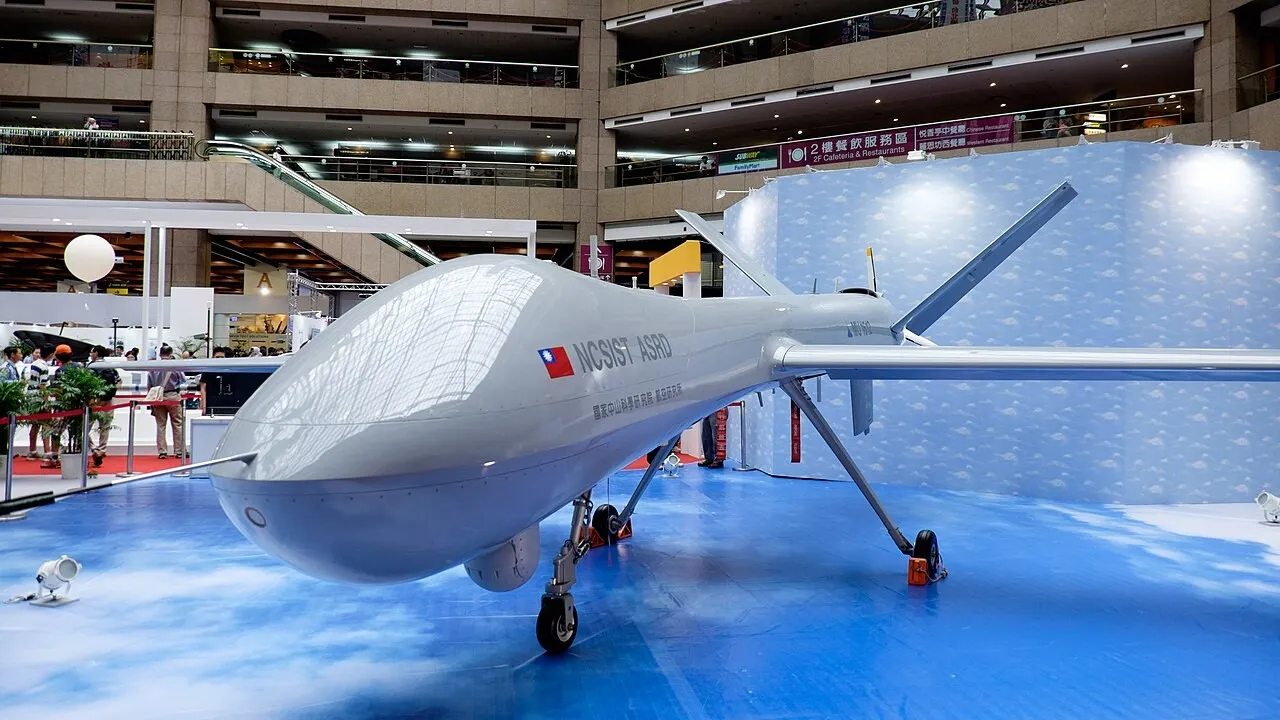
On 30 October 2026, former Czech Chamber speaker Marketa Pekarova Adamova told Taipei that battle-tested Czech drone firms are ready to move production lines to Taiwan.
TAIPEI —
This article is an original Taiwan Defence analysis based on the cited public sources. It distinguishes reported facts from analytical judgments and does not represent original field reporting.
On 30 October 2026, former Czech Chamber of Deputies speaker Marketa Pekarova Adamova told the opening of the Global UAV Academy in Taipei that Czech drone manufacturers want to build assembly lines in Taiwan and that several firms with Ukraine-war experience are already preparing to move production.
Taipei Times reported her remarks at the academy inauguration, an organisation focused on drone supply-chain cooperation, certification and pilot training. Liberty Times covered the same speech at the 2026 Taiwan drone international forum and Global UAV Academy opening, quoting her as saying many Czech makers with Russia-Ukraine combat experience are ready to shift lines directly to Taiwan.
Czech daily iDNES followed on 2 November 2026, reporting from Prague that Pekarova Adamova used the Taipei event to negotiate assembly of Czech drones on the island and to present makers of drones, counter-drone systems and autonomous interceptors planning Taiwan partnerships.
The industrial cast named in Taipei matters more than the ceremonial framing. Taipei Times and Liberty Times both listed AVEC Systems for autonomous interceptors and attack drones, Digitech Automotive for UAV navigation software drawn from automotive work, JISER for NATO-certified counter-drone systems, and Farpoint for pilot training already running with the academy.
Farpoint is not only a slide-deck partner. Liberty Times said the firm finished a first Taiwan pilot course two months earlier with 24 graduates drawn from universities, the National Chung-Shan Institute of Science and Technology, the Industrial Technology Research Institute, private firms and other organisations, and that with Ministry of Foreign Affairs support it is preparing an office at the Asia UAV AI Innovation Research and Development Center in Chiayi.
Trade data in the same coverage underlines why Czech capacity is not a random European guest. The Research Institute for Democracy, Society and Emerging Technology figures cited by Taipei Times and Liberty Times put the Czech Republic as the largest importer of Taiwanese drones and UAV components, with Poland second, which makes Czech assembly in Taiwan a reverse-link in an already thick two-way supply relationship rather than a cold start.
Judgment: the policy signal is that Taiwan is being pitched as a manufacturing and training node for European drone firms that already sell into Ukraine-tested markets, not merely as a buyer of finished airframes. That is a different industrial posture from importing kit alone.
Pekarova Adamova framed the urgency in classic deterrence language, citing the Roman line that if you want peace you must prepare for war, and arguing that prosperity and democracy lose meaning without security. She also said the Ukraine war has compressed drone and counter-drone refresh cycles to weeks rather than years, which is the practical reason battle-tested suppliers matter to Taiwanese buyers and co-producers.
She tied Czech proximity to Ukraine, about 300 kilometres, to the claim that Czech software, hardware and tactics are proven outside laboratories. Taipei Times recorded that claim as her contrast with manufacturers that can only lab-test platforms; Liberty Times carried the same battlefield-validation point.
iDNES added a semiconductor angle from her Taiwan pitch, noting Taiwan as a democratic chip power producing more than 90 percent of the most advanced chips and treating semiconductors as a core component of current systems. That is background colour for why Czech firms want local assembly beside Taiwanese electronics, not a substitute for the concrete company names and Chiayi office plan already on the record.
Judgment: for Taiwan's defence industry, the durable takeaway from the 30 October and 2 November disclosures is the combination of named Czech combat-experienced firms, an existing Farpoint training pipeline into NCSIST and ITRI circles, and an explicit willingness to locate assembly on the island. Forum optics expire; a co-located European counter-drone and attack-drone line would change Taiwan's non-Chinese UAV options in a way a one-day conference cannot.
The evidence available through early November 2026 is still announcement evidence. No Taiwan factory licence, contract award or first locally assembled Czech airframe has been publicly confirmed in these reports. Until those later phases appear, the grounded reading is that Prague-linked industry is marketing Taiwan as an assembly and training base, and that Taiwanese institutions are already hosting the training half of that offer.
For TaiwanDefence readers, that matters because uncrewed mass and China-free components are both political and operational constraints on Taiwan's coastal drone and boat programmes. A Czech production foothold would not replace US or indigenous systems, but it would add a European battle-tested supplier class that has already told Taipei it is ready to manufacture beside Taiwanese partners rather than only export finished kits.
Sources
More in Analysis
Why NCSIST's first international Aegis Cup matters more for Taiwan's cyber force than for weekend trophies
On 5 November 2026, Taiwan's state missile institute named DEF CON regulars for Tainan finals that Liberty Times says already feed the Information, Communications and Electronic Force.
TaiwanDefence · 10h ago · 3 min read

Why writing the six assurances into US law would matter more for arms sales than for symbolism
A Taipei panel and Taiwan People’s Party lobbying after the 2026 midterms revive the Six Assurances to Taiwan Act. The real test is whether statute can limit executive pauses on already approved weapons.
TaiwanDefence · 17h ago · 4 min read
Xi's purge leaves the PLA short of generals, but analysts in Taipei see no let-up in pressure on Taiwan
Willy Lam told a Taipei seminar on 28 October 2026 that only a handful of PLA full generals remain. A thinner high command need not mean a quieter strait.
TaiwanDefence · 29 Oct 2026 · 4 min read
Discussion (0)
Comments are not currently available.