
ANALYSIS
Why keeping MRF-SEA continuously in the Philippines matters more for Balikatan 27 than another short visit
The U.S. Marine Corps says Marine Rotational Force-Southeast Asia is on its second continuous Philippines-focused rotation after a 26 October 2026 turnover, aiming to carry lessons into Balikatan 27.
TAIPEI —
This article is an original Taiwan Defence analysis based on the cited public sources. It distinguishes reported facts from analytical judgments and does not represent original field reporting.
Marine Rotational Force-Southeast Asia is now on its second continuous rotation focused on the Philippines, after a turnover on 26 October 2026, according to a U.S. Marine Corps release carried by U.S. Indo-Pacific Command and reported by USNI News and the Philippine Star.
The force began as a six-month rotational deployment that typically ran from October to March, but its mission was extended in April 2026 so that the command element stays based in the Philippines at the invitation of the Philippine government rather than shifting around Southeast Asia for each training window.
That change matters more than the ceremony of another arrival. A temporary visit can build personal ties and tick an exercise calendar. A continuous command element is meant to keep lessons, relationships and procedures from one Balikatan or KAMANDAG cycle into the next instead of resetting each autumn.
USNI News said the current deployment is the sixth iteration of MRF-SEA since 2022 and that, unlike Marine Rotational Force-Darwin, MRF-SEA deploys as a scalable task force whose headquarters is the permanent piece, with other Marine units attached as required for specific events.
Col. Robert Bunn, the outgoing commanding officer, said the goal was never simply to be present in the Philippines and that presence has to have purpose, with every exercise, planning session and repetition used to become more interoperable, responsive and capable with Philippine forces.
Col. Coby Moran, the incoming commanding officer, said the next rotation inherits momentum rather than only a mission, and will keep working shoulder-to-shoulder with Philippine allies through the Archipelagic Coastal Defense Continuum and Exercise Balikatan 27.
What the last rotation practised
The previous rotation trained with Philippine forces during Balikatan 26, KAMANDAG 10 and a series of bilateral events under the Archipelagic Coastal Defense Continuum, covering command and control, sensing, fires integration, maritime domain awareness, aviation, communications and unmanned systems.
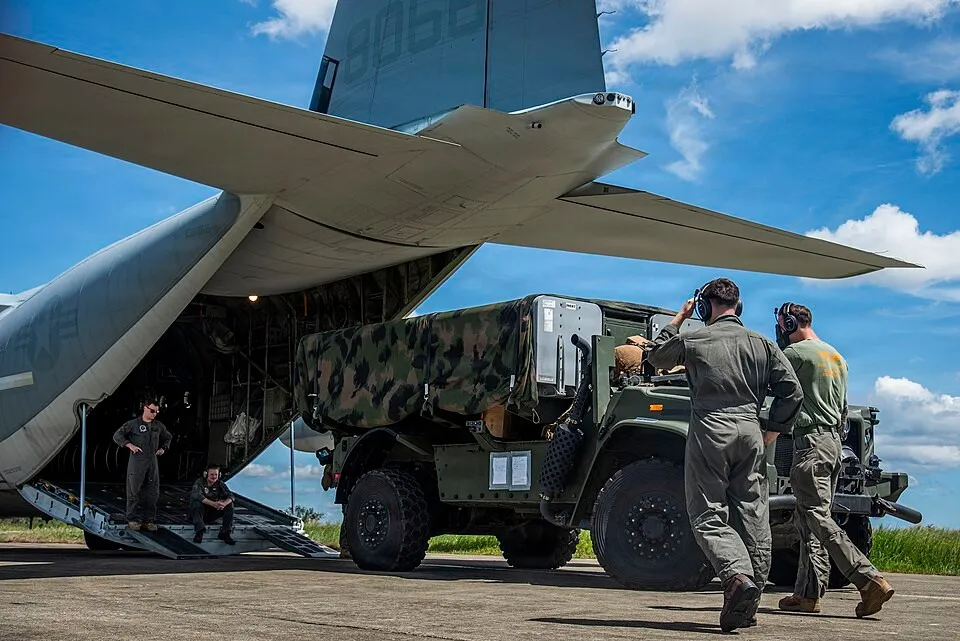
Marines also tested how forces and equipment move across distributed archipelagic terrain, including mobility of the AN/TPS-80 Ground/Air Task-Oriented Radar and movement of the Navy-Marine Expeditionary Ship Interdiction System and Marine Air Defense Integrated System from ports to dispersed exercise sites during KAMANDAG 10.
Those details show why the continuous model is not a branding change. NMESIS, MADIS and expeditionary radar only help if crews can repeatedly move them through Philippine ports and islands under the same command relationships. A headquarters that stays put is how that repetition is supposed to accumulate between headline exercises.
Evidence and limits
The Philippine Star reported that PACOM framed each rotation as building on the relationships and lessons of the force before it, an approach MRF-SEA calls presence with purpose, and that Marines and sailors work alongside the Armed Forces of the Philippines and the Philippine Marine Corps while providing command and control for Marine Corps training across the archipelago.
There are limits. The Marine Corps has not said whether MRF-SEA will now focus only on the Philippines or will still lead engagement with other Southeast Asian partners from a Philippine base. A continuous presence also depends on Philippine political consent and on logistics that can sustain a forward headquarters between major exercises.
Moran previously led a I Marine Expeditionary Force technical assistance team for a maritime prepositioning force offload at the Port of Cagayan de Oro in Mindanao in April 2026, the first such offload at that port, which the Marine Corps treated as a way to deliver combat power to a Marine air-ground task force preparing for Balikatan 26.
The continuum is designed as recurring training between major exercises so that U.S. and Philippine forces can apply lessons from one event to the next rather than treating Balikatan as a stand-alone annual spike.
Why it matters
For Taiwan contingency planning, the relevant question is not whether another U.S. unit visited Manila. It is whether U.S. and Philippine forces can keep improving how they sense, shoot and move across the northern Philippines and the Batanes approaches on a steady schedule rather than in one-off bursts. The second continuous MRF-SEA rotation is the clearest public signal yet that both sides want that schedule to stick through Balikatan 27.
Watch the next continuum events and how often high-end systems such as NMESIS and MADIS leave the pier for dispersed sites. If those movements stay rare, continuous presence will look thinner than the language suggests. If they become routine under the same headquarters, the April 2026 extension will have done more for allied readiness than another short rotational visit.
Sources
More in Analysis
Why Malabar 2026's sub-hunting focus matters more for Taiwan than the Quad summit optics
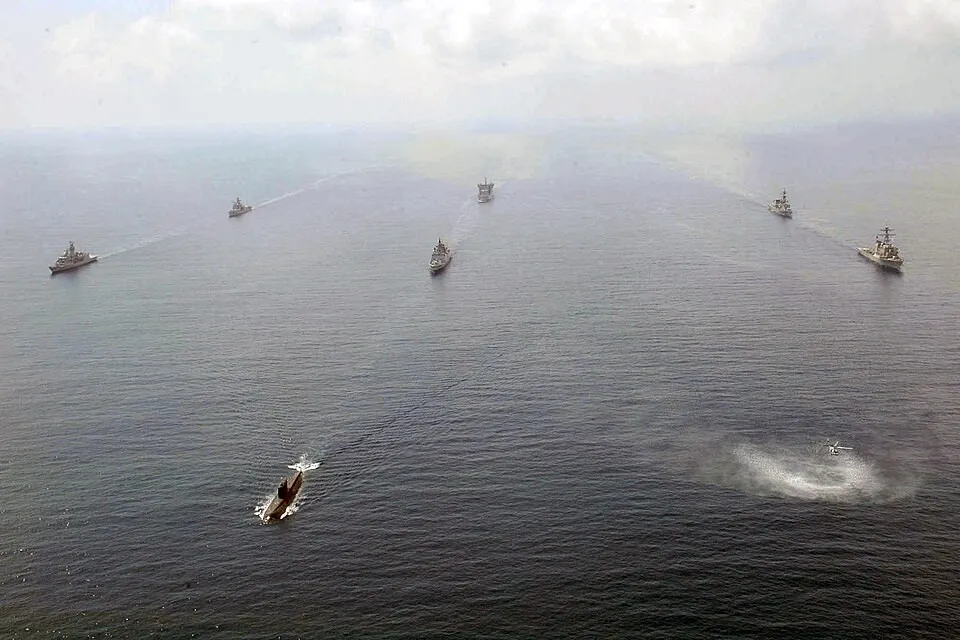
Malabar 2026 opened on 5 November with the Quad navies rehearsing submarine hunts while China kept more than 100 ships at sea around Taiwan's approaches.
TaiwanDefence · 3h ago · 4 min read

Why China's dark-ship coast guard probes at Pratas matter more than the expulsion count
On 31 October 2026 a Chinese coast guard ship ran dark into Pratas restricted waters, the 13th such entry this year, and analysts say the real test is supply access.
TaiwanDefence · 3h ago · 4 min read
Why CENTCOM's unmanned surge matters more for Taiwan as a joint-force scaling template
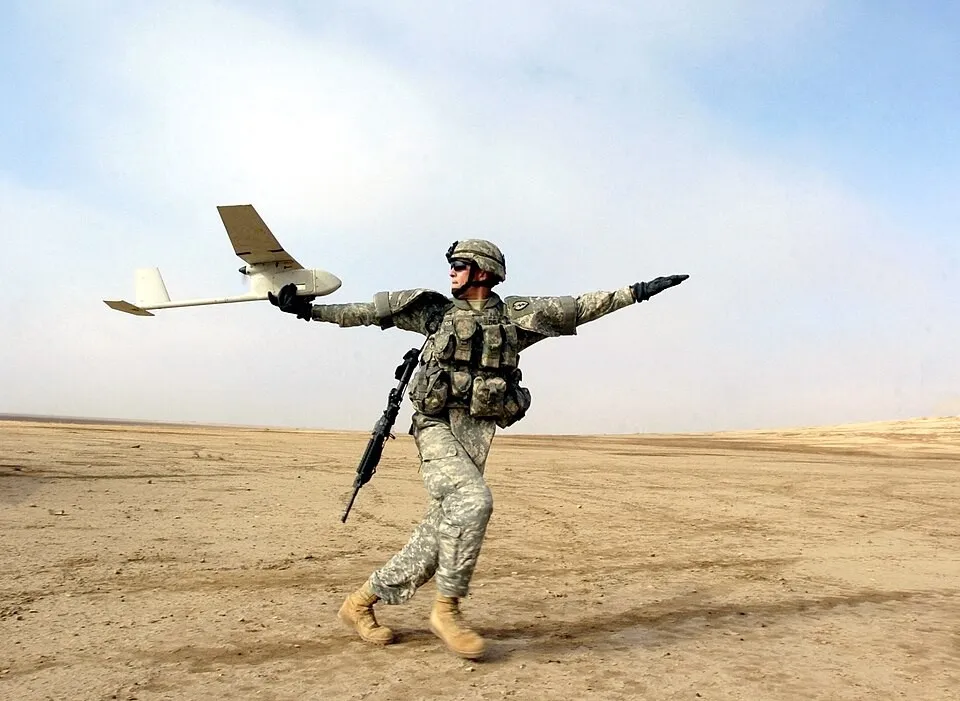
In November 2026 the Pentagon said Central Command received more than 25,000 unmanned systems this year, a fielding it frames as the start of joint-force scaling toward the Pacific.
TaiwanDefence · 5h ago · 4 min read
Discussion (0)
Comments are not currently available.