
ANALYSIS
Why Taiwan's December army truck tender matters more for wartime logistics than the German truck on show
A NT$23.3bn tender for 2,434 army trucks opens in December 2026; the real test is whether Taiwan escapes the spare-parts trap that crippled its last fleet.
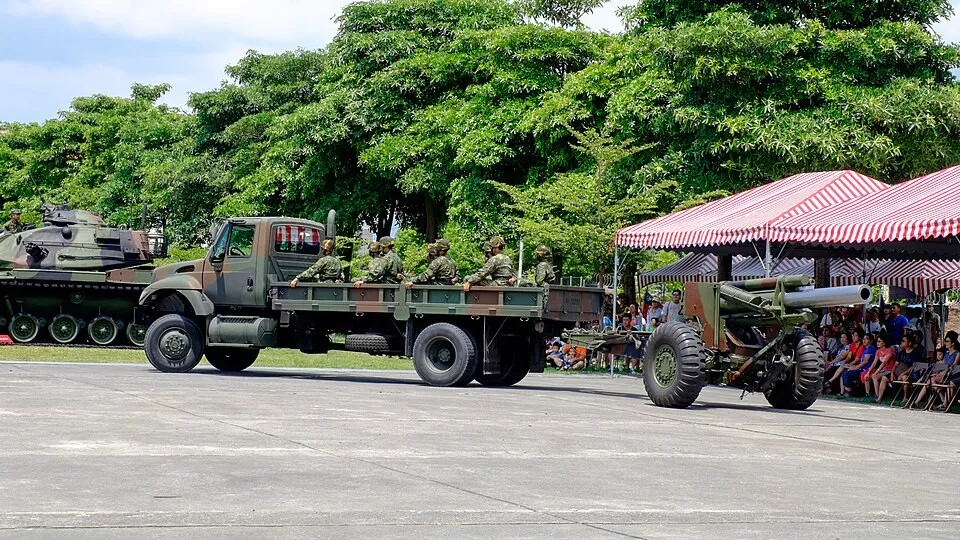
TAIPEI —
This article is an original Taiwan Defence analysis based on the cited public sources. It distinguishes reported facts from analytical judgments and does not represent original field reporting.
Taiwan's army is set to open a tender in December 2026 for 2,434 new load-carrying trucks under a programme worth about NT$23.34 billion, according to reporting this week by CNA, FTNN and Liberty Times on the defence ministry's 2027 budget book. The trucks, bought from 2027 to 2032 together with eight new vehicle shelters, are meant to replace the medium tactical trucks that carry troops, supplies and towed guns across the island.
Judgment: the tender deserves more attention than its modest price suggests. Trucks decide whether missiles, ammunition and fuel actually reach dispersed units once ports and depots come under pressure, and the Army's own explanation shows that its current fleet failed on sustainment rather than on design alone.
The argument
The medium tactical truck entered service from 2006 after a 2004 tender won by Sanyang Motor and Navistar, which produced 4,788 of them. FTNN reported that soldiers have long complained about poor readiness, weak off-road performance and spare parts that took so long to arrive that conscripts finished service before repairs were done, and that a 2025 National Audit Office report found the military had not built up a spare-parts stock, leaving vehicles out of use.
Liberty Times reported that the deeper cause was the decision to build and assemble parts locally for industrial cooperation, which produced uneven quality and hard-to-find components. As a result, the military now leans toward importing complete vehicles and wants to cut the number of variants from nine to three, a standard truck, a crane truck and a hydraulic tailgate model, a point Taiwan News also carried.
The budget book says the new trucks will let units move quickly to their wartime storage and dispersal positions and buy time and space. That ties the purchase directly to the Army's plan to scatter forces and stocks before an attack rather than hold them at fixed bases.
Evidence and constraints
The truck tender is the first piece of a wider renewal. Liberty Times counted 4,547 light off-road tactical vehicles to replace light trucks and Humvees and 401 eight-wheel heavy trucks alongside the load carriers, with related budgets approaching NT$200 billion, and Taiwan News summarised the plan as about 7,000 new vehicles. So far only one local firm, Zih-Mao, has publicly said it will bid, offering the Rheinmetall MAN TGM-MIL 4x4 with an 11-tonne payload, 320 horsepower, a 60 percent climbing grade and 85 centimetres of fording depth.
Both Liberty Times and FTNN linked the thin field to the military's rule against Chinese-made components and to the size of the order, which few firms can absorb quickly. Zih-Mao says the vehicle would arrive complete apart from a modular cargo bed assembled in Taiwan, and that it holds German and Austrian export approvals.
Zih-Mao deputy general manager Chen Tsung-chih told CNA that the German government had approved the export to Taiwan, so the Army would receive a genuine military-specification truck rather than a converted commercial one. He told Liberty Times that Rheinmetall has no investment in China and that Beijing this year listed it as an unwelcome company, which he presented as proof the truck meets the rule against Chinese supply chains.
Analysts at the Institute for National Defense and Security Research told CNA that the current truck is not a true military vehicle and lacks off-road ability. Hsu Chih-hsiang noted that wartime roads may be damaged and units may need to move across open ground, that Ukraine has shown fast unloading improves survival, and that Berlin has loosened its export stance toward Taiwan. Shu Hsiao-huang said riverbeds and forest deployments demand off-road performance well above commercial trucks.
Judgment: a single bidder is the main constraint. A thin competition can push up prices or invite delays and protests, and importing complete vehicles moves the spare-parts risk overseas rather than removing it. Unless the contract funds a parts stockpile in Taiwan from the first delivery, the Army could repeat the audit finding with a better truck.
What could change
The December tender will show whether more firms enter, whether the specifications keep the three-variant plan and whether spare parts and local maintenance are written into the award. A delay past the 2027 budget year would also push back the light vehicle and heavy truck buys that follow.
Why it matters
Taiwan's defence plan relies on moving units and supplies quickly to dispersed positions before and during an attack. A truck fleet that is ready, simple to support and able to leave the road is a precondition for that plan, which is why the December tender is a better test of wartime logistics than any single vehicle on display.
Sources
More in Analysis
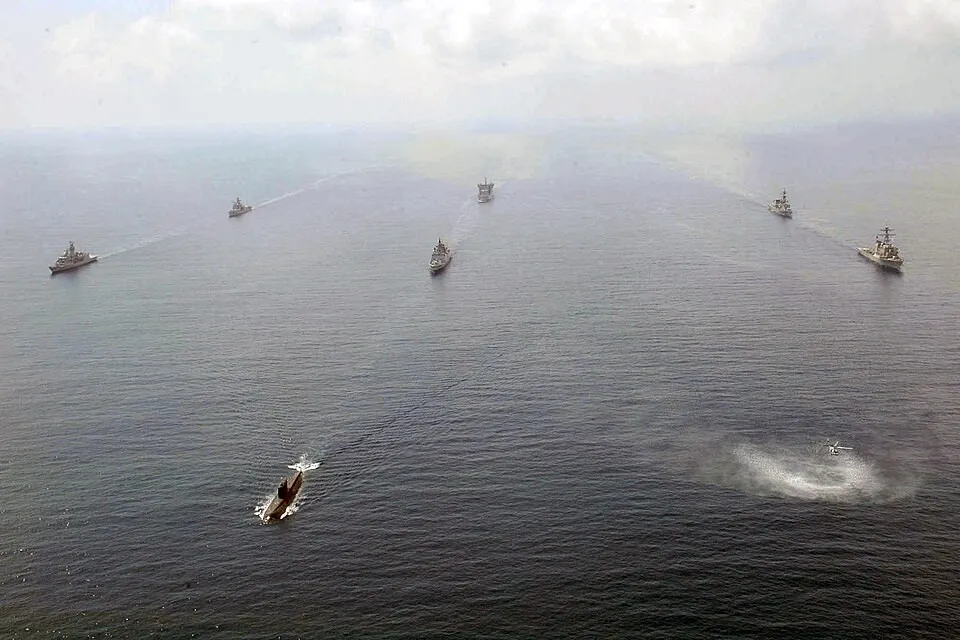
Why Malabar 2026's sub-hunting focus matters more for Taiwan than the Quad summit optics
Malabar 2026 opened on 5 November with the Quad navies rehearsing submarine hunts while China kept more than 100 ships at sea around Taiwan's approaches.
TaiwanDefence · 3h ago · 4 min read

Why China's dark-ship coast guard probes at Pratas matter more than the expulsion count
On 31 October 2026 a Chinese coast guard ship ran dark into Pratas restricted waters, the 13th such entry this year, and analysts say the real test is supply access.
TaiwanDefence · 3h ago · 4 min read
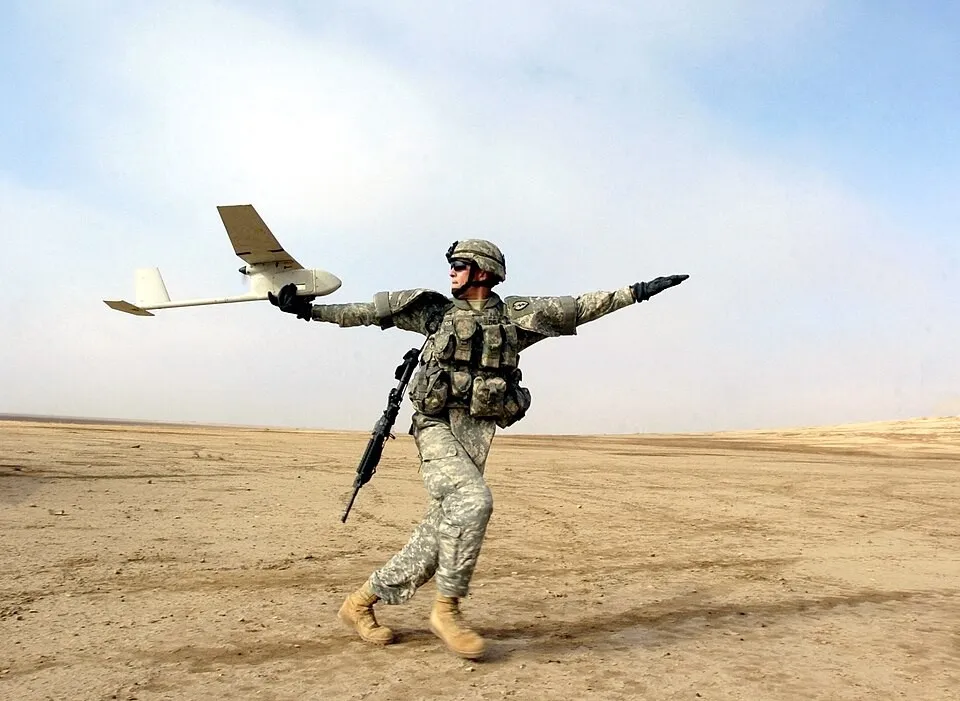
Why CENTCOM's unmanned surge matters more for Taiwan as a joint-force scaling template
In November 2026 the Pentagon said Central Command received more than 25,000 unmanned systems this year, a fielding it frames as the start of joint-force scaling toward the Pacific.
TaiwanDefence · 5h ago · 4 min read
Discussion (0)
Comments are not currently available.